54. Garden to Table — the Annamaya Connection
The Annamaya Living Food Forest and Ayurveda Garden is planned as a working model of India's edible, medicinal and sacred plant heritage — themed zones such as the Nakshatra and Navagraha vatikas, an Ayurveda dravya garden, a saag garden, fruit forest, spice and herb beds, millets and roots. For the kitchen it means one simple principle: let the garden, not the supplier, set the menu.
| Garden zone | What the kitchen receives | Typical dishes | |
|---|---|---|---|
| Saag garden | Methi, palak, bathua, chaulai, moringa, curry leaf | Saags, dals, chillas, soups | |
| Spice and herb beds | Tulsi, mint, lemongrass, coriander, fresh turmeric and ginger | Kadhas, chutneys, teas, tadka | |
| Fruit forest | Amla, guava, papaya, banana, mango, bael, jamun, pomegranate | Murabba, chutneys, stewed fruit, sharbats | |
| Vegetable beds | Gourds, pumpkin, okra, beans, roots by season | Everyday sabzis | |
| Millets and grains | Ragi, jowar, foxtail, samak (trial plots) | Porridges, rotis, khichdi | |
| Medicinal plants | Ashwagandha, brahmi, giloy (display and education) | Not used in cooking without a vaidya's advice |
The zero-waste kitchen cycle
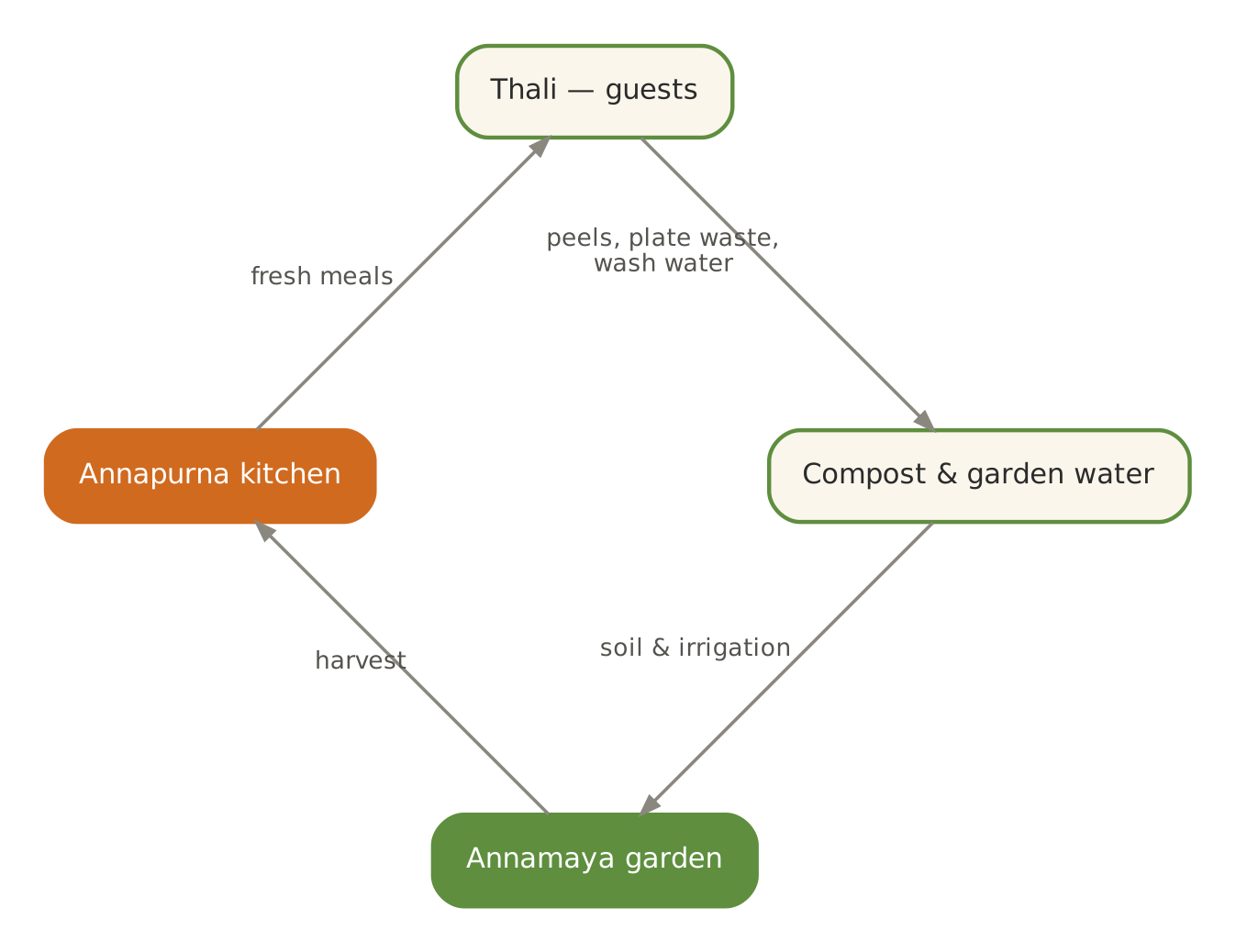
Figure. The zero-waste cycle — garden, kitchen, compost, garden
| Stream | What | Where it goes | |
|---|---|---|---|
| Vegetable trimmings and peels | Clean scraps | Compost for the Annamaya garden; some to the Centre's cows if any | |
| Cooked leftovers (unserved) | Within safe time | Staff meals the same day | |
| Plate waste | Uneaten food | Compost (cooked food composted separately) | |
| Dry waste | Packaging | Segregated for recycling | |
| Used oil | Never reused for frying | Collected for authorised biodiesel recycling where available | |
| Water | Rice and dal washing water | Garden irrigation |