10. The Spice Pharmacy
In an Ayurvedic kitchen the spice box is a small pharmacy. Spices kindle agni, help digest heavy foods, reduce gas from pulses, preserve, and balance the doshas — in pinch quantities. They are most effective when whole spices are freshly roasted and ground, and when they are bloomed in ghee or oil, which carries their aromatic compounds into the food.
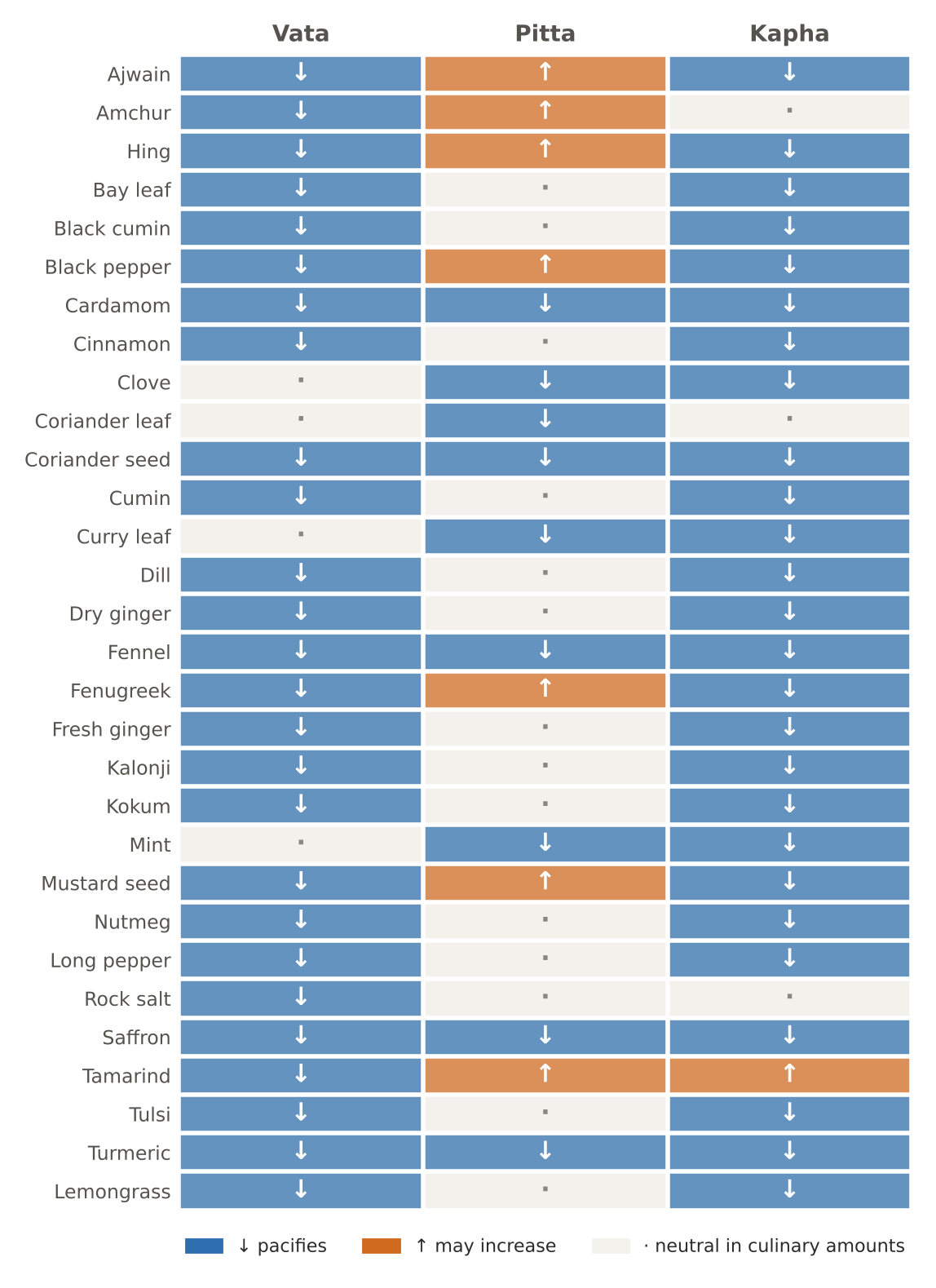
Figure. Thirty kitchen spices and herbs — warming or cooling, and their effect on each dosha
| Spice / herb | Sanskrit | Taste | Potency | Dosha effect | Best culinary use | Notes for 55+ guests | |
|---|---|---|---|---|---|---|---|
| Ajwain (carom) | Yavani | Pungent, bitter | Heating | ↓V ↓K ↑P | Arbi, beans, parathas, monsoon dals | Strong digestive for gas; small amounts | |
| Amchur (dry mango) | Amra churna | Sour | Heating | ↓V ↑P | Khatta-meetha sabzis, chaat | Avoid in acidity; skip in Pitta season | |
| Asafoetida | Hingu | Pungent | Heating | ↓V ↓K ↑P | Every pulse dish; replaces onion–garlic | A pinch fried 5 seconds in ghee; never raw | |
| Bay leaf | Tamalapatra | Sweet, pungent | Heating | ↓V ↓K | Pulao, dal, kheer | Remove before serving texture-modified food | |
| Black cumin | Krishna jiraka | Pungent | Heating | ↓V ↓K | Pulao, light gravies | Use sparingly | |
| Black pepper | Maricha | Pungent | Heating | ↓V ↓K ↑P | Rasam, pongal, golden milk | Crushed, not whole, for elders; mild amounts | |
| Cardamom | Ela | Sweet, pungent | Cooling | Tridoshic | Milk, sweets, tea, rice | Neutralises heaviness of milk and sweets | |
| Cinnamon | Tvak | Sweet, pungent, bitter | Heating | ↓V ↓K | Kadha, stews, oats, kheer | True (Ceylon) cinnamon preferred for daily use | |
| Clove | Lavanga | Pungent, bitter | Cooling (by tradition) | ↓K ↓P | Whole-spice tempering, kadha | 1–2 per dish | |
| Coriander leaf | Dhanyaka patra | Pungent, bitter | Cooling | ↓P | Garnish, chutneys | Wash well in salted water | |
| Coriander seed | Dhanyaka | Astringent, bitter, sweet | Cooling (mild) | Tridoshic | Masalas, CCF tea, dhaniya water | A Pitta-friendly base for most masalas | |
| Cumin | Jiraka | Pungent | Cooling (by tradition) / mild | ↓V ↓K | Tempering, raita, takra | The most used digestive spice | |
| Curry leaf | Kaidarya / surabhinimba | Bitter, pungent | Cooling | ↓P ↓K | Tempering, chutney, buttermilk | Grow in the garden; use fresh | |
| Dill | Shatapushpa | Pungent, bitter | Heating | ↓V ↓K | Dal, sabzi | Traditionally used for gas and menstrual comfort | |
| Dry ginger | Shunthi | Pungent | Heating | ↓V ↓K | Kadha, sweets, panjiri | Gentler on the gut than fresh ginger; 'universal medicine' | |
| Fennel | Mishreya | Sweet, pungent | Cooling | Tridoshic | Mukhwas, coolers, khatta-meetha | Best digestive for Pitta; after meals | |
| Fenugreek seed | Methika | Bitter | Heating | ↓V ↓K ↑P | Kadhi, sambar powder, pickles | Bitter: tiny amounts; supports blood-sugar control | |
| Fresh ginger | Ardraka | Pungent | Heating | ↓V ↓K | Every dal, kadha, pre-meal slice | Reduce in acidity and summer | |
| Kalonji (nigella) | Upakunchika | Pungent, bitter | Heating | ↓V ↓K | Bengali tempering, breads | Small amounts | |
| Kokum | Vrikshamla | Sour, sweet | Cooling (in practice) | ↓V ↓K | Dal, sol kadhi, sharbat | Gentler sour than tamarind | |
| Mint | Pudina | Pungent | Cooling | ↓P ↓K | Chutney, coolers, raita | Summer herb | |
| Mustard seed | Sarshapa | Pungent | Heating | ↓V ↓K ↑P | South-Indian tempering | Splutter fully; underdone seeds are bitter | |
| Nutmeg | Jatiphala | Pungent | Heating | ↓V ↓K | Golden milk, sweets | A tiny pinch only; traditionally for sleep | |
| Long pepper | Pippali | Pungent | Heating (mild vipaka) | ↓V ↓K | Kadha, winter soups | Medicinal — very small quantities | |
| Rock salt | Saindhava | Salty | Cooling (mild) | ↓V | Fasting days, chaat | Classical best salt; still salt — limit | |
| Saffron | Kumkuma | Bitter, pungent | Heating | Tridoshic | Kheer, milk, festive rice | 5–10 strands per dish | |
| Tamarind | Chincha / amlika | Sour | Heating | ↓V ↑P ↑K | Sambar, rasam, chutney | Small amounts; kokum for acidity-prone guests | |
| Tulsi | Tulasi | Pungent, bitter | Heating | ↓V ↓K | Kadha, teas | Add at the end; do not boil long | |
| Turmeric | Haridra | Bitter, pungent | Heating | Tridoshic | Dal, sabzi, golden milk | With pepper and fat; medical doses only on advice | |
| Lemongrass | Bhustrina | Pungent, bitter | Heating (mild) | ↓V ↓K | Teas | Garden-grown |
Three house churnas for the three doshas
These blends are sprinkled on rice, dal or vegetables at the table, ½ tsp per serving. Dry-roast seeds separately on low heat until fragrant, cool, grind and store airtight for up to one month.
| Vata churna (warming, grounding) | Pitta churna (cooling) | Kapha churna (light, warming) | |
|---|---|---|---|
| Cumin 20 g | Coriander seed 30 g | Dry ginger 10 g | |
| Fennel 20 g | Fennel 30 g | Black pepper 5 g | |
| Coriander seed 20 g | Cumin 15 g | Cumin 15 g | |
| Dry ginger 10 g | Cardamom 5 g | Coriander seed 15 g | |
| Ajwain 5 g | Turmeric 5 g | Mustard seed 5 g | |
| Turmeric 5 g | Mishri 15 g | Turmeric 5 g | |
| Hing 1 g (warmed) | Dried mint 3 g | Fenugreek seed 3 g | |
| Rock salt 15 g | Rock salt 5 g | Cinnamon 5 g |
Ten rules for spices
|