28. How Much — Portion and Hunger
Classical texts describe dividing the stomach's capacity into parts: one part for solid food, one for liquid, and one left empty for the movement of the doshas (some texts divide it into four, with two parts solid). The modern equivalent is to stop at about three-quarters full — satisfied, not stuffed. For older guests, whose agni is often weaker, this is the single most useful rule.
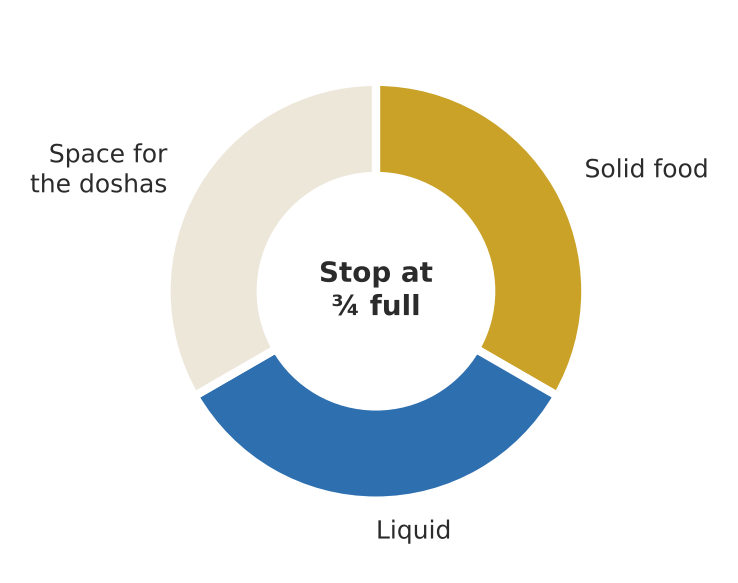
Figure. The classical division of the stomach — solid, liquid and space
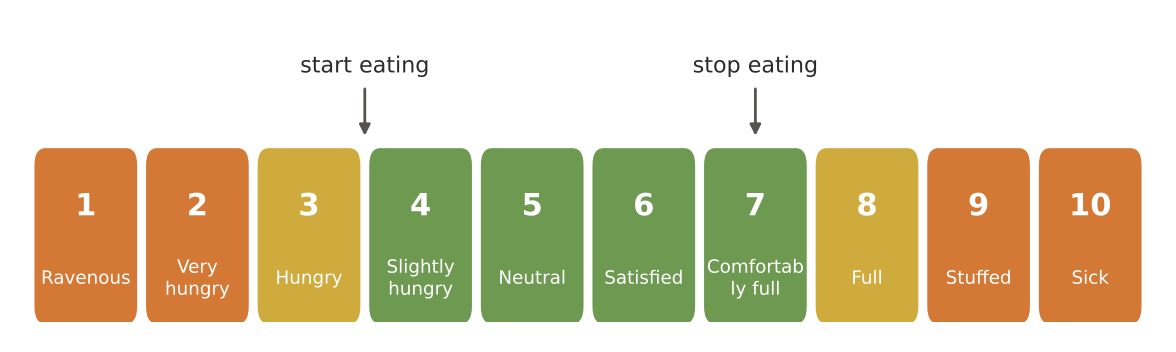
Figure. The hunger–fullness scale: begin eating at 3–4 and stop at 6–7
| Measure | Classical idea | Kitchen translation | |
|---|---|---|---|
| Anjali | The two cupped hands of the person | A portion of grain roughly the size of the eater's own two cupped hands | |
| Agni bala | Quantity depends on digestive strength | Larger lunch; smaller breakfast and dinner; less when ill | |
| Guru and laghu | Heavy foods to half satiety; light foods to near-satiety | Small sweets and paneer; generous soups and vegetables | |
| Signs of the right amount | No heaviness, comfortable breathing, easy movement, satisfied senses | Ask guests how they feel an hour after the meal | |
| Signs of too much | Heaviness, sleepiness, bloating, acidity, restlessness | Reduce portion; lighter dinner | |
| Signs of too little | Weakness, early hunger, low mood, weight loss | Add ghee, milk, paneer, nuts; check appetite with a doctor if weight falls |