26. The Eight Factors of Wholesome Eating
Charaka (Vimanasthana 1) names eight factors that decide whether a meal nourishes or harms — the ashta ahara vidhi visheshayatana. They are a complete checklist for any kitchen, and they show that the same food can be medicine or poison depending on how it is prepared, combined, measured and eaten.
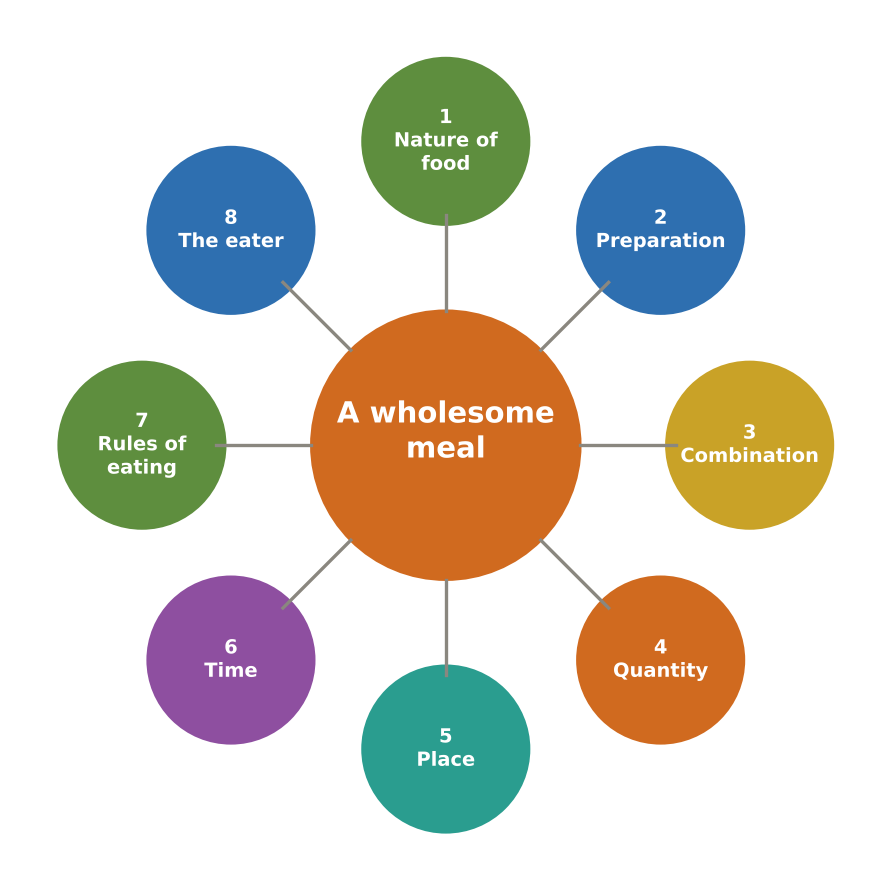
Figure. The eight factors that decide whether a meal nourishes
| Factor | Sanskrit | Meaning | Annapurna Kitchen example | |
|---|---|---|---|---|
| 1. Nature of the food | Prakriti | Inherent qualities: moong is light, urad heavy | Moong as the house dal; urad only in small amounts | |
| 2. Preparation | Karana / samskara | Processing changes qualities: roasting lightens, soaking softens | Roast suji; soak pulses; cook greens; ferment batters | |
| 3. Combination | Samyoga | Foods change each other's effects | No milk with sour fruit; ghee with rice to lighten it | |
| 4. Quantity | Rashi | Total amount and amount of each item | 150 g rice, 180 ml dal, 2 phulkas; stomach rule (Ch. 28) | |
| 5. Place | Desha | Climate and region; also where the food grows | Haridwar's seasons; produce from the Annamaya garden | |
| 6. Time | Kala | Time of day, season, age, state of digestion | Lunch as main meal; ritucharya; Vata stage of life | |
| 7. Rules of eating | Upayoga samstha | How the meal is eaten | The twelve rules (Ch. 27) | |
| 8. The eater | Upayokta | The person's constitution, habits, digestion | Prakriti, current imbalance, health conditions, preferences |