7. Agni, Ama and the Journey of Food
Agni — the digestive fire
If one idea sums up Ayurvedic nutrition, it is this: we are not what we eat but what we digest. Agni, the transforming fire, decides whether a meal becomes nourishment or residue. Ayurveda counts thirteen agnis — the central digestive fire (jatharagni), five elemental fires (bhutagni) in the liver, and seven tissue fires (dhatvagni) — but in the kitchen the central fire is what matters.
| State of agni | Linked dosha | Signs | Kitchen response | |
|---|---|---|---|---|
| Sama agni (balanced) | All in balance | Regular appetite, comfortable digestion, regular stools, steady energy | Keep doing what you are doing; follow the season | |
| Vishama agni (irregular) | Vata | Hunger comes and goes; gas, bloating, constipation, cravings | Regular meal times; warm, moist, cooked food; ginger, cumin, hing, ghee | |
| Tikshna agni (sharp) | Pitta | Intense hunger, irritability if meals are late, acidity, loose stools | Do not skip meals; cooling foods: rice, milk, ghee, coconut, fennel; less chilli and sour | |
| Manda agni (dull) | Kapha | Little appetite, heaviness, sleepiness after meals, slow digestion | Light warm meals; pungent and bitter spices; no snacking; dinner very light |
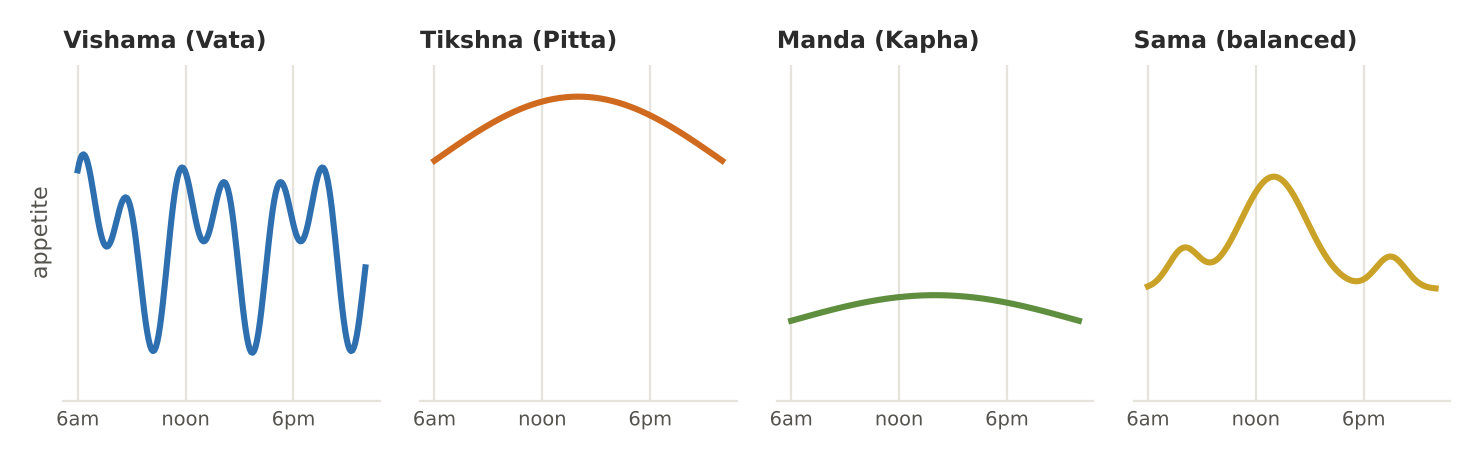
Figure. Four states of agni — irregular, sharp, dull and balanced
Ama — the residue of incomplete digestion
When food is not fully digested it leaves ama: a heavy, sticky, cold residue that Ayurveda considers the root of many disorders. Recognising ama is a daily skill for a cook who serves the same guests for weeks.
| Sign of ama | What the guest notices | |
|---|---|---|
| Coated tongue | Thick white or yellow coating, especially on waking | |
| Heaviness and fatigue | Tired even after sleep; heavy after meals | |
| Loss of appetite and taste | Food does not appeal; dull taste in the mouth | |
| Bad breath, foul stools | Sticky stools that sink; strong odour | |
| Stiffness and aches | Generalised body ache, worse in the morning | |
| Mental fog | Dullness, low motivation |
Clearing ama in the kitchen — gentle steps
|
From food to tissue — the seven dhatus
Ayurveda describes digested food nourishing seven tissues in sequence, each refined from the one before. The final essence of all tissues is ojas — the substance of immunity, vitality and contentment. This sequence is why Ayurveda says that good nutrition takes time to show: changes in diet are felt in digestion within days, but in bones and deeper tissues only over weeks and months.
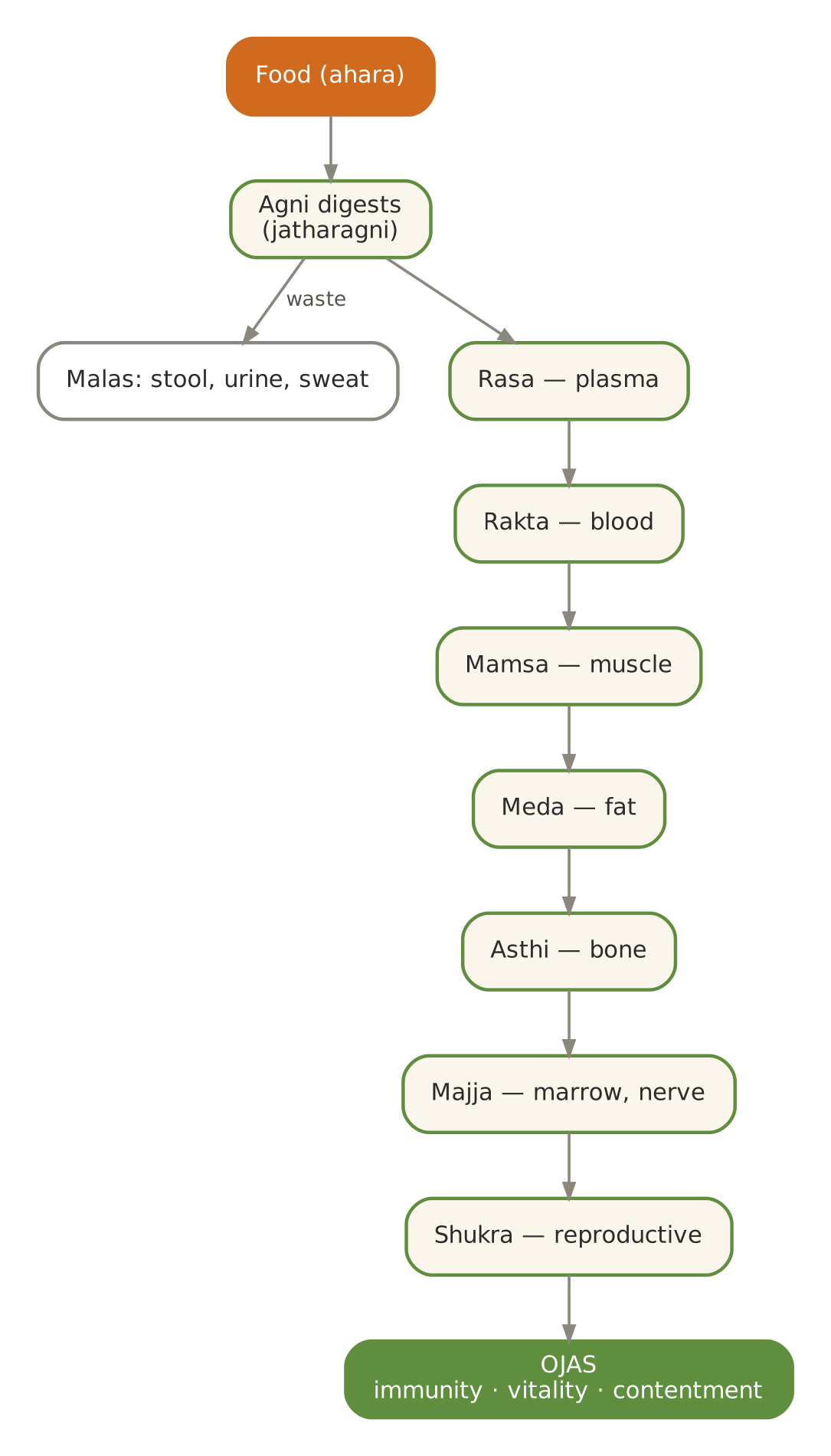
Figure. The journey of food — from digestion through the seven tissues to ojas
| Dhatu | Tissue | Nourished especially by | Signs of good nourishment | |
|---|---|---|---|---|
| Rasa | Plasma, lymph | Water, milk, juicy fruit, soups | Hydrated, clear skin; contentment | |
| Rakta | Blood | Pomegranate, beet, leafy greens with amla, jaggery | Good colour, warmth, vitality | |
| Mamsa | Muscle | Moong, urad, paneer, milk, wheat | Strength, firm muscles | |
| Meda | Fat | Ghee, sesame, nuts | Lubricated joints, supple skin | |
| Asthi | Bone, teeth | Milk, sesame, ragi, amla | Strong bones, teeth, nails, hair | |
| Majja | Marrow, nerves | Ghee, milk, almonds, walnuts | Clear mind, steady nerves, good sleep | |
| Shukra / artava | Reproductive essence | Milk, ghee, dates, almonds, saffron | Vitality, creativity | |
| Ojas | Essence of all | All of the above; also contentment and love | Immunity, radiance, calm |