13. Pulses — Protein Without the Wind
Pulses (dals and beans) supply most of the protein in a vegetarian kitchen, but they are dry, rough and gas-forming — Vata qualities. Ayurveda ranks them by digestibility and prescribes techniques that turn them into gentle food. For guests over 55, this is essential: a well-cooked moong dal is medicine; an undercooked rajma is a night of discomfort.
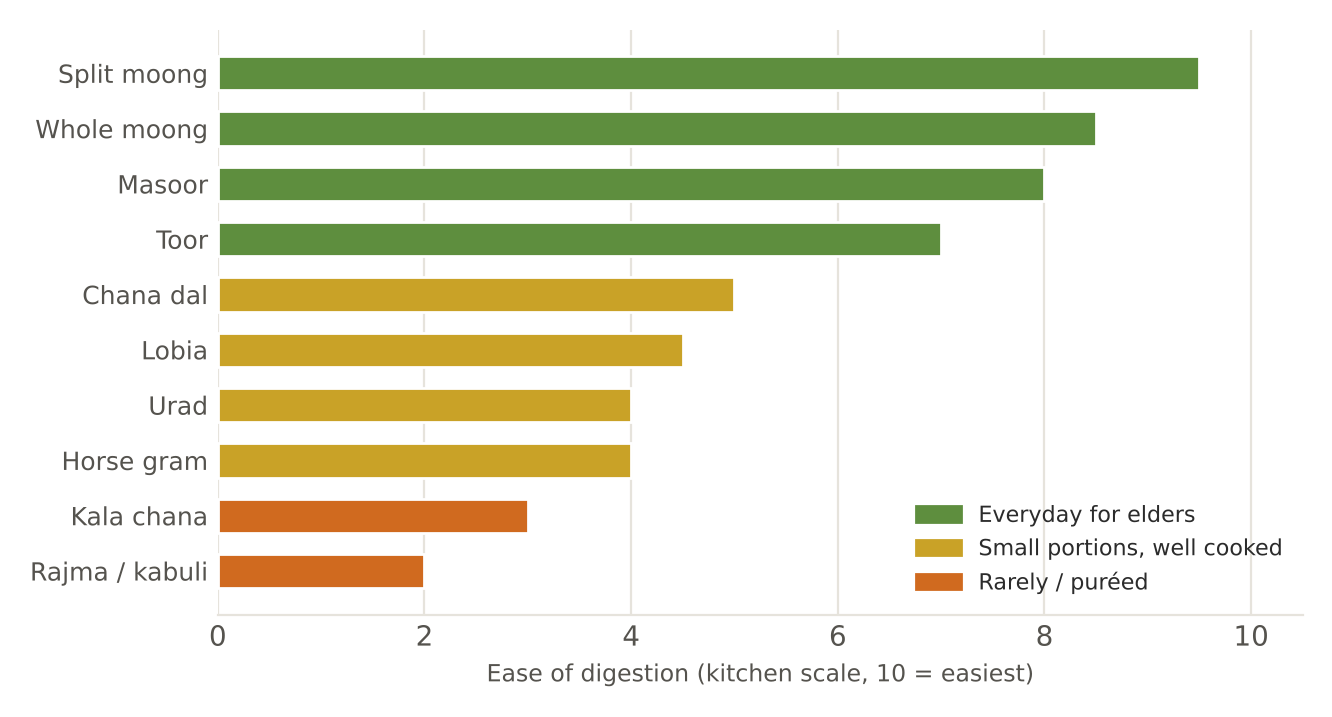
Figure. The digestibility ladder of pulses — from easiest (top) to heaviest (bottom)
| Pulse | Soak time | Pressure-cook (whistles) | Water per cup | Dosha note | Best paired with | |
|---|---|---|---|---|---|---|
| Split yellow moong | 15–30 min (optional) | 3 | 4 cups | Tridoshic — the house dal | Ghee, cumin, ginger | |
| Whole green moong | 6–8 h | 5–6 | 4 cups | Light; cooling | Ginger, coconut | |
| Masoor (red lentil) | 15 min | 2–3 | 4 cups | Slightly heating | Lauki, palak, lemon | |
| Toor / arhar | 30 min | 4 | 4 cups | Balanced with hing | Drumstick, tamarind (small) | |
| Chana dal | 2 h | 4 + 5 min low | 4 cups | Heavy, Vata-aggravating | Hing, ginger, lauki | |
| Urad dal | 2–4 h | 4–5 | 4 cups | Heavy, nourishing; Kapha | Only in small amounts; ginger, hing | |
| Lobia (cowpea) | 8 h | 5–6 | 4 cups | Heavy | Pumpkin, coconut | |
| Kala chana | 8–10 h | 8–10 | 4 cups | Heavy, drying | Very soft, small portions | |
| Kulthi (horse gram) | 8 h | 7–8 | 5 cups | Heating; Kapha–Vata | Winter and monsoon yusha | |
| Rajma, kabuli chana | 10–12 h | 10+ | 4 cups | Very heavy | Rarely for elders — puréed if at all |
Seven techniques that make pulses digestible
|