2. The Five Elements and the Three Doshas
The five great elements (pancha mahabhuta)
Ayurveda sees everything — the body, food, the seasons — as composed of five elements. They are not chemical elements but five states or principles of matter. Understanding them makes the rest of Ayurveda intuitive: a food that is mostly earth and water (rice, milk) will feel heavy, moist and grounding; a food that is mostly air and fire (chilli, dry crackers) will feel light, dry and stimulating.
| Element | Sanskrit | Qualities | In the body | In the kitchen | |
|---|---|---|---|---|---|
| Space / ether | Akasha | Subtle, light, clear, expansive | Hollow spaces: mouth, gut, ears, joints | Puffed rice, fasting, light soups | |
| Air | Vayu | Light, dry, mobile, cool, rough | Movement: breath, circulation, nerve impulses, peristalsis | Raw salads, dry crackers, beans, cold drinks | |
| Fire | Agni / tejas | Hot, sharp, light, penetrating | Digestion, metabolism, body heat, vision | Chilli, ginger, pepper, sour, fermented foods | |
| Water | Jala / ap | Cool, liquid, soft, smooth, cohesive | Plasma, saliva, lymph, mucus | Milk, coconut water, juicy fruit, soups | |
| Earth | Prithvi | Heavy, stable, dense, hard, gross | Bones, muscles, teeth, nails | Root vegetables, grains, nuts, pulses |
The three doshas
The five elements combine into three functional principles, the doshas, which govern all activity in the body and mind. Every person has all three; their proportion at birth is one's constitution (prakriti), and their current state is one's condition (vikriti).
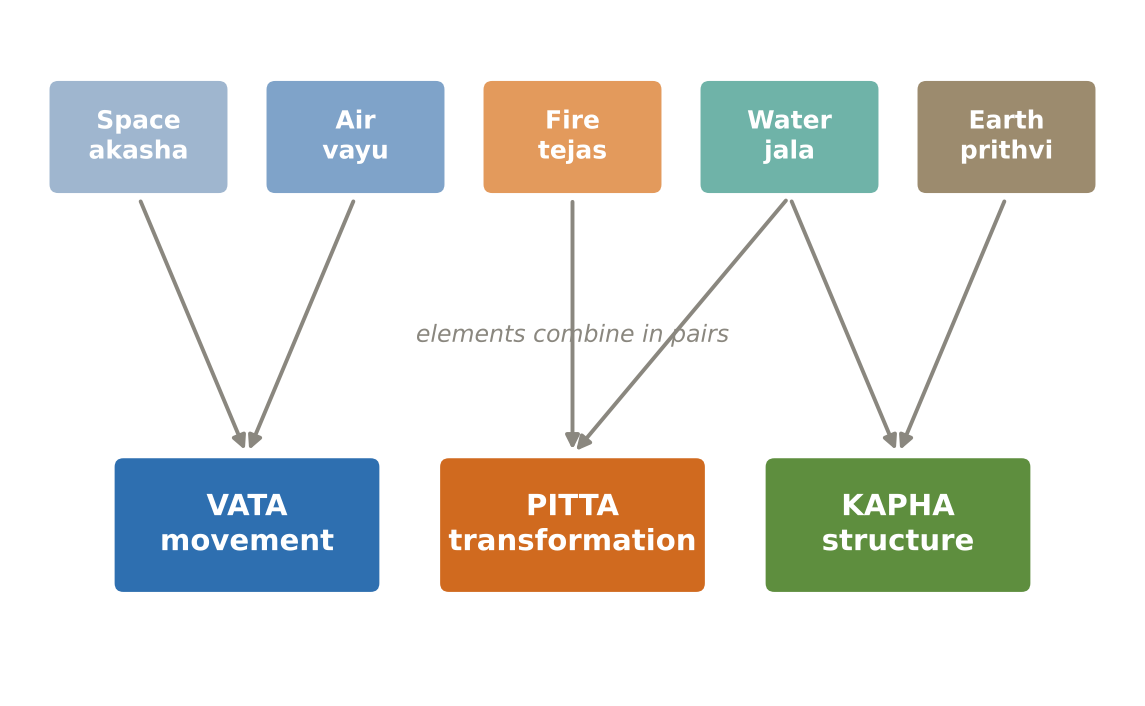
Figure. How the five elements combine to form the three doshas
| Dosha | Elements | Qualities | Main function | Main seats | Balanced, it gives | Aggravated, it causes | |
|---|---|---|---|---|---|---|---|
| Vata | Space + air | Dry, light, cold, rough, subtle, mobile | Movement of every kind | Colon, pelvis, bones, joints, ears, skin, nervous system | Enthusiasm, quick mind, good circulation and elimination | Dryness, constipation, gas, joint pain, insomnia, anxiety, tremor, weight loss | |
| Pitta | Fire + water | Hot, sharp, light, slightly oily, liquid, spreading | Transformation: digestion, metabolism, perception | Small intestine, stomach, liver, blood, eyes, skin | Strong digestion, warmth, courage, intelligence, lustrous skin | Acidity, heartburn, inflammation, rashes, loose stools, irritability, excess hunger or thirst | |
| Kapha | Water + earth | Heavy, slow, cool, oily, smooth, dense, stable | Structure, lubrication, cohesion, immunity | Chest, lungs, stomach, head, joints, plasma | Strength, stamina, stable joints, calm, patience, immunity | Heaviness, sluggish digestion, congestion, weight gain, lethargy, attachment |
The fifteen sub-doshas
Each dosha has five functional divisions. A cook does not need to memorise them, but they explain why, for example, Ayurveda links digestion (pachaka pitta), the heart and emotion (sadhaka pitta) and taste perception (bodhaka kapha).
| Dosha | Sub-dosha | Seat | Function relevant to food and lifestyle | |
|---|---|---|---|---|
| Vata | Prana | Head, chest | Breathing, swallowing, sensory intake, will | |
| Vata | Udana | Throat, chest | Speech, exhalation, effort, memory | |
| Vata | Samana | Stomach, small intestine | Moves food through digestion; fans the digestive fire | |
| Vata | Vyana | Heart, whole body | Circulation, movement of limbs | |
| Vata | Apana | Colon, pelvis | Elimination of stool, urine, menstruation | |
| Pitta | Pachaka | Stomach, small intestine | Digests food; separates nutrients from waste | |
| Pitta | Ranjaka | Liver, spleen | Gives colour to blood | |
| Pitta | Sadhaka | Heart | Emotions, intelligence, devotion | |
| Pitta | Alochaka | Eyes | Vision | |
| Pitta | Bhrajaka | Skin | Complexion, warmth of skin, absorbs oil massage | |
| Kapha | Kledaka | Stomach | Moistens and softens food at the start of digestion | |
| Kapha | Avalambaka | Chest, heart, lungs | Supports chest and heart; strength | |
| Kapha | Bodhaka | Tongue | Perception of taste; first stage of digestion | |
| Kapha | Tarpaka | Head, brain | Nourishes the senses and brain; contentment | |
| Kapha | Shleshaka | Joints | Lubricates joints |
The doshas through the day and through life
Each dosha predominates at certain times of the day and in a certain stage of life. This is the basis of Ayurveda's daily timetable: rise in the Vata hours before dawn, eat the main meal in the Pitta hours around noon, and sleep before the Vata hours of late night. And it explains why the later years — the Vata stage of life — call for warm, moist, grounding food and a steady routine.
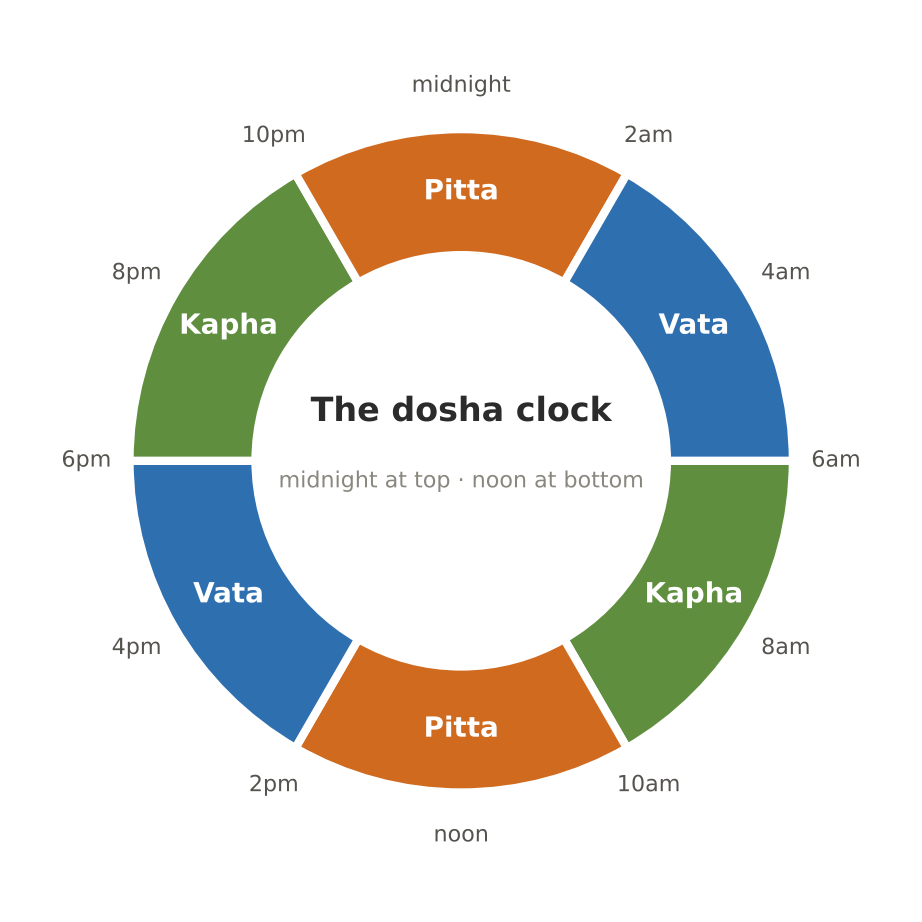
Figure. The dosha clock — each dosha governs two four-hour periods of the day
| Period | Dosha | What the body is doing | What to do | |
|---|---|---|---|---|
| 6–10 am | Kapha | Heaviness after sleep; slow digestion | Wake before 6, move the body, light breakfast | |
| 10 am–2 pm | Pitta | Digestive fire at its strongest | Main meal 12:00–1:30; focused work | |
| 2–6 pm | Vata | Lightness, mental activity; dryness rises | Warm drink and light snack; walks, study, creative work | |
| 6–10 pm | Kapha | Body slows and grows heavy | Light early dinner; unwind; sleep by 10 | |
| 10 pm–2 am | Pitta | Internal digestion and repair of tissues | Be asleep — late meals and screens disturb this | |
| 2–6 am | Vata | Lightness, alertness, dreaming | The best time for waking, prayer and meditation (brahma muhurta) |
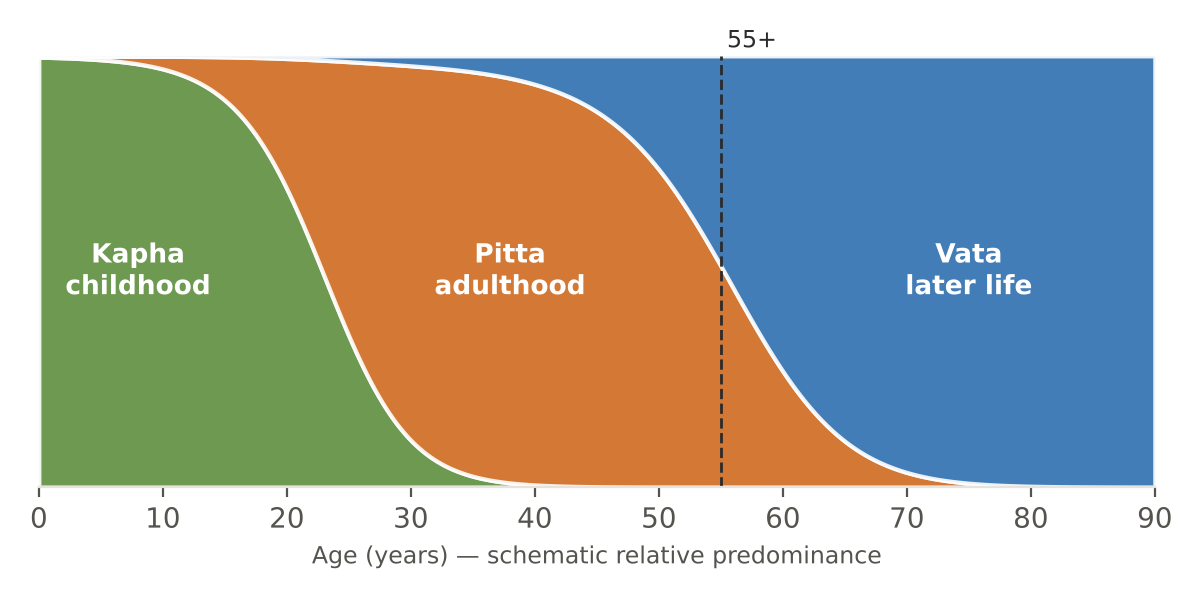
Figure. The doshas across the lifespan — later life is the Vata stage
Why the 55+ kitchen is a Vata kitchen
|