Volume I
The Twelve-Month Sattvic Menu Book
83 recipes · 12 months
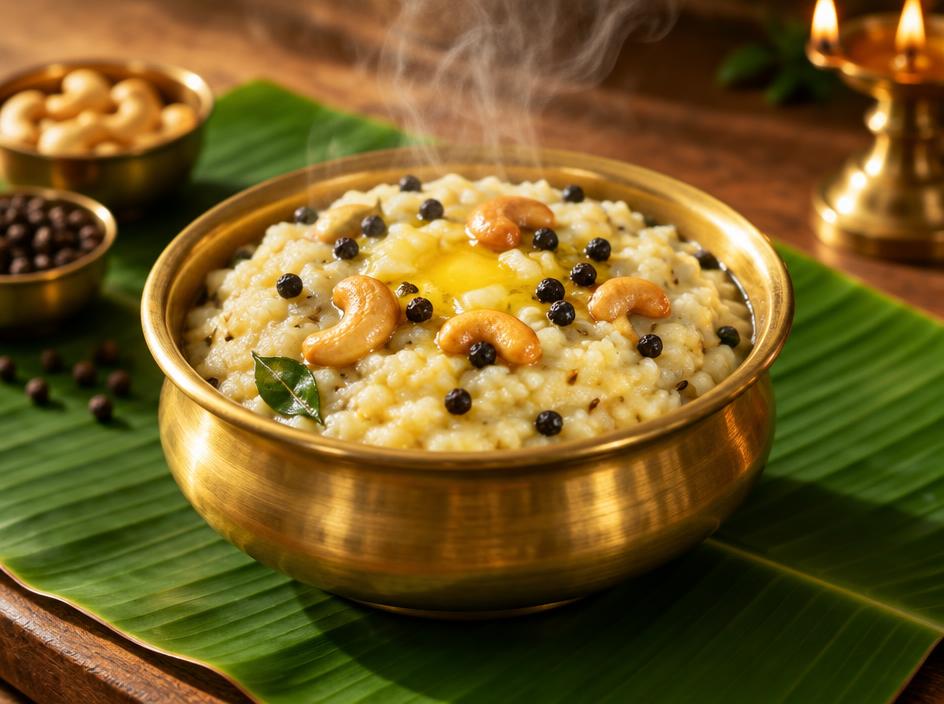
A full year of 7-day menus for guests over 55, with the foundations of portion, texture and nutrition.

Shree Shree Ma Anandamayee International Centre · Kankhal, Haridwar
Sattvic Ayurvedic food and living for the second half of life — every recipe, menu and teaching, openly shared.
Featured this season
Café & Stay
Dalia / Oats / Muesli, Bread, Butter & Jam, Fresh Fruits, Tea / Coffee / Milk
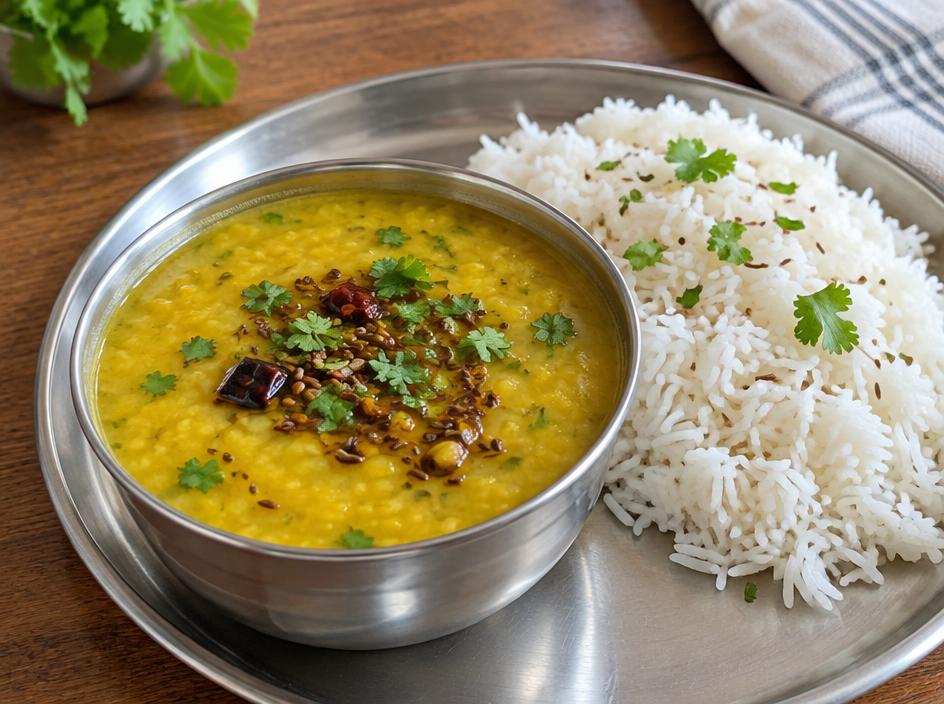
Rice, Dal (Lentils), Roti, 2 Seasonal Vegetables, Yogurt
Rice, Dal, Roti, 2 Seasonal Vegetables, Sweet
Fresh juices — seasonal fruits / cucumber (slow juicer) · Fruit salad bowl — seasonal fruits · Vegetable salad — seasonal vegetables · Light snacks — khichdi or poha
Abhyangam (full-body oil massage)
60 minutes; trained female Panchakarma therapist; for female guests only; indoor therapy with professional massage table; fresh towels provided
Yoga session
40 minutes; gentle, guided, suitable for all levels; English-speaking yoga trainer
Ayurveda consultation
External Ayurveda doctor consultation available on prior request
Additional therapies
Advanced Ayurvedic treatments available ~15 minutes away
Three volumes, one kitchen
Volume I
83 recipes · 12 months
A full year of 7-day menus for guests over 55, with the foundations of portion, texture and nutrition.
Volume II
169 recipes · 13 sections
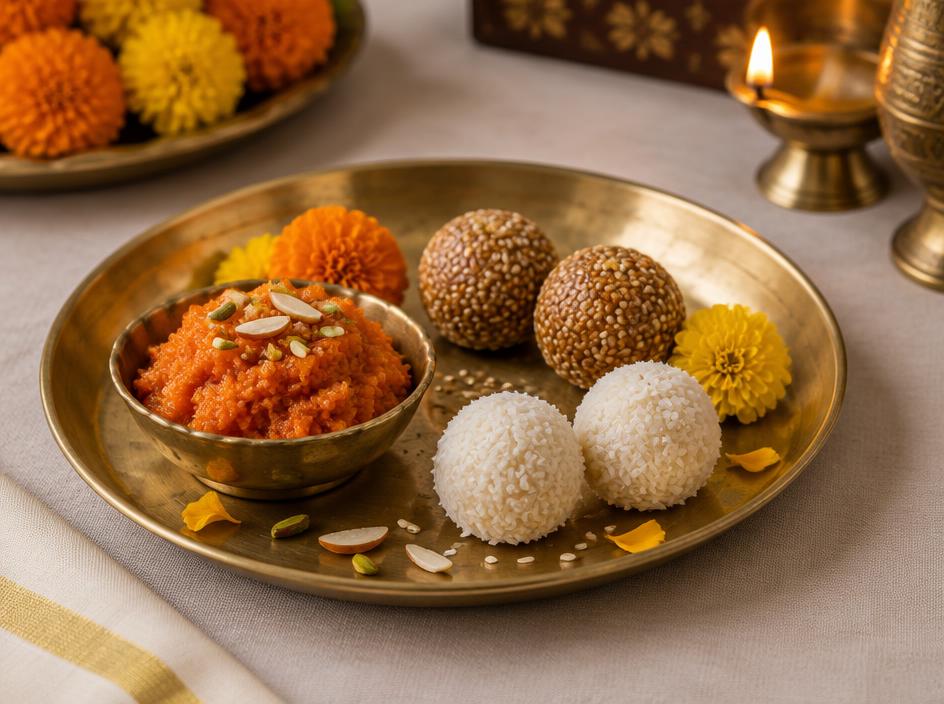
From the classical pathya kitchen to festival thalis — plus research, ingredient profiles, tools and cookware.
Volume III
64 chapters
Doshas, tastes and digestion; the rules of eating; daily rhythm, sleep and the six seasons of Haridwar.
Today at Annapurna Kitchen
Volume III · Chapter 1
Ayurveda — literally the knowledge (veda) of life (ayus) — is India's classical science of health. Its first aim, stated in the Charaka Samhita, is to protect the health of the healthy (swasthasya swasthya rakshanam); only its second is to relieve the disease of the sick. Food (ahara), daily and seasonal routine (vihara) and the state of the mind are its three main tools for the first aim. This volume is about those tools as they are lived out in a kitchen and a household — especially for people in the second half of life.
Sushruta describes a healthy person (swastha) as one whose doshas are in balance, whose digestive fire is even, whose tissues and wastes function properly, and whose senses, mind and spirit are content (prasanna). Notice that health here is not only the absence of disease: it includes good appetite and digestion, regular elimination, sound sleep, clarity and cheerfulness. Each of these is something a kitchen and a daily routine can support.
| Pillar | Sanskrit | What it means in daily life | Where in this volume |
|---|---|---|---|
| Food | Ahara | What, how much, when and how we eat | Parts II and III |
| Sleep | Nidra | Enough, at the right time, restful | Chapter 37 |
| Regulated living | Brahmacharya / sadvritta | Moderation of the senses and right conduct | Chapters 39–40 |
| Routine | Dinacharya, ritucharya | Living in rhythm with the day and the season | Chapters 33, 38 |
| Mind and spirit | Sattva, sadhana | Contentment, prayer, meditation, service | Chapters 31, 36, 42 |
The six ritus
mid-January to mid-March
Doshas: Kapha accumulating; Vata provoked by cold and dryness
Favour
Reduce
Garden to table
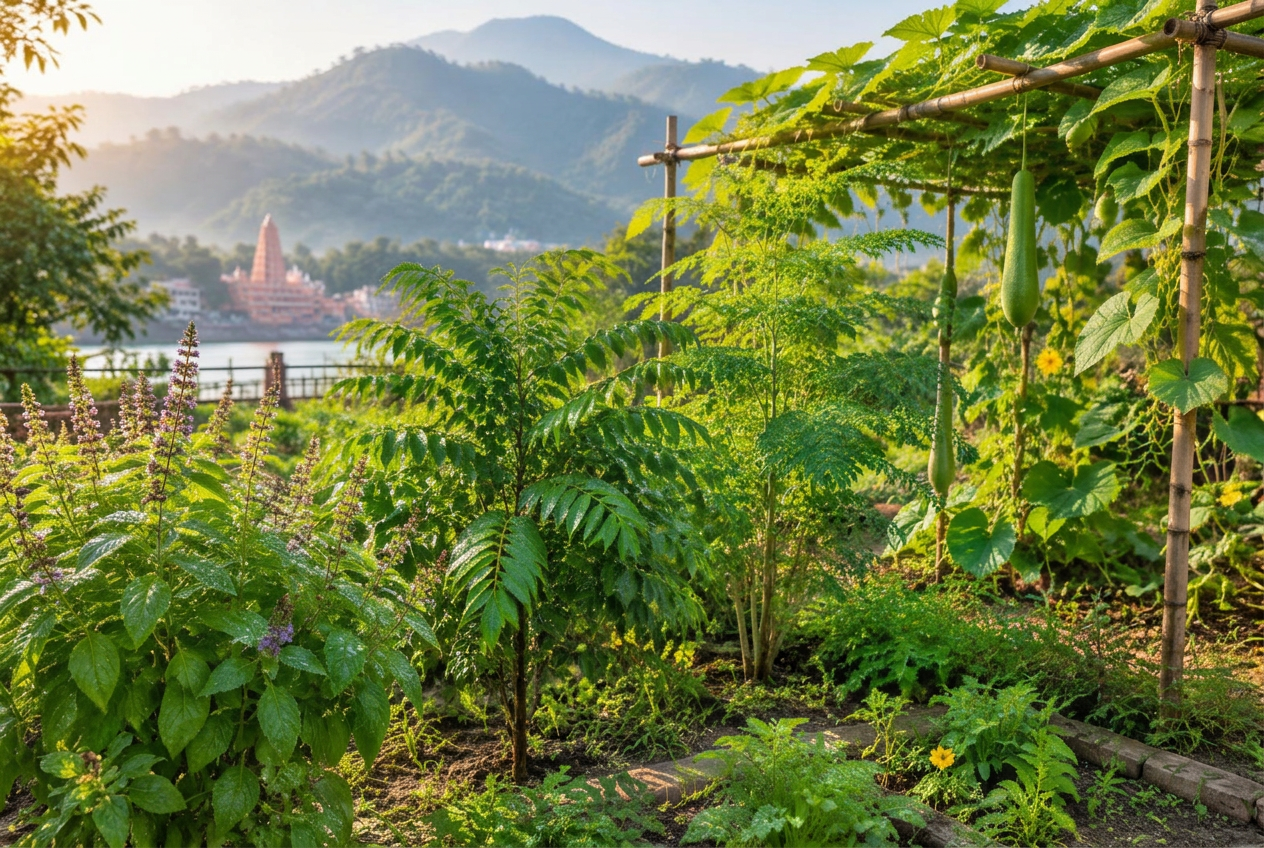
The Annamaya Living Food Forest and Ayurveda Garden is planned as a working model of India's edible, medicinal and sacred plant heritage — themed zones such as the Nakshatra and Navagraha vatikas, an Ayurveda dravya garden, a saag garden, fruit forest, spice and herb beds, millets and roots. For the kitchen it means one simple principle: let the garden, not the supplier, set the menu.
Visit the garden| Garden zone | What the kitchen receives | Typical dishes |
|---|---|---|
| Saag garden | Methi, palak, bathua, chaulai, moringa, curry leaf | Saags, dals, chillas, soups |
| Spice and herb beds | Tulsi, mint, lemongrass, coriander, fresh turmeric and ginger | Kadhas, chutneys, teas, tadka |
| Fruit forest | Amla, guava, papaya, banana, mango, bael, jamun, pomegranate | Murabba, chutneys, stewed fruit, sharbats |
| Vegetable beds | Gourds, pumpkin, okra, beans, roots by season | Everyday sabzis |
| Millets and grains | Ragi, jowar, foxtail, samak (trial plots) | Porridges, rotis, khichdi |
| Medicinal plants | Ashwagandha, brahmi, giloy (display and education) | Not used in cooking without a vaidya's advice |
From your kitchen to ours
We welcome your suggestions and sattvic recipe additions.
info@ssmaic.org