33. Dinacharya — The Daily Routine
Ayurveda considers the daily routine the most powerful preventive medicine: it entrains the body's rhythms, steadies Vata and frees the mind. Charaka begins his description of healthy living with it. The routine below is the classical sequence adapted for people over 55 at the Centre — gentle, flexible, and safe. Nobody needs to adopt all of it at once; even three steps done every day (waking early, warm water, an early dinner) change how one feels within weeks.
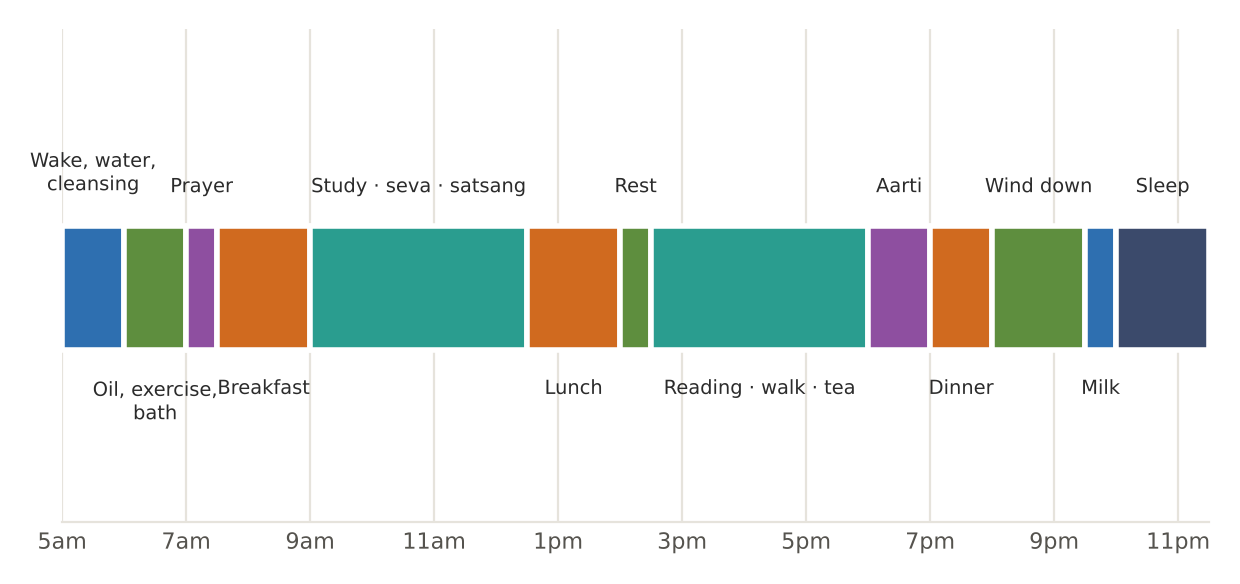
Figure. A day in rhythm — the dinacharya at a glance
| Time | Practice | How | Why | Notes for 55+ | |
|---|---|---|---|---|---|
| 5:00–6:00 am | Wake in brahma muhurta | Wake about 1½ hours before sunrise (two muhurtas of 48 min); sit up slowly | Vata time: lightness, clarity, ideal for prayer | Sit on the bed edge for a minute before standing (prevents dizziness) | |
| On waking | Remember the divine; observe the body | A short prayer or intention; notice digestion of last night's meal | Begins the day in sattva | — | |
| On waking | Warm water | 1 glass of warm water, plain or with cumin–ginger | Awakens agni; prompts bowel movement | Sip slowly | |
| Morning | Elimination | Unhurried, without straining | Apana vata regularity | Footstool under the feet helps; no straining (BP) | |
| Morning | Teeth and tongue | Soft brush or traditional twig (neem, babool); then tongue scraper, 7–10 gentle strokes back to front | Removes coating (ama) and odour-causing residue | A study found scraping reduced odour compounds more than a toothbrush [2] | |
| Morning | Oil pulling (gandusha / kavala) | 1 tbsp sesame or coconut oil swished 5–10 min; spit into a bin (not the drain); rinse | Traditionally for teeth, gums, voice and jaw | Evidence is limited; never replaces brushing [3]; avoid if swallowing is unsafe | |
| Morning | Eyes and face | Splash eyes with cool water; rinse face | Refreshes alochaka pitta | — | |
| Morning | Nasya (optional) | 2 drops of warm sesame or medicated oil (anu taila) per nostril | Lubricates nasal passages; classical for head and senses | Only after learning from a vaidya; not with cold, fever or after meals | |
| Morning | Abhyanga (oil massage) | Warm oil over the body 10–20 min before bath (Chapter 34) | Pacifies Vata; nourishes skin, joints, sleep | Non-slip mat; sit while oiling feet | |
| Morning | Gentle exercise (vyayama) | 20–40 min: walking, chair yoga, balance work (Chapter 35) | Strength, circulation, digestion | To half capacity — light sweat on the forehead, breathing comfortable | |
| Morning | Bath (snana) | Warm water on the body; lukewarm, not hot, on the head | Cleansing, refreshing, appetite | Grab bars; non-slip mat; avoid very hot water | |
| Morning | Prayer, meditation, pranayama | 15–30 min (Chapter 36) | Calms mind; sets the day's tone | Seated on a chair is fine | |
| 7:30–9:00 am | Breakfast | Warm, moderate | — | — | |
| Morning | Work, study, seva, satsang | Purposeful activity | Sattva; meaning | Rest when tired | |
| 12:30–2:30 pm | Lunch — main meal | All six tastes | Pitta time, strongest agni | — | |
| After lunch | Hundred steps; rest | Short walk; then rest sitting or lying on the left side 15–20 min | Digestion | Charaka permits day sleep for the elderly and weak, and for all in summer — keep it short | |
| Afternoon | Reading, satsang, light activity | — | Vata time: mental clarity | Warm drink at 4 pm | |
| Sunset | Evening prayer, aarti, lamp | Ganga aarti at Har-ki-Pauri or the Centre's own | Transition into evening | — | |
| 7:00–7:30 pm | Light dinner | Soup, khichdi, kanji | Before Kapha slows digestion | At least 2–3 h before sleep | |
| Evening | Gentle walk; family time; reading | No screens in the last hour | Wind down | — | |
| 9:30 pm | Golden milk; foot massage | Warm oil on soles | Sleep | — | |
| By 10:00 pm | Sleep | Dark, quiet, cool room | Pitta time repair | 7–8 hours [4] |
Three-step starter routine for new guests
|