21. Cooking Methods Compared
Ayurveda prefers cooking that makes food lighter and easier to digest while keeping it moist. Modern nutrition adds a concern for keeping vitamins and avoiding harmful compounds from very high heat. The table brings both together.
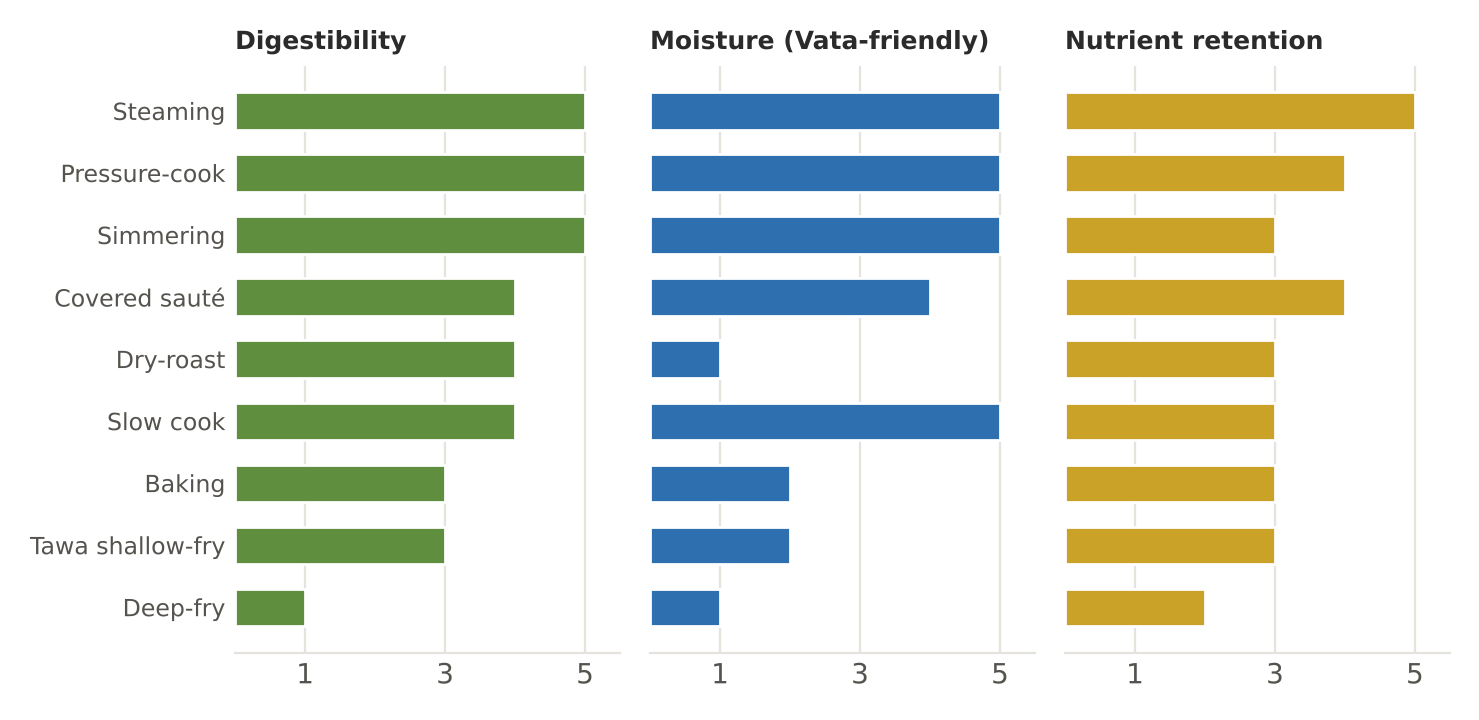
Figure. Cooking methods rated for digestibility, moisture and nutrient retention (kitchen guide, 1–5)
| Method | Ayurvedic quality | Best for | Nutrient note | Elders | |
|---|---|---|---|---|---|
| Steaming | Light, moist | Idli, dhokla, vegetables, koftas | Good retention of water-soluble vitamins | Excellent | |
| Pressure-cooking | Soft, quick | Dal, khichdi, rice, tubers | Shorter time; good retention; deactivates anti-nutrients in pulses | Excellent | |
| Simmering / boiling | Moist, light | Soups, kanji, kheer | Vitamins leach into water — serve the liquid | Excellent | |
| Covered sautéing (sabzi) | Moderately light with ghee | Everyday vegetables | Moderate; short cooking keeps colour | Very good | |
| Dry-roasting | Very light, drying | Grains, spices, makhana | — | Good (add ghee for Vata) | |
| Slow cooking (handi, dum) | Soft, deep flavour | Dals, undhiyu, kheer | Long times reduce some vitamins | Good | |
| Baking | Drying | Handvo, tikkis | Moderate | Good with moist sides | |
| Shallow-frying on tawa | Heavier | Paratha, cheela | Uses more fat | Occasional | |
| Deep-frying | Heavy, tamasic when repeated | Festival puri, pakora | Absorbs fat; reused oil forms harmful compounds | Rarely; token portions | |
| Microwave reheating | Not addressed classically | Reheating single portions | Fast; uneven heating | Stir and check ≥ 75 °C |