A5. The Classical Restorative Foods of Ayurveda
Ayurveda describes a series of rice preparations of increasing thickness used during recovery: manda (the clear liquid), peya (thin gruel), vilepi (thick gruel) and odana (cooked rice). Published summaries give differing water ratios — one lists manda at about 14 times water and yavagu at about 6 times [7], while another describes manda as the first food given when digestion is weak and vilepi as strengthening and binding. [8] The kitchen ratios in Section 1 are practical choices within these descriptions.
| Preparation | What it is | Kitchen ratio used here | Classical use |
|---|---|---|---|
| Manda | Clear liquid strained from boiled rice | 1 : 14 | First food when agni is weak; after fasting or treatment |
| Peya | Thin gruel with some grains | ≈ 1 : 11 | Thirst, weakness, mild fever, indigestion |
| Vilepi | Thick porridge, little free water | 1 : 4 | Strengthening; binding in loose motions |
| Yavagu | Gruel of barley or rice, often with herbs/spices | ≈ 1 : 12 (barley) | Kapha conditions; spring |
| Yusha | Thin soup of pulses (moong, kulattha) | ≈ 1 : 12 | Light protein during recovery |
| Krishara | Rice–pulse khichdi | 1 : 4 (house) | Nourishing one-pot meal |
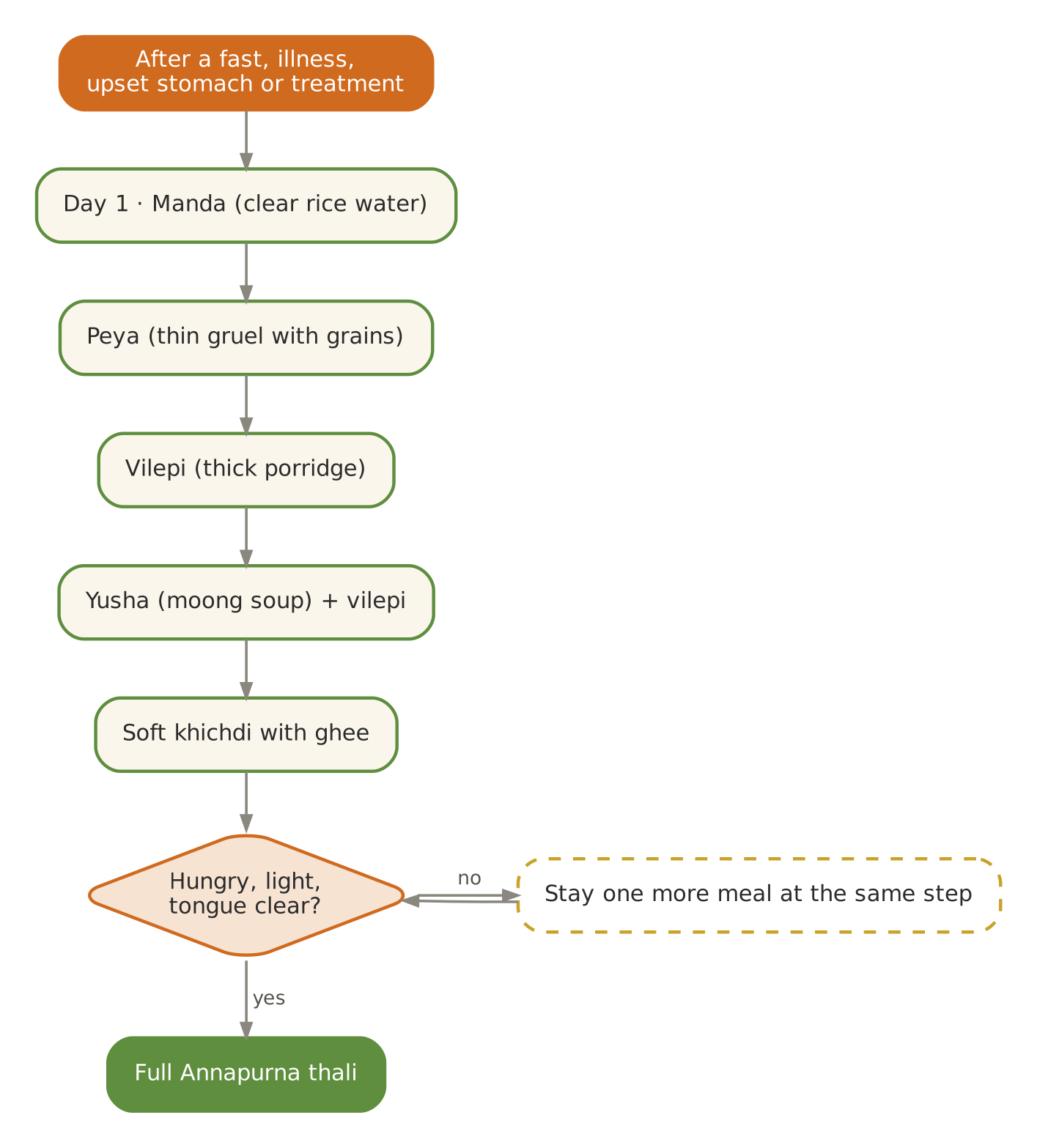 Figure A4. Samsarjana krama — the graduated return to normal food | Ayurveda Aahara and the law India's Food Safety and Standards (Ayurveda Aahara) Regulations, 2022 recognise foods prepared according to classical Ayurvedic texts. [9] In 2025 FSSAI and the Ministry of Ayush issued a definitive list of such preparations (Category A) to guide food businesses. [10] For a guesthouse kitchen this is reassurance that dishes like manda, peya and yusha are part of a recognised food tradition. The kitchen should still avoid medicinal claims on menus, and medicinal herb gruels (such as Kerala's Karkidaka kanji kits) are served only on an Ayurvedic physician's advice. [11] |