October — Cooling Sweetness — Navratri & Sharad Purnima
| Hindu months | Ashwin – Kartik |
| Ayurvedic season | Sharad (autumn) |
| Haridwar weather | ≈ 18 – 30 °C, clear skies, warm days, cool nights |
| Agni (digestion) | Improving steadily |
| Dosha picture | Pitta at its peak (the 'October heat' after rains) |
| Favour | Sweet, bitter, astringent; ghee, milk, rice, moong, amla; mildly cooling |
| Limit | Chilli, sour pickles, excess salt, fermented food, curd at night, sun exposure at midday |
In season
| Vegetables & greens | Fruit | Pantry & other |
|---|---|---|
| Lauki, kaddu, sweet potato, singhara, arbi, early spinach & methi, beans, raw banana | Pomegranate, guava, custard apple (sitaphal), apple, early amla, banana | Samak rice, kuttu, rajgira, makhana (Navratri) |
Festivals & observances
| Occasion | Kitchen response |
|---|---|
| Sharad Navratri (Ashwin Shukla) | Nine-day phalahari menu: samak khichdi, rajgira porridge, kuttu cheela, sabudana khichdi, makhana kheer, aloo–dahi (lunch). |
| Dussehra | Jalebi substitute: soft kesari; festive sattvic thali. |
| Sharad Purnima | Rice kheer kept briefly under moonlight — a Pitta-cooling tradition. |
| Karva Chauth / Diwali preparations | Soft mithai planning — see November. |
Kitchen guidance for October
-
Ghee is the Sharad medicine — ½ tsp on rice and dal; reduce oil.
-
Navratri: keep a full phalahari track daily; ensure protein (milk, paneer, makhana, rajgira).
-
Bitter and astringent: pomegranate, amla, karela, lauki daily.
-
Avoid fasting elders skipping fluids; offer coconut water and takra.
Daily rituals: on waking — Room-temperature water with soaked raisins (8–10) eaten; at bedtime — Warm milk with ghee and a pinch of cardamom.
Seven-day menu — October
Rotate weekly; swap any item for one from 'Further dishes & variations' at the end of this chapter. Lunch always includes rice and phulka; curd/raita is served at lunch only.
| Day | Breakfast 7:30–9:00 | Lunch thali 12:30–2:30 | Evening 4:00 | Dinner 7:00–8:30 |
|---|---|---|---|---|
| Monday | Rajgira–milk porridge with dates | Whole green moong dal · Sattvic palak paneer · Kaddu khatta-meetha · rice & phulka · Lauki raita (lunch) | Roasted shakarkandi chaat | Samak rice khichdi · sweet: Sharad Purnima kheer (80 ml) |
| Tuesday | Samak upma · pomegranate | Lauki–moong dal · Arbi ajwaini · Lauki–peas · rice & phulka · Pomegranate raita | Coconut water | Moong khichdi · sweet: Makhana kheer |
| Wednesday | Kuttu–lauki chilla (vrat) · curd | Kerala parippu · Shakarkandi–singhara sabzi · Raw-banana poriyal · rice & phulka · Coconut chutney | Roasted makhana | Lauki soup · phulka · sweet: Singhara halwa (40 g) |
| Thursday | Sabudana khichdi (soft) · banana | Moong yusha · Beans thoran · Bhindi with coconut · rice & phulka · Mint–coriander chutney | Pomegranate juice (fresh, room temp.) | Kanji with ghee · sweet: Coconut ladoo |
| Friday | Moong dal chilla · coconut chutney | Masoor–lauki · Paneer–capsicum (light) · Karela with jaggery · rice & phulka · Spiced takra | Badam milk | Pumpkin soup · rice · sweet: Rajgira ladoo (soft) |
| Saturday | Rice idli · coconut chutney | Toor dal (mild) · Sattvic palak paneer · Kaddu khatta-meetha · rice & phulka · Lauki raita (lunch) | Banana–cardamom | Moong yusha · ghee rice · sweet: Sitaphal rabdi (light) |
| Sunday | Oats porridge · guava | Aloo–dahi curry (vrat, lunch) · Arbi ajwaini · Lauki–peas · rice & phulka · Pomegranate raita | CCF tea | Namkeen dalia · sweet: Kesari (40 g) |
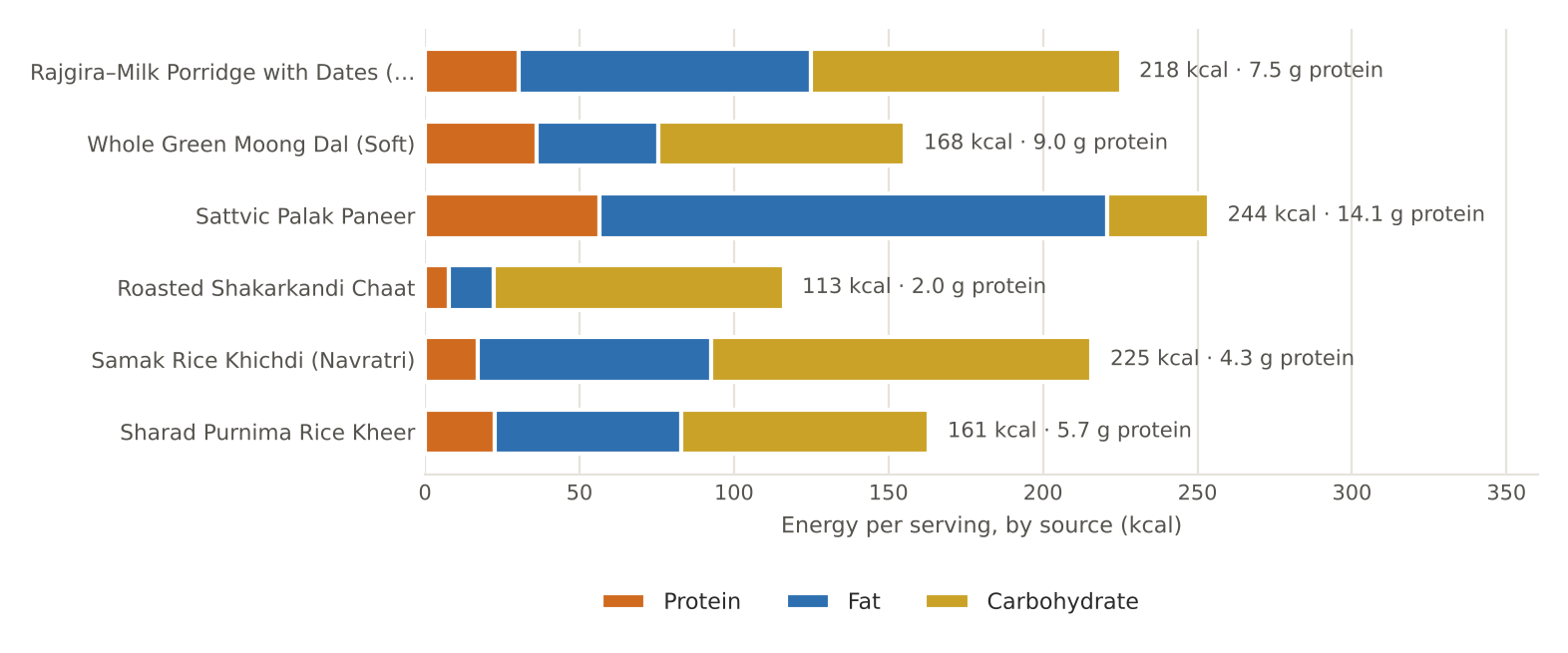
Figure. October's featured recipes — energy per serving by source, with protein
October recipes
Rajgira–Milk Porridge with Dates (Navratri)
BREAKFAST · Serves 4 · Portion: 200 ml bowl · Cook 15 min
Texture: Smooth porridge Dosha: Nourishing; Pitta & Vata pacifying
| Ingredient | Household measure | Base qty | Café batch ×5 |
|---|---|---|---|
| Amaranth (rajgira) flour | ½ cup amaranth flour | 60 g | 300 g |
| Ghee (cow) | 2 tsp | 10 g | 50 g |
| Cow's milk, whole | 2½ cups, warm | 600 ml | 3,000 ml |
| Dates, seedless | 5 seedless, chopped | 40 g | 200 g |
| Green cardamom | ⅛ tsp | 0.5 g | 2.5 g |
| Almonds | 8, slivered | 10 g | 50 g |
Method
1. Roast rajgira flour in ghee on low 5 minutes until nutty.
2. Add warm milk gradually, whisking to avoid lumps.
3. Cook 6 minutes, stirring, until creamy.
4. Add dates and cardamom; simmer 1 minute.
5. Top with almonds.
| Per serving | Energy 218 kcal | Protein 7.5 g | Fat 10.5 g | Carbs 25.1 g | Fibre 2.1 g | Salt 0.0 g |
Care notes for 55+ guests Amaranth is a complete-protein pseudo-grain, permitted on fasts — a valuable Navratri protein. | Ayurvedic note Light yet nourishing; dates and milk cool Sharad Pitta. |
Variations & further ideas: Rajgira ladoo (soft) · Rajgira thepla (vrat) · Rajgira kheer · Popped amaranth with milk
Whole Green Moong Dal (Soft)
LUNCH · DAL · Serves 4 · Portion: 1 katori (≈180 g) · Soak 6 h · Cook 40 min
Texture: Soft Dosha: Tridoshic; cooling
| Ingredient | Household measure | Base qty | Café batch ×5 |
|---|---|---|---|
| Moong, whole green | ¾ cup, soaked 6 h | 150 g | 750 g |
| Water | 3¾ cups | 900 ml | 4,500 ml |
| Turmeric powder | ¼ tsp | 1 g | 5 g |
| Rock salt (sendha namak) | ¾ tsp | 4 g | 20 g |
| Ghee (cow) | 1 tbsp | 15 g | 75 g |
| Cumin (jeera) | ½ tsp | 2 g | 10 g |
| Asafoetida (hing) | 1 pinch | 0.3 g | 1.5 g |
| Ginger, fresh | 2 tsp grated | 10 g | 50 g |
| Tomato | ½ medium (optional) | 60 g | 300 g |
| Coriander seed / powder | 1 tsp | 2 g | 10 g |
| Sattvic garam masala (no onion-garlic) | ⅛ tsp | 0.5 g | 2.5 g |
| Coriander leaves | 2 tbsp | 8 g | 40 g |
| Lemon juice | 2 tsp | 10 ml | 50 ml |
Method
1. Pressure-cook soaked moong with water and turmeric — 6 whistles until grains burst.
2. Mash about a third against the pot for body.
3. Tadka: ghee, cumin, hing, ginger, tomato until soft; coriander powder.
4. Pour in, add salt; simmer 5 minutes.
5. Finish with garam masala, coriander and lemon.
| Per serving | Energy 168 kcal | Protein 9.0 g | Fat 4.4 g | Carbs 20.0 g | Fibre 6.7 g | Salt 1.0 g |
Care notes for 55+ guests Soaking and long cooking make whole moong as digestible as split; the skins give extra fibre. | Ayurvedic note Mudga is the most praised pulse in Ayurveda — light, cooling and tridoshic. |
Variations & further ideas: Moong usal (soft) · Moong–spinach · Sabut moong khichdi · Moong soup
Sattvic Palak Paneer
LUNCH · SABZI · Serves 4 · Portion: 1 katori (≈160 g) · Cook 30 min
Texture: Smooth gravy, soft paneer Dosha: Balancing; protein-rich
| Ingredient | Household measure | Base qty | Café batch ×5 |
|---|---|---|---|
| Spinach (palak) | 2 bunches | 500 g | 2,500 g |
| Paneer (cow's milk) | 1-inch cubes | 200 g | 1,000 g |
| Ghee (cow) | 4 tsp | 20 g | 100 g |
| Cumin (jeera) | ½ tsp | 2 g | 10 g |
| Asafoetida (hing) | 1 pinch | 0.3 g | 1.5 g |
| Ginger, fresh | 1 tbsp | 15 g | 75 g |
| Green chilli (optional, deseeded) | ½ (optional) | 2 g | 10 g |
| Cashew nuts | 10, soaked | 15 g | 75 g |
| Coriander seed / powder | 1 tsp | 2 g | 10 g |
| Sattvic garam masala (no onion-garlic) | ⅛ tsp | 0.5 g | 2.5 g |
| Water | scant ½ cup | 100 ml | 500 ml |
| Cow's milk, whole | ¼ cup (in place of cream) | 60 ml | 300 ml |
| Rock salt (sendha namak) | ¾ tsp | 3.5 g | 18 g |
Method
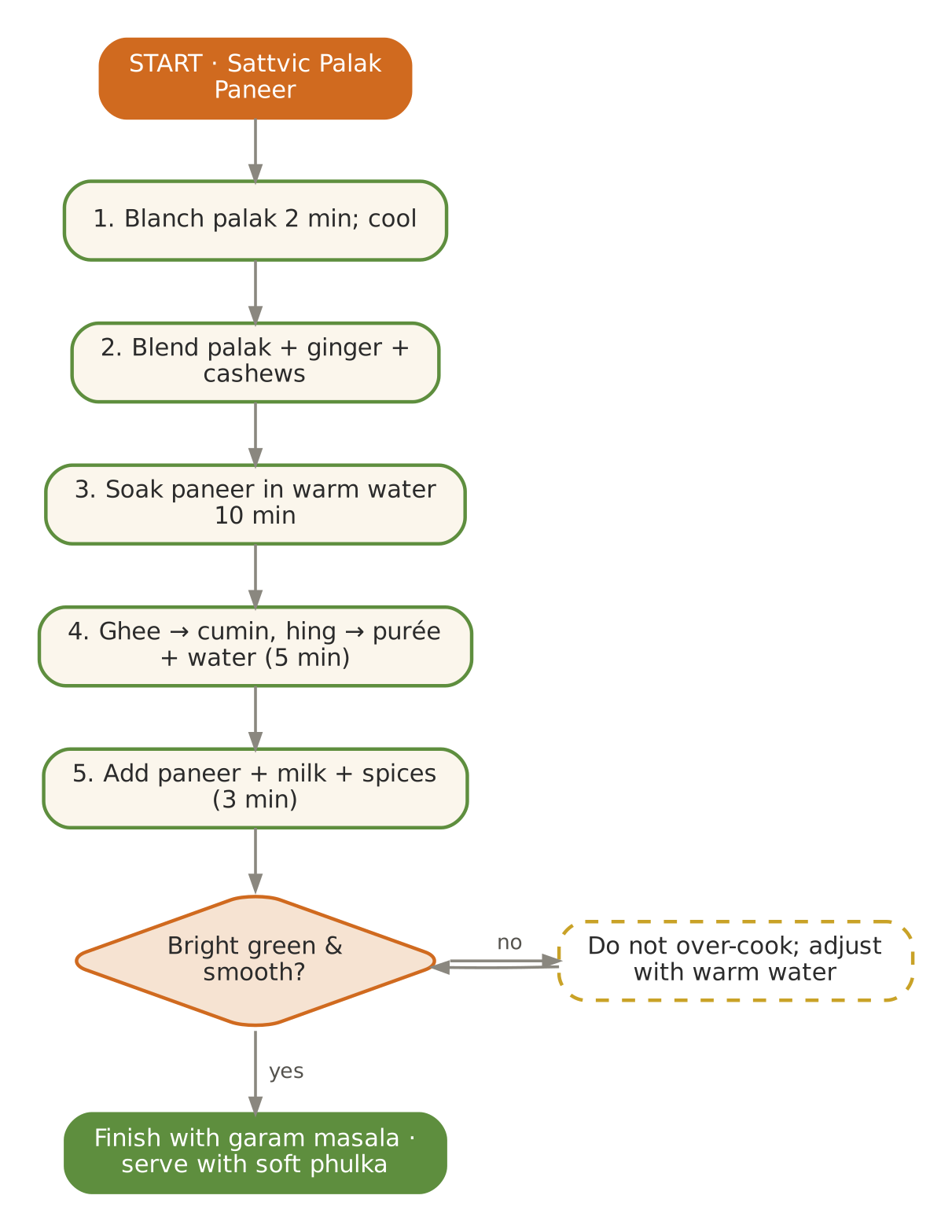
1. Blanch palak 2 minutes; drain and cool in plain water.
2. Blend palak with ginger, chilli and soaked cashews to a smooth purée.
3. Soak paneer cubes in warm water 10 minutes (keeps them soft).
4. Heat ghee; cumin and hing; add purée and water; simmer 5 minutes.
5. Add coriander powder, salt and paneer; add milk; simmer 3 minutes; finish with garam masala.
| Per serving | Energy 244 kcal | Protein 14.1 g | Fat 18.2 g | Carbs 8.3 g | Fibre 3.3 g | Salt 0.9 g |
Care notes for 55+ guests Each serving gives roughly a third of the day's protein need for many older adults; paneer soaked in warm water stays tender. | Ayurvedic note Cooked palak with ghee is far gentler than raw; paneer is nourishing (brimhana). |
Variations & further ideas: Palak–makhana · Methi–malai paneer (light) · Paneer bhurji (no onion) · Matar paneer
Roasted Shakarkandi Chaat
EVENING · SNACK · Serves 4 · Portion: ≈110 g · Cook 30 min
Texture: Soft Dosha: Vata-pacifying, sweet
| Ingredient | Household measure | Base qty | Café batch ×5 |
|---|---|---|---|
| Sweet potato (shakarkandi) | 2 medium | 400 g | 2,000 g |
| Ghee (cow) | 1 tsp | 5 g | 25 g |
| Cumin (jeera) | ½ tsp roasted, powdered | 2 g | 10 g |
| Black pepper | ¼ tsp | 0.5 g | 2.5 g |
| Rock salt (sendha namak) | ⅓ tsp rock salt | 2 g | 10 g |
| Lemon juice | 1 tbsp | 15 ml | 75 ml |
| Pomegranate arils | ½ cup arils | 60 g | 300 g |
| Coriander leaves | 1 tbsp | 5 g | 25 g |
Method
1. Steam or roast sweet potatoes 25 minutes until fully soft.
2. Peel and cut into cubes.
3. Toss with ghee, roasted cumin, pepper, rock salt and lemon.
4. Top with pomegranate and coriander; serve warm.
| Per serving | Energy 113 kcal | Protein 2.0 g | Fat 1.6 g | Carbs 23.5 g | Fibre 3.8 g | Salt 0.5 g |
Care notes for 55+ guests Steaming gives the softest result. A fibre- and beta-carotene-rich snack. | Ayurvedic note Sweet potato is sweet and grounding; pomegranate balances Pitta. |
Variations & further ideas: Shakarkandi kheer · Sweet-potato tikki (baked) · Shakarkandi halwa · Sweet-potato soup
Samak Rice Khichdi (Navratri)
DINNER · Serves 4 · Portion: 1 bowl (≈250 g) · Soak 20 min · Cook 25 min
Texture: Soft Dosha: Light; vrat-friendly
| Ingredient | Household measure | Base qty | Café batch ×5 |
|---|---|---|---|
| Barnyard millet (samak rice) | ¾ cup barnyard millet | 150 g | 750 g |
| Ghee (cow) | 4 tsp | 20 g | 100 g |
| Cumin (jeera) | ½ tsp | 2 g | 10 g |
| Ginger, fresh | 2 tsp grated | 10 g | 50 g |
| Green chilli (optional, deseeded) | ½ (optional) | 2 g | 10 g |
| Potato | 1 small, diced | 100 g | 500 g |
| Water | 2½ cups (4 : 1) | 600 ml | 3,000 ml |
| Rock salt (sendha namak) | ¾ tsp rock salt (sendha) only | 3.5 g | 18 g |
| Peanuts | 2 tbsp roasted, powdered | 20 g | 100 g |
| Black pepper | ¼ tsp | 0.5 g | 2.5 g |
| Lemon juice | 2 tsp | 10 ml | 50 ml |
| Coriander leaves | 1 tbsp | 5 g | 25 g |
Method
1. Wash samak and soak 20 minutes; drain.
2. Heat ghee; cumin, ginger and chilli; add potato and sauté 3 minutes.
3. Add samak, water and rock salt; cover and simmer 12–15 minutes until soft.
4. Stir in powdered peanuts, pepper and lemon; loosen with hot water if needed.
5. Garnish with coriander.
| Per serving | Energy 225 kcal | Protein 4.3 g | Fat 8.4 g | Carbs 30.8 g | Fibre 4.9 g | Salt 0.9 g |
Care notes for 55+ guests Peanuts are powdered (never whole) for safe swallowing. Serve with curd only at lunch. | Ayurvedic note Barnyard millet is light, quick to digest and permitted on fasts. |
Variations & further ideas: Samak pulao · Samak kheer · Samak dosa (vrat) · Samak upma
Sharad Purnima Rice Kheer
SWEET · Serves 8 · Portion: 100 ml · Cook 55 min
Texture: Creamy Dosha: Cooling; Pitta-pacifying
| Ingredient | Household measure | Base qty | Café batch ×5 |
|---|---|---|---|
| Cow's milk, whole | 5 cups | 1,200 ml | 6,000 ml |
| Rice, white basmati (raw) | ¼ cup, soaked 20 min | 50 g | 250 g |
| Mishri / sugar | ⅓ cup | 60 g | 300 g |
| Green cardamom | ¼ tsp | 1 g | 5 g |
| Saffron (kesar) | 10–12 strands | 0.1 g | 0.5 g |
| Almonds | 10, slivered | 15 g | 75 g |
Method
1. Simmer milk 10 minutes.
2. Add rice; cook on low 40 minutes, stirring often, until the rice dissolves and milk reduces by about half.
3. Add mishri; cook 3 minutes.
4. Add saffron and cardamom; garnish with almonds.
5. Tradition: keep covered with muslin in moonlight up to 2 hours, then refrigerate; bring to room temperature to serve next morning.
| Per serving | Energy 161 kcal | Protein 5.7 g | Fat 6.7 g | Carbs 20.1 g | Fibre 0.4 g | Salt 0.0 g |
Care notes for 55+ guests Food safety first: never leave milk dishes out overnight. Diabetic portion 50 ml. | Ayurvedic note Moonlight, milk and rice — the classic Sharad remedy for accumulated Pitta. |
Variations & further ideas: Chawal ki kheer with jaggery (winter) · Makhana kheer · Sabudana kheer · Lauki kheer
Signature process & further dishes — October
 Signature dish: Sattvic Palak Paneer | Further dishes & variations Breakfast Kuttu cheela with lauki (vrat) · Sabudana–makhana khichdi · Singhara-atta porridge · Samak dosa · Poha with pomegranate Dals & Saags Aloo–dahi curry (vrat, lunch) · Moong usal · Lauki–moong · Moong–spinach · Parippu Sabzis Shakarkandi–singhara · Vrat aloo jeera (rock salt) · Paneer–capsicum · Kaddu ki sabzi (vrat) · Arbi (vrat) Evening Sitaphal (custard apple) pulp with milk · Makhana chaat · Coconut water · Pomegranate · Singhara (boiled) chaat Light Dinners Sabudana khichdi (soft) · Samak pulao · Lauki soup · Kanji Sweets & Digestives Singhara halwa · Rajgira ladoo · Coconut barfi · Sitaphal rabdi (light) · Saunf–mishri |