April — Gentle Cooling & the New Wheat
| Hindu months | Chaitra – Vaishakh |
| Ayurvedic season | Vasanta → Grishma (spring to early summer) |
| Haridwar weather | ≈ 18 – 34 °C, warm dry days, hot afternoons |
| Agni (digestion) | Moderate, starting to dip with heat |
| Dosha picture | Kapha settling; Pitta and Vata (dryness) begin to rise |
| Favour | Sweet, bitter, astringent; light, slightly cooling, freshly cooked |
| Limit | Very spicy, sour or salty food, fermented items in excess, heavy fried snacks |
In season
| Vegetables & greens | Fruit | Pantry & other |
|---|---|---|
| Lauki, tinda, torai, early bhindi, cucumber, raw mango, drumstick, mint, green coriander | Watermelon (late), muskmelon, papaya, banana, last oranges, mulberry | New-crop wheat, sattu, jau |
Festivals & observances
| Occasion | Kitchen response |
|---|---|
| Baisakhi (13–14 Apr) | New-wheat celebration: soft atta phulka, kadhi–chawal, sweet meethe chawal; Haridwar Ganga snan. |
| Ram Navami (Chaitra Navratri, lunar) | Panakam (jaggery–ginger–cardamom water), kosambari (soaked moong salad — serve lightly steamed), neer mor. |
| Hanuman Jayanti (lunar) | Boondi-free besan ladoo (soft), banana, prasad halwa. |
Kitchen guidance for April
-
Shift from warming to neutral foods: moong, lauki, tinda, rice.
-
Introduce cooling drinks at room temperature: sattu sharbat, panakam, takra.
-
Fluid target 1.5–2 L/day for most guests — elders lose thirst sensation; offer drinks proactively.
-
Keep salt modest but replace electrolytes with buttermilk and lemon water.
Daily rituals: on waking — Room-temperature water with a few soaked coriander seeds (dhaniya water); at bedtime — Warm milk with a pinch of cardamom (100–150 ml).
Seven-day menu — April
Rotate weekly; swap any item for one from 'Further dishes & variations' at the end of this chapter. Lunch always includes rice and phulka; curd/raita is served at lunch only.
| Day | Breakfast 7:30–9:00 | Lunch thali 12:30–2:30 | Evening 4:00 | Dinner 7:00–8:30 |
|---|---|---|---|---|
| Monday | Lemon–peas poha · papaya | Lauki–moong dal · Tinda masala · Lauki–chana · rice & phulka · Kheera raita (room temp.) | Sattu sharbat (salted) | Moong yusha · soft phulka · sweet: Gulkand–rose phirni (80 ml) |
| Tuesday | Moong dal chilla · mint chutney | Yellow moong tadka · Torai–moong · Bhindi with coconut · rice & phulka · Pudina takra | Panakam | Lauki–moong khichdi · sweet: Rice kheer (60 ml) |
| Wednesday | Rava idli · coconut chutney | Toor dal (mild) · Kaddu khatta-meetha · Parwal sabzi · rice & phulka · Raw-mango chutney (small) | Roasted makhana | Namkeen dalia · sweet: Atta sheera (40 g) |
| Thursday | Sweet dalia with dates · banana | Kadhi (no pakora) · Aloo–jeera (light) · Raw-mango–kaddu · rice & phulka · Lauki raita | Stewed apple | Rasam · soft rice · sweet: Coconut ladoo (1 small) |
| Friday | Vegetable upma · muskmelon | Masoor–lauki dal · Beans–carrot thoran · Kundru (soft) · rice & phulka · Coriander chutney | Coconut water with lime | Vegetable soup · phulka · sweet: Banana–date mash |
| Saturday | Ragi porridge with jaggery | Moong with drumstick · Tinda masala · Lauki–chana · rice & phulka · Kheera raita (room temp.) | CCF tea | Moong dal · ghee rice · sweet: Mango phirni (end Apr) |
| Sunday | Soft besan–lauki chilla · curd | Whole moong (soft) · Torai–moong · Bhindi with coconut · rice & phulka · Pudina takra | Muskmelon cubes | Torai–dal · phulka · sweet: Gulkand (1 tsp) |
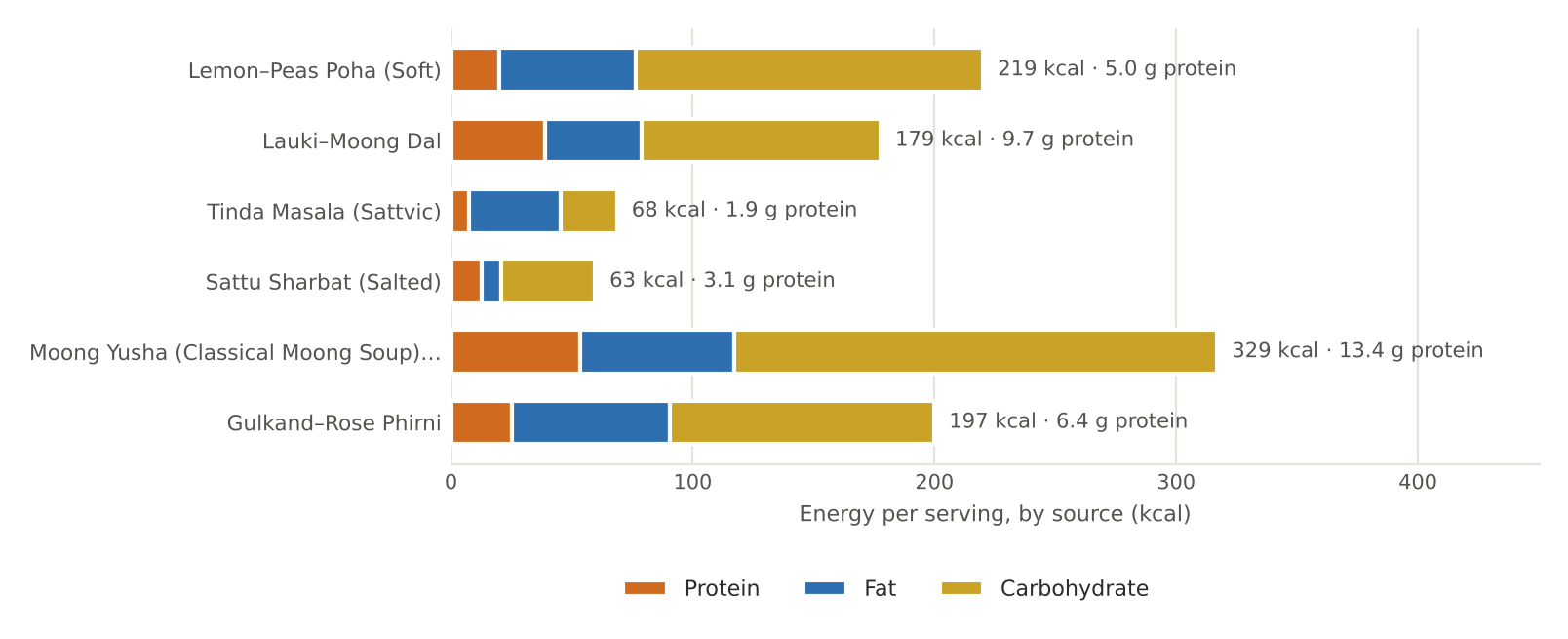
Figure. April's featured recipes — energy per serving by source, with protein
April recipes
Lemon–Peas Poha (Soft)
BREAKFAST · Serves 4 · Portion: 1 plate (≈180 g) · Cook 20 min
Texture: Soft Dosha: Light; balances Pitta & Kapha
| Ingredient | Household measure | Base qty | Café batch ×5 |
|---|---|---|---|
| Poha (flattened rice) | 1½ cups thick poha | 150 g | 750 g |
| Green peas, fresh | ½ cup | 80 g | 400 g |
| Carrot | ⅓ cup fine dice | 50 g | 250 g |
| Ghee (cow) | 1 tbsp | 15 g | 75 g |
| Mustard seeds | ½ tsp | 2 g | 10 g |
| Cumin (jeera) | ¼ tsp | 1 g | 5 g |
| Curry leaves | 10 leaves | 2 g | 10 g |
| Asafoetida (hing) | 1 small pinch | 0.2 g | 1 g |
| Ginger, fresh | 1½ tsp grated | 8 g | 40 g |
| Turmeric powder | ¼ tsp | 1 g | 5 g |
| Rock salt (sendha namak) | ½ tsp | 3 g | 15 g |
| Mishri / sugar | 1 tsp | 5 g | 25 g |
| Water | 2 tbsp (to steam veg) | 30 ml | 150 ml |
| Lemon juice | 1 tbsp | 15 ml | 75 ml |
| Coriander leaves | 2 tbsp | 8 g | 40 g |
| Pumpkin seeds | 1 tbsp roasted (in place of peanuts) | 15 g | 75 g |
Method
1. Rinse poha twice in a colander; drain and rest 5 minutes — it should be soft, not mushy. Mix in turmeric, salt and mishri.
2. Heat ghee; add mustard, cumin, curry leaves, hing and ginger.
3. Add peas, carrot and 2 tbsp water; cover 4 minutes until tender.
4. Add poha; toss gently on low 2 minutes; cover 2 minutes to steam.
5. Finish with lemon, coriander and roasted seeds.
| Per serving | Energy 219 kcal | Protein 5.0 g | Fat 6.3 g | Carbs 35.9 g | Fibre 2.9 g | Salt 0.8 g |
Care notes for 55+ guests Pumpkin seeds replace whole peanuts (hard to chew, choking risk). Sprinkle seeds only for those with good dentition. | Ayurvedic note Rice flakes are light and cooling; lemon added at the end preserves vitamin C and freshness. |
Variations & further ideas: Dadpe poha (Maharashtra) · Indori poha without onion · Poha upma · Aval payasam (sweet poha)
Lauki–Moong Dal
LUNCH · DAL · Serves 4 · Portion: 1 katori (≈180 g) · Cook 30 min
Texture: Soft Dosha: Cooling, tridoshic
| Ingredient | Household measure | Base qty | Café batch ×5 |
|---|---|---|---|
| Moong dal, yellow split | ¾ cup | 150 g | 750 g |
| Bottle gourd (lauki) | 2 cups, 1-cm cubes | 300 g | 1,500 g |
| Water | 3⅓ cups | 800 ml | 4,000 ml |
| Turmeric powder | ¼ tsp | 1 g | 5 g |
| Rock salt (sendha namak) | ¾ tsp | 4 g | 20 g |
| Ghee (cow) | 1 tbsp | 15 g | 75 g |
| Cumin (jeera) | ½ tsp | 2 g | 10 g |
| Asafoetida (hing) | 1 pinch | 0.3 g | 1.5 g |
| Ginger, fresh | 2 tsp grated | 10 g | 50 g |
| Coriander seed / powder | 1 tsp powder | 2 g | 10 g |
| Coriander leaves | 2 tbsp | 8 g | 40 g |
| Lemon juice | 2 tsp | 10 ml | 50 ml |
Method
1. Wash moong; soak 15 minutes.
2. Pressure-cook moong, lauki, water and turmeric — 3 whistles.
3. Whisk lightly so lauki blends into the dal.
4. Tadka: ghee, cumin, hing, ginger, coriander powder; pour in, add salt, simmer 3 minutes.
5. Finish with coriander and lemon.
| Per serving | Energy 179 kcal | Protein 9.7 g | Fat 4.4 g | Carbs 24.8 g | Fibre 4.2 g | Salt 1.0 g |
Care notes for 55+ guests Lauki is over 90% water — excellent for hydration and gentle on the kidneys and gut. | Ayurvedic note Lauki (alabu) is cooling and heart-friendly; moong keeps the dal light — an everyday summer staple. |
Variations & further ideas: Torai–moong dal · Lauki–chana dal · Lauki kadhi · Lauki raita
Tinda Masala (Sattvic)
LUNCH · SABZI · Serves 4 · Portion: 1 katori (≈130 g) · Cook 30 min
Texture: Soft Dosha: Cooling, light
| Ingredient | Household measure | Base qty | Café batch ×5 |
|---|---|---|---|
| Round gourd (tinda) | 6–7 young, peeled & quartered | 400 g | 2,000 g |
| Tomato | 1 large, puréed (optional) | 100 g | 500 g |
| Ghee (cow) | 1 tbsp | 15 g | 75 g |
| Cumin (jeera) | ½ tsp | 2 g | 10 g |
| Asafoetida (hing) | 1 pinch | 0.3 g | 1.5 g |
| Ginger, fresh | 2 tsp grated | 10 g | 50 g |
| Turmeric powder | ¼ tsp | 1 g | 5 g |
| Coriander seed / powder | 1½ tsp | 3 g | 15 g |
| Kashmiri chilli powder (mild) | ¼ tsp Kashmiri | 1 g | 5 g |
| Rock salt (sendha namak) | ½ tsp | 3 g | 15 g |
| Water | ½ cup | 120 ml | 600 ml |
| Sattvic garam masala (no onion-garlic) | ⅛ tsp | 0.5 g | 2.5 g |
| Coriander leaves | 2 tbsp | 8 g | 40 g |
Method
1. Peel the tinda and quarter.
2. Heat ghee; add cumin, hing and ginger; add tomato purée and cook 4 minutes.
3. Add turmeric, coriander powder, chilli and salt; then tinda.
4. Add water; cover and cook on low 15 minutes until tinda turns translucent and spoon-soft.
5. Finish with garam masala and coriander.
| Per serving | Energy 68 kcal | Protein 1.9 g | Fat 4.2 g | Carbs 5.9 g | Fibre 1.9 g | Salt 0.8 g |
Care notes for 55+ guests Choose young tinda (seeds soft). Mature tinda: scoop out seeds. | Ayurvedic note Tinda is light, cooling and diuretic — good for summer Pitta and fluid balance. |
Variations & further ideas: Bharwa tinda (steamed) · Tinda–moong dal · Lauki–tinda · Parwal masala
Sattu Sharbat (Salted)
EVENING · DRINK · Serves 4 · Portion: 200 ml · 5 min
Texture: Thin liquid Dosha: Cooling; reduces Pitta
| Ingredient | Household measure | Base qty | Café batch ×5 |
|---|---|---|---|
| Roasted gram flour (sattu) | 6 tbsp (≈½ cup) | 60 g | 300 g |
| Water | 3⅓ cups | 800 ml | 4,000 ml |
| Lemon juice | 4 tsp | 20 ml | 100 ml |
| Cumin (jeera) | ½ tsp roasted, powdered | 2 g | 10 g |
| Rock salt (sendha namak) | ½ tsp black/rock salt | 3 g | 15 g |
| Mint leaves | 10 leaves, crushed | 8 g | 40 g |
Method
1. Whisk sattu with 200 ml water to a lump-free paste.
2. Add the remaining water, lemon, roasted cumin, salt and crushed mint.
3. Stir well; serve at room temperature. Stir before each sip — sattu settles.
| Per serving | Energy 63 kcal | Protein 3.1 g | Fat 0.9 g | Carbs 9.8 g | Fibre 2.1 g | Salt 0.8 g |
Care notes for 55+ guests Good protein and fibre. Guests on potassium or fluid restriction (kidney disease) should check with their doctor. | Ayurvedic note Roasted gram (sattu) is cooling and strengthening — Bihar's summer drink. |
Variations & further ideas: Sweet sattu with jaggery & cardamom · Sattu-stuffed soft paratha · Sattu ladoo · Jau–chana sattu
Moong Yusha (Classical Moong Soup) with Soft Phulka
DINNER · Serves 4 · Portion: 250 ml soup + 2 phulkas · Cook 40 min
Texture: Thin soup + soft bread Dosha: Tridoshic; classical convalescent food
| Ingredient | Household measure | Base qty | Café batch ×5 |
|---|---|---|---|
| Moong dal, yellow split | ½ cup + 2 tbsp | 120 g | 600 g |
| Water | 5 cups (soup) | 1,200 ml | 6,000 ml |
| Turmeric powder | ¼ tsp | 1 g | 5 g |
| Ghee (cow) | 1 tbsp (tadka) | 15 g | 75 g |
| Cumin (jeera) | ½ tsp | 2 g | 10 g |
| Asafoetida (hing) | 1 pinch | 0.3 g | 1.5 g |
| Ginger, fresh | 2 tsp grated | 10 g | 50 g |
| Black pepper | ¼ tsp | 0.5 g | 2.5 g |
| Rock salt (sendha namak) | ¾ tsp | 3.5 g | 18 g |
| Coriander leaves | 1 tbsp | 5 g | 25 g |
| Lemon juice | 2 tsp | 10 ml | 50 ml |
| Whole-wheat flour (atta) | 1⅔ cups (phulka) | 200 g | 1,000 g |
| Water | ½ cup + 1 tsp (dough) | 125 ml | 625 ml |
| Ghee (cow) | ½ tsp per phulka | 8 g | 40 g |
Method
1. Cook moong with 6× water and turmeric until fully dissolved (4 whistles or 30 minutes open pot).
2. Whisk well; strain if a clear yusha is wanted.
3. Tempering: ghee, cumin, hing, ginger; add pepper and salt; simmer 3 minutes; finish with coriander and lemon.
4. Phulka: knead a soft dough, rest 20 minutes, roll 8 thin 6-inch discs, cook on a tawa and puff on the flame; brush ½ tsp ghee each.
| Per serving | Energy 329 kcal | Protein 13.4 g | Fat 7.1 g | Carbs 49.9 g | Fibre 8.5 g | Salt 0.9 g |
Care notes for 55+ guests The vegetarian substitute for the meat broth (mamsa rasa) in the source Kerala plan — equally restorative. | Ayurvedic note Mudga yusha is prescribed in classical texts for recovery and weak agni. |
Variations & further ideas: Moong–lauki yusha · Kulthi (horse gram) yusha — winter · Moong–masoor soup · Moong soup with rice (kanji style)
Gulkand–Rose Phirni
SWEET · Serves 6 · Portion: 100 ml kulhad · Soak 30 min · Cook 25 min
Texture: Smooth, set Dosha: Cooling; Pitta-pacifying
| Ingredient | Household measure | Base qty | Café batch ×5 |
|---|---|---|---|
| Rice, white basmati (raw) | ¼ cup, soaked 30 min | 50 g | 250 g |
| Cow's milk, whole | 4 cups | 1,000 ml | 5,000 ml |
| Mishri / sugar | ¼ cup | 50 g | 250 g |
| Green cardamom | ¼ tsp | 1 g | 5 g |
| Gulkand (rose-petal preserve) | 2 tbsp | 30 g | 150 g |
| Rose water | 1 tsp | 5 ml | 25 ml |
| Almonds | 8, slivered | 10 g | 50 g |
Method
1. Grind soaked rice with 4 tbsp milk to a coarse, semolina-like paste.
2. Boil remaining milk; add rice paste stirring constantly 12–15 minutes until thick.
3. Add mishri and cardamom; cook 2 minutes.
4. Cool to room temperature; stir in gulkand and rose water.
5. Set in earthen kulhads; serve at room temperature, not chilled.
| Per serving | Energy 197 kcal | Protein 6.4 g | Fat 7.2 g | Carbs 27.4 g | Fibre 0.4 g | Salt 0.0 g |
Care notes for 55+ guests Smooth texture — safe for all chewing abilities. Diabetic portion: 50 ml, no mishri, 1 tsp gulkand. | Ayurvedic note Rose and gulkand calm Pitta and heat; rice and milk nourish. |
Variations & further ideas: Kesar phirni · Mango phirni · Sitaphal phirni (autumn) · Rose–coconut ladoo
Signature process & further dishes — April
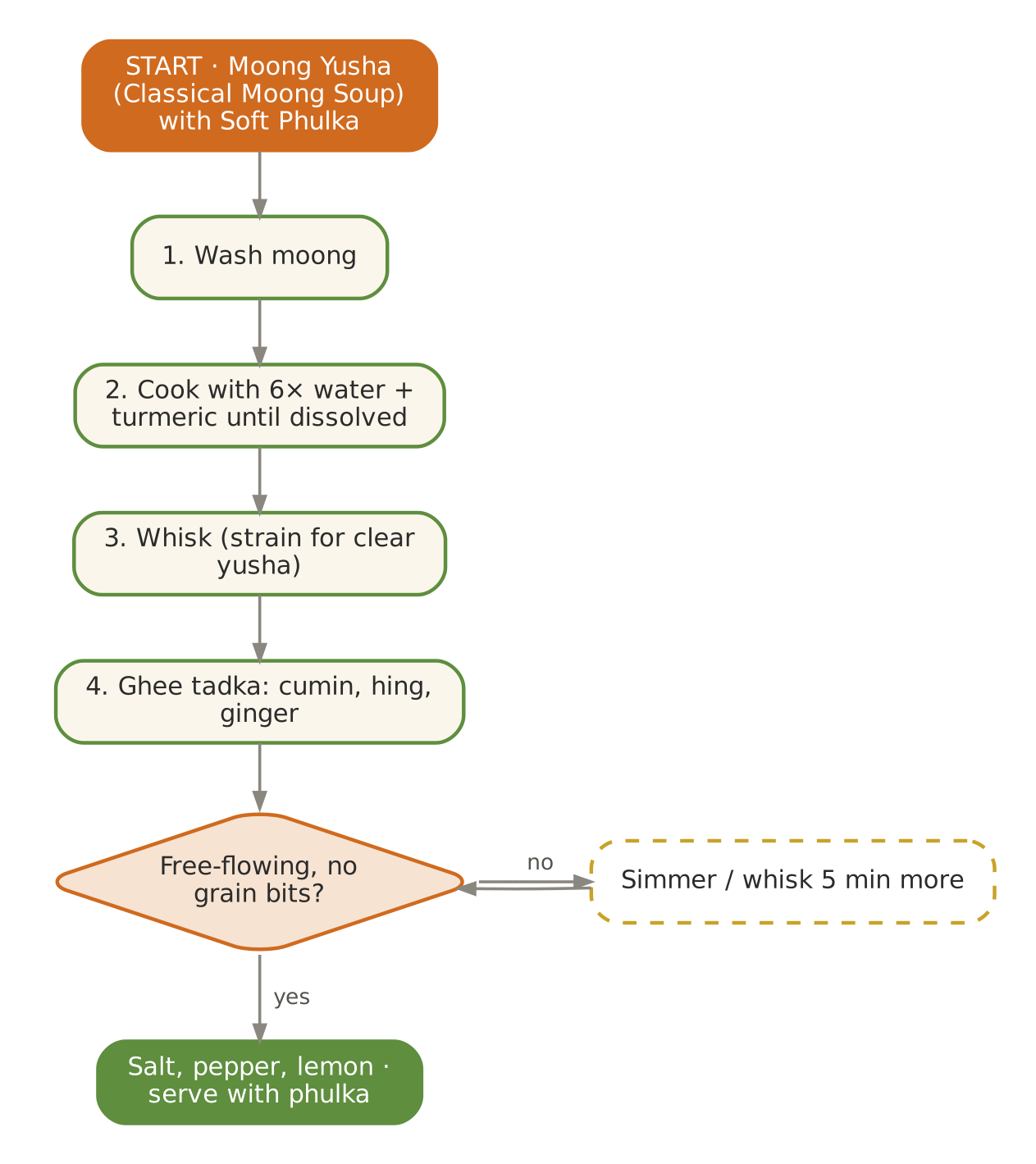 Signature dish: Moong Yusha (Classical Moong Soup) with Soft Phulka | Further dishes & variations Breakfast Sattu paratha (soft) · Lauki thepla · Rice–moong idli · Kosambari (steamed moong salad) · Dalia with banana Dals & Saags Neer mor (thin spiced buttermilk) · Toor dal with raw mango (small) · Moong with mint tempering · Lauki chana dal · Drumstick-leaf dal Sabzis Kundru with coconut · Raw-mango kaddu · Torai–chana dal · Bhindi kadhi · Aloo–tinda Evening Panakam · Coconut water with lime · Bel sharbat (late Apr) · Mint–jeera takra · Muskmelon with cardamom Light Dinners Lauki–moong soup · Lauki soup · Namkeen dalia · Moong dal khichdi · Jowar phulka with dal Sweets & Digestives Coconut–rose ladoo · Banana sheera · Dhaniya–mishri digestive · Saunf–mishri · Phirni |