February — Root Vegetables & the Colour of Basant
| Hindu months | Magh – Phalgun |
| Ayurvedic season | Shishira (late winter) |
| Haridwar weather | ≈ 9 – 23 °C, cool and dry, warming by month-end |
| Agni (digestion) | Still strong — continue nourishing meals |
| Dosha picture | Kapha accumulating; Vata from residual cold winds |
| Favour | Sweet, sour, salty; warm, moist and well-spiced with ginger |
| Limit | Heavy fried snacks, chilled desserts, excessive curd at night |
In season
| Vegetables & greens | Fruit | Pantry & other |
|---|---|---|
| Peas, cauliflower, cabbage, carrots, beetroot, radish, spinach, methi, broad beans (sem), turnip | Oranges, kinnow, guava, ber, strawberries, amla | Mustard oil, jaggery, barley flour |
Festivals & observances
| Occasion | Kitchen response |
|---|---|
| Basant Panchami (lunar) | Yellow menu: kesari meetha chawal, besan kadhi, yellow moong dal. |
| Maha Shivratri (Feb/Mar, lunar) | Phalahari thali: sabudana khichdi, kuttu–lauki paratha (soft), singhara halwa, thandai (non-intoxicating). |
Kitchen guidance for February
-
Begin gently lightening the menu in the last week — add barley and more bitter greens.
-
Root vegetables (beet, carrot) are excellent in soups — blend smooth for elders.
-
Keep amla daily in some form: tea, chutney, murabba or juice in warm water.
-
Spring-cleaning of pantry: discard old flours, re-roast spices, make fresh garam masala.
Daily rituals: on waking — Warm cumin–ginger water; at bedtime — Golden milk with a pinch of nutmeg.
Seven-day menu — February
Rotate weekly; swap any item for one from 'Further dishes & variations' at the end of this chapter. Lunch always includes rice and phulka; curd/raita is served at lunch only.
| Day | Breakfast 7:30–9:00 | Lunch thali 12:30–2:30 | Evening 4:00 | Dinner 7:00–8:30 |
|---|---|---|---|---|
| Monday | Matar–gajar vegetable upma · orange | Masoor–palak dal · Gobhi–matar adraki · Beet–carrot poriyal · rice & phulka · Beetroot raita (room temp.) | Amla–ginger–honey warm tea | Beet–carrot–moong soup · soft rice · sweet: Kesari meetha chawal (60 g) |
| Tuesday | Beetroot–moong chilla · coconut chutney | Yellow moong dal tadka · Cabbage–peas · Palak paneer (sattvic) · rice & phulka · Spiced takra | Roasted makhana | Vegetable khichdi · sweet: Gajar halwa (40 g) |
| Wednesday | Sweet dalia with jaggery & raisins | Toor dal with methi · Aloo–methi · Mooli bhurji · rice & phulka · Amla chutney | Stewed apple with cinnamon | Palak–moong soup · phulka · sweet: Moong dal halwa (30 g) |
| Thursday | Methi–paneer soft paratha · curd | Chana dal–lauki · Matar–paneer · Broad-bean (sem) & potato · rice & phulka · Mooli–gajar soft salad | Badam milk | Dalia khichdi · sweet: Atta sheera (50 g) |
| Friday | Vegetable rava idli · tomato-free coconut chutney | Whole masoor (soft) · Shalgam–gajar · Kaddu khatta-meetha · rice & phulka · Mint–coriander chutney | Sweet-potato chaat | Lauki–chana dal · phulka · sweet: Rice kheer (80 ml) |
| Saturday | Oats porridge with dates · guava | Moong–palak dal · Gobhi–matar adraki · Beet–carrot poriyal · rice & phulka · Beetroot raita (room temp.) | Til–gud ladoo (mini) | Moong yusha · ghee rice · sweet: Date–nut ladoo |
| Sunday | Poha with peas & lemon · amla tea | Panchmel dal (light) · Cabbage–peas · Palak paneer (sattvic) · rice & phulka · Spiced takra | CCF tea · soaked walnuts | Mixed-veg soup · phulka · sweet: Amla murabba (½) |
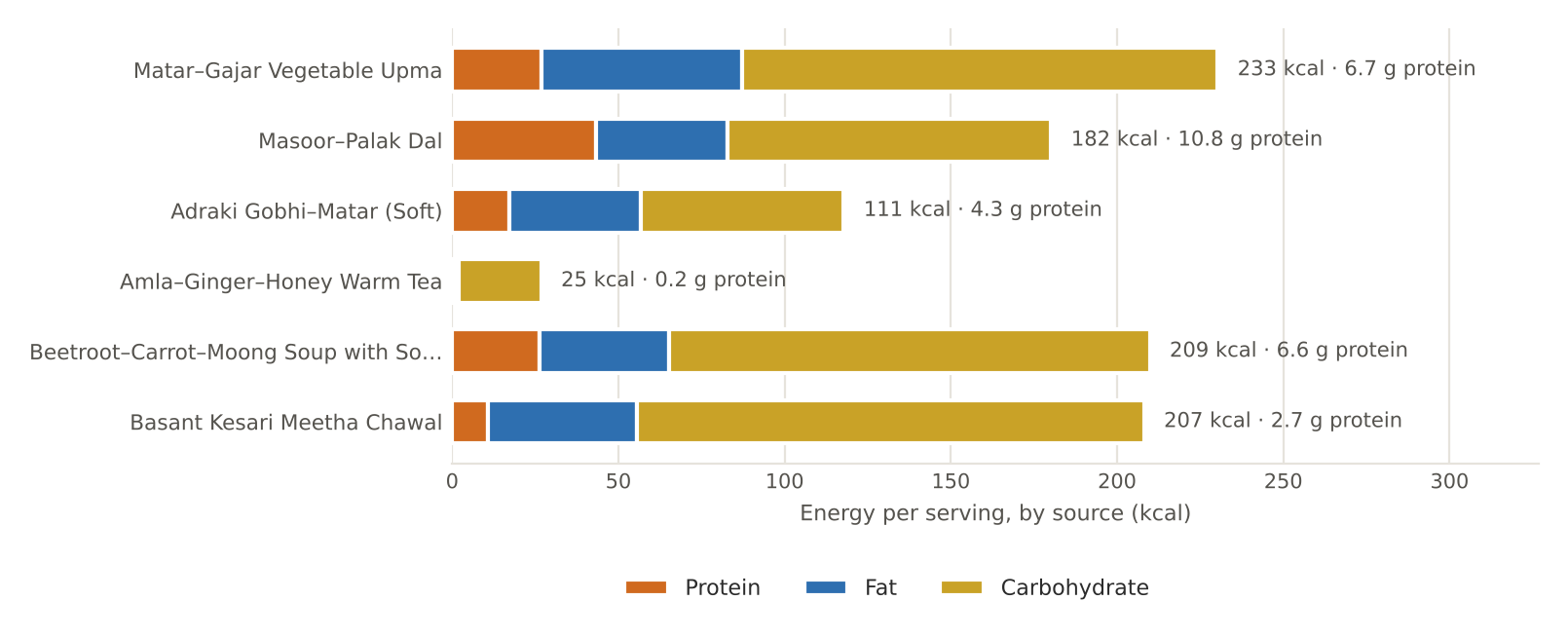
Figure. February's featured recipes — energy per serving by source, with protein
February recipes
Matar–Gajar Vegetable Upma
BREAKFAST · Serves 4 · Portion: 1 plate (≈200 g) · Cook 25 min
Texture: Soft Dosha: Vata-pacifying with ghee
| Ingredient | Household measure | Base qty | Café batch ×5 |
|---|---|---|---|
| Semolina (suji/rava) | 1 cup | 160 g | 800 g |
| Ghee (cow) | 4 tsp | 20 g | 100 g |
| Mustard seeds | ½ tsp | 2 g | 10 g |
| Urad dal, split | 1 tsp urad dal | 5 g | 25 g |
| Curry leaves | 10 leaves | 2 g | 10 g |
| Ginger, fresh | 2 tsp grated | 10 g | 50 g |
| Green chilli (optional, deseeded) | ½ chilli (optional) | 2 g | 10 g |
| Carrot | ½ cup fine dice | 80 g | 400 g |
| Green peas, fresh | ⅓ cup | 60 g | 300 g |
| Water | 3 cups (soft-set ratio) | 720 ml | 3,600 ml |
| Rock salt (sendha namak) | ¾ tsp | 3.5 g | 18 g |
| Cashew nuts | 8 halves (optional) | 10 g | 50 g |
| Lemon juice | 2 tsp | 10 ml | 50 ml |
| Coriander leaves | 2 tbsp | 8 g | 40 g |
Method
1. Dry-roast suji on low 6–7 minutes until aromatic but not brown; set aside.
2. Heat ghee; add mustard, then urad dal and cashew until golden; add curry leaves, ginger and chilli.
3. Add carrot and peas; sauté 2 minutes.
4. Add water and salt; boil, then simmer covered 4 minutes until vegetables are tender.
5. On low heat, add suji in a thin stream, stirring continuously to avoid lumps.
6. Cover 3 minutes; fluff and finish with lemon and coriander.
| Per serving | Energy 233 kcal | Protein 6.7 g | Fat 6.7 g | Carbs 35.8 g | Fibre 3.4 g | Salt 0.9 g |
Care notes for 55+ guests We use 3 cups water per cup suji for a soft set. Upma firms as it cools — serve immediately or loosen with a little hot water. | Ayurvedic note Wheat and ghee are Vata-grounding; mustard and ginger keep it light for Kapha season. |
Variations & further ideas: Dalia upma · Oats upma · Semiya (vermicelli) upma · Rava pongal
Masoor–Palak Dal
LUNCH · DAL · Serves 4 · Portion: 1 katori (≈180 g) · Cook 35 min
Texture: Soft Dosha: Balances Kapha; ghee tadka for Vata
| Ingredient | Household measure | Base qty | Café batch ×5 |
|---|---|---|---|
| Masoor dal (red lentil) | ¾ cup red lentils | 150 g | 750 g |
| Water | 3¾ cups | 900 ml | 4,500 ml |
| Turmeric powder | ¼ tsp | 1 g | 5 g |
| Spinach (palak) | 1 bunch, chopped | 200 g | 1,000 g |
| Rock salt (sendha namak) | ¾ tsp | 4 g | 20 g |
| Ghee (cow) | 1 tbsp | 15 g | 75 g |
| Cumin (jeera) | ½ tsp | 2 g | 10 g |
| Asafoetida (hing) | 1 pinch | 0.3 g | 1.5 g |
| Ginger, fresh | 2 tsp grated | 10 g | 50 g |
| Tomato | 1 medium, chopped (optional) | 80 g | 400 g |
| Kashmiri chilli powder (mild) | ¼ tsp Kashmiri | 1 g | 5 g |
| Lemon juice | 2 tsp | 10 ml | 50 ml |
Method
1. Wash masoor and soak 15 minutes.
2. Cook with water and turmeric — 3 whistles, or 25 minutes in an open pot — until fully dissolved.
3. Add chopped palak; simmer 5 minutes, then whisk smooth.
4. Tadka: ghee, cumin, hing, ginger; add tomato and cook 4 minutes until soft; add chilli powder.
5. Pour into dal, add salt, simmer 2 minutes; finish with lemon.
| Per serving | Energy 182 kcal | Protein 10.8 g | Fat 4.4 g | Carbs 24.4 g | Fibre 5.4 g | Salt 1.0 g |
Care notes for 55+ guests Masoor cooks fast and mashes completely — an excellent everyday protein. Lemon's vitamin C improves iron absorption from palak. | Ayurvedic note Masoor is mildly heating and drying; the ghee tadka balances it for Vata constitution. |
Variations & further ideas: Dal methi · Moong–palak dal · Lauki–masoor (summer) · Amla-soured dal without tomato
Adraki Gobhi–Matar (Soft)
LUNCH · SABZI · Serves 4 · Portion: 1 katori (≈130 g) · Cook 25 min
Texture: Soft Dosha: Ginger & hing counter Vata of cauliflower
| Ingredient | Household measure | Base qty | Café batch ×5 |
|---|---|---|---|
| Cauliflower | 1 small head, small florets | 400 g | 2,000 g |
| Green peas, fresh | ¾ cup | 120 g | 600 g |
| Potato | 1 small, diced (optional) | 100 g | 500 g |
| Ghee (cow) | 1 tbsp | 15 g | 75 g |
| Cumin (jeera) | ½ tsp | 2 g | 10 g |
| Asafoetida (hing) | 1 pinch | 0.3 g | 1.5 g |
| Ginger, fresh | 1 tbsp julienne + grated | 15 g | 75 g |
| Turmeric powder | ¼ tsp | 1 g | 5 g |
| Coriander seed / powder | 1½ tsp coriander powder | 3 g | 15 g |
| Sattvic garam masala (no onion-garlic) | ¼ tsp sattvic garam masala | 1 g | 5 g |
| Rock salt (sendha namak) | ¾ tsp | 3.5 g | 18 g |
| Water | ⅓ cup | 80 ml | 400 ml |
| Coriander leaves | 2 tbsp | 10 g | 50 g |
Method
1. Blanch florets in hot salted water 3 minutes; drain.
2. Heat ghee; add cumin, hing and ginger.
3. Add turmeric and coriander powder, then cauliflower, peas and potato; toss well.
4. Add water, cover and cook on low 12 minutes until tender.
5. Finish with garam masala and coriander leaves.
| Per serving | Energy 111 kcal | Protein 4.3 g | Fat 4.4 g | Carbs 15.3 g | Fibre 4.7 g | Salt 0.9 g |
Care notes for 55+ guests Blanching, hing and ginger reduce bloating — the cabbage family is otherwise Vata-aggravating. | Ayurvedic note Cauliflower is ruksha (dry); ghee and warm spices make it suitable for older, Vata-prone digestion. |
Variations & further ideas: Cabbage–peas · Broccoli–paneer · Aloo–methi · Gobhi–shalgam
Amla–Ginger–Honey Warm Tea
EVENING · DRINK · Serves 4 · Portion: 150 ml cup · Cook 12 min
Texture: Thin liquid Dosha: Tridoshic; amla is the great rasayana
| Ingredient | Household measure | Base qty | Café batch ×5 |
|---|---|---|---|
| Amla (Indian gooseberry) | 2 medium, grated | 60 g | 300 g |
| Ginger, fresh | 2 tsp grated | 10 g | 50 g |
| Cinnamon | 1-inch stick | 1 g | 5 g |
| Water | 3⅓ cups | 800 ml | 4,000 ml |
| Honey | 1 tbsp + 1 tsp (added warm) | 20 g | 100 g |
Method
1. Boil water with grated amla, ginger and cinnamon; simmer 8 minutes.
2. Strain into a jug.
3. Cool to sip-warm (about 45 °C).
4. Stir in honey just before serving.
| Per serving | Energy 25 kcal | Protein 0.2 g | Fat 0.1 g | Carbs 6.2 g | Fibre 0.8 g | Salt 0.0 g |
Care notes for 55+ guests Never add honey to boiling liquid. Diabetic guests: omit honey entirely — amla's taste is pleasant on its own. | Ayurvedic note Ayurveda holds heated honey to be ama-forming; amla balances all three doshas and supports immunity in seasonal change. |
Variations & further ideas: Amla murabba (½ piece) · Warm amla–mint water · Chyawanprash in warm milk · Amla candy as digestive
Beetroot–Carrot–Moong Soup with Soft Rice
DINNER · Serves 4 · Portion: 250 ml soup + 100 g rice · Cook 35 min
Texture: Pureed soup Dosha: Vata-pacifying, warm & sweet
| Ingredient | Household measure | Base qty | Café batch ×5 |
|---|---|---|---|
| Moong dal, yellow split | ⅓ cup | 60 g | 300 g |
| Beetroot | 1 medium, cubed | 150 g | 750 g |
| Carrot | 2 small, cubed | 150 g | 750 g |
| Ginger, fresh | 1-inch piece | 10 g | 50 g |
| Water | 4 cups (soup) | 1,000 ml | 5,000 ml |
| Ghee (cow) | 1 tbsp | 15 g | 75 g |
| Cumin (jeera) | ½ tsp | 2 g | 10 g |
| Black pepper | ½ tsp | 1 g | 5 g |
| Rock salt (sendha namak) | ¾ tsp | 3.5 g | 18 g |
| Lemon juice | 2 tsp | 10 ml | 50 ml |
| Coriander leaves | 1 tbsp | 5 g | 25 g |
| Rice, white basmati (raw) | ½ cup | 100 g | 500 g |
| Water | 2 cups (rice, 5 : 1 soft) | 500 ml | 2,500 ml |
Method
1. Soak moong 20 minutes.
2. Pressure-cook moong, beet, carrot and ginger in 800 ml water — 3 whistles.
3. Cool slightly; blend smooth; thin with remaining 200 ml water and simmer 3 minutes.
4. Temper with ghee and cumin; add pepper and salt; lemon off the heat.
5. Rice: cook rice in 5× water until very soft; serve alongside.
| Per serving | Energy 209 kcal | Protein 6.6 g | Fat 4.3 g | Carbs 36.1 g | Fibre 4.1 g | Salt 0.9 g |
Care notes for 55+ guests Smooth soup suits dysphagia-modified diets — adjust thickness on request. | Ayurvedic note A warm, sweet and slightly unctuous dinner — light enough for evening agni. |
Variations & further ideas: Pumpkin–lentil soup · Carrot–ginger soup · Lauki soup · Palak shorba (no cream)
Basant Kesari Meetha Chawal
SWEET · Serves 6 · Portion: ≈70 g · Soak 30 min · Cook 30 min
Texture: Soft grains Dosha: Vata-pacifying; small portion
| Ingredient | Household measure | Base qty | Café batch ×5 |
|---|---|---|---|
| Rice, white basmati (raw) | ¾ cup basmati, soaked 30 min | 150 g | 750 g |
| Water | 5 cups (boiling, drained) | 1,200 ml | 6,000 ml |
| Clove | 3 | 0.5 g | 2.5 g |
| Ghee (cow) | 4 tsp | 20 g | 100 g |
| Green cardamom | 4 pods, crushed | 1 g | 5 g |
| Cinnamon | 1-inch | 1 g | 5 g |
| Saffron (kesar) | 15–20 strands | 0.1 g | 0.5 g |
| Cow's milk, whole | 2 tbsp warm (for saffron) | 30 ml | 150 ml |
| Mishri / sugar | ½ cup less 1 tbsp | 90 g | 450 g |
| Raisins (kishmish) | 2 tbsp | 20 g | 100 g |
| Almonds | 10, slivered | 15 g | 75 g |
Method
1. Soak saffron in warm milk.
2. Boil rice in plenty of water with cloves until 80% done (8 minutes); drain.
3. Heat ghee; add cardamom, cinnamon, raisins and almonds.
4. Add rice, mishri and saffron milk; fold gently.
5. Cover tightly and cook on lowest heat (dum) 10 minutes until the sugar melts and grains are glossy.
| Per serving | Energy 207 kcal | Protein 2.7 g | Fat 5.0 g | Carbs 38.1 g | Fibre 0.9 g | Salt 0.0 g |
Care notes for 55+ guests Serve a small portion (≈70 g); diabetic guests receive a spoonful of plain saffron rice instead. | Ayurvedic note Saffron is tridoshic and uplifting; yellow food honours Basant. |
Variations & further ideas: Zarda · Gur-wale chawal · Kesar phirni · Meethi seviyan
Signature process & further dishes — February
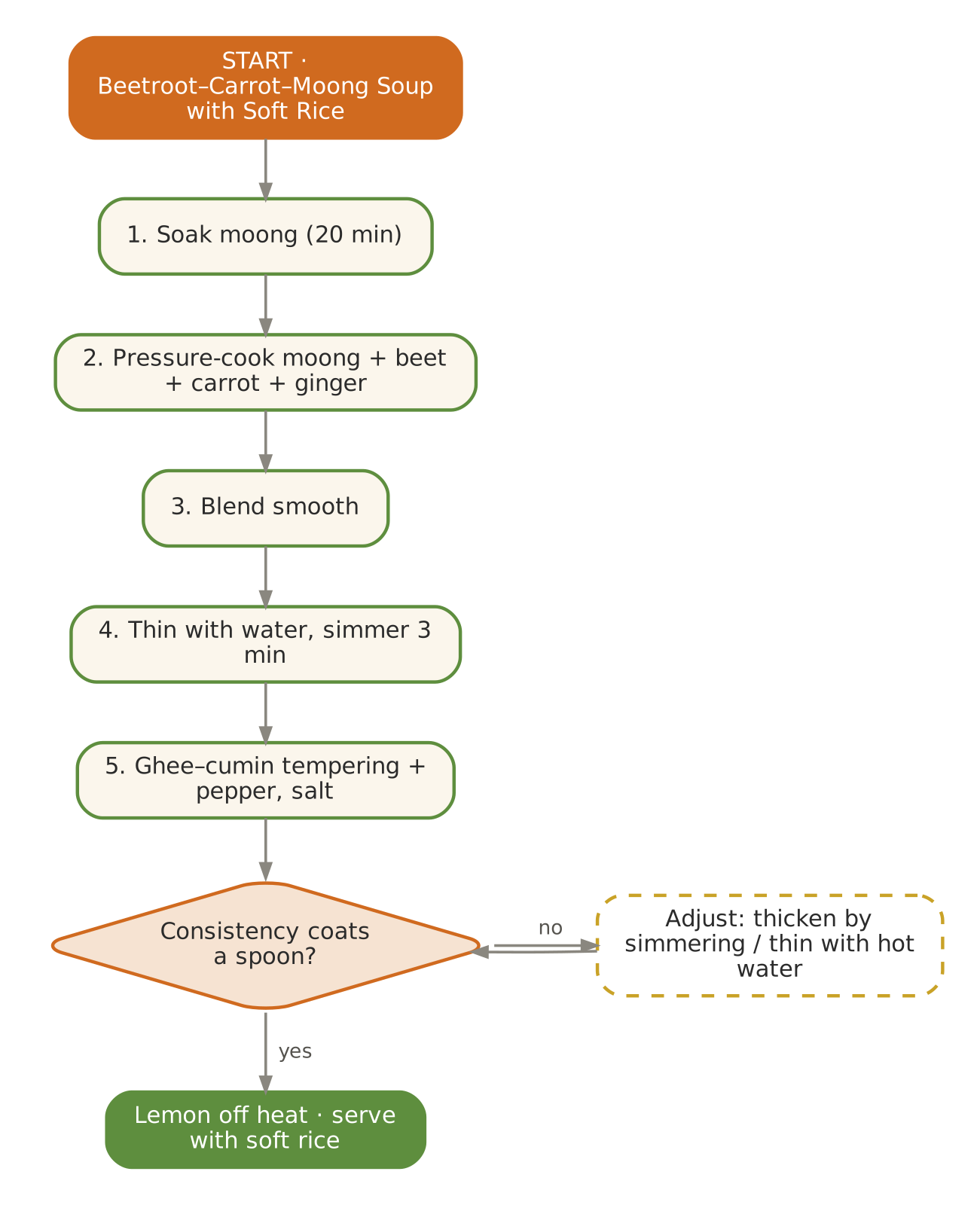 Signature dish: Beetroot–Carrot–Moong Soup with Soft Rice | Further dishes & variations Breakfast Beetroot–moong chilla · Methi thepla (soft) · Vegetable dalia (savoury) · Ragi–oats porridge · Moong sprout (cooked) poha Dals & Saags Dal methi · Kali masoor (soft, lunch only) · Toor–lauki dal · Moong–methi dana dal · Sarson-saag (early Feb) Sabzis Beet thoran · Sem–aloo · Mooli–gajar sabzi · Paneer–matar bhurji · Cabbage kofta (steamed, light gravy) Evening Amla murabba · Warm orange juice with ginger (room temp.) · Roasted chana-free makhana mix · Badam–kesar milk · Guava stewed with jaggery Light Dinners Beet–moong khichdi · Barley–vegetable soup · Masoor soup with ghee rice · Lauki dalia Sweets & Digestives Kesar phirni · Gajar–dates barfi · Ajwain–saunf mukhwas · Ber–jaggery chutney · Atta sheera |