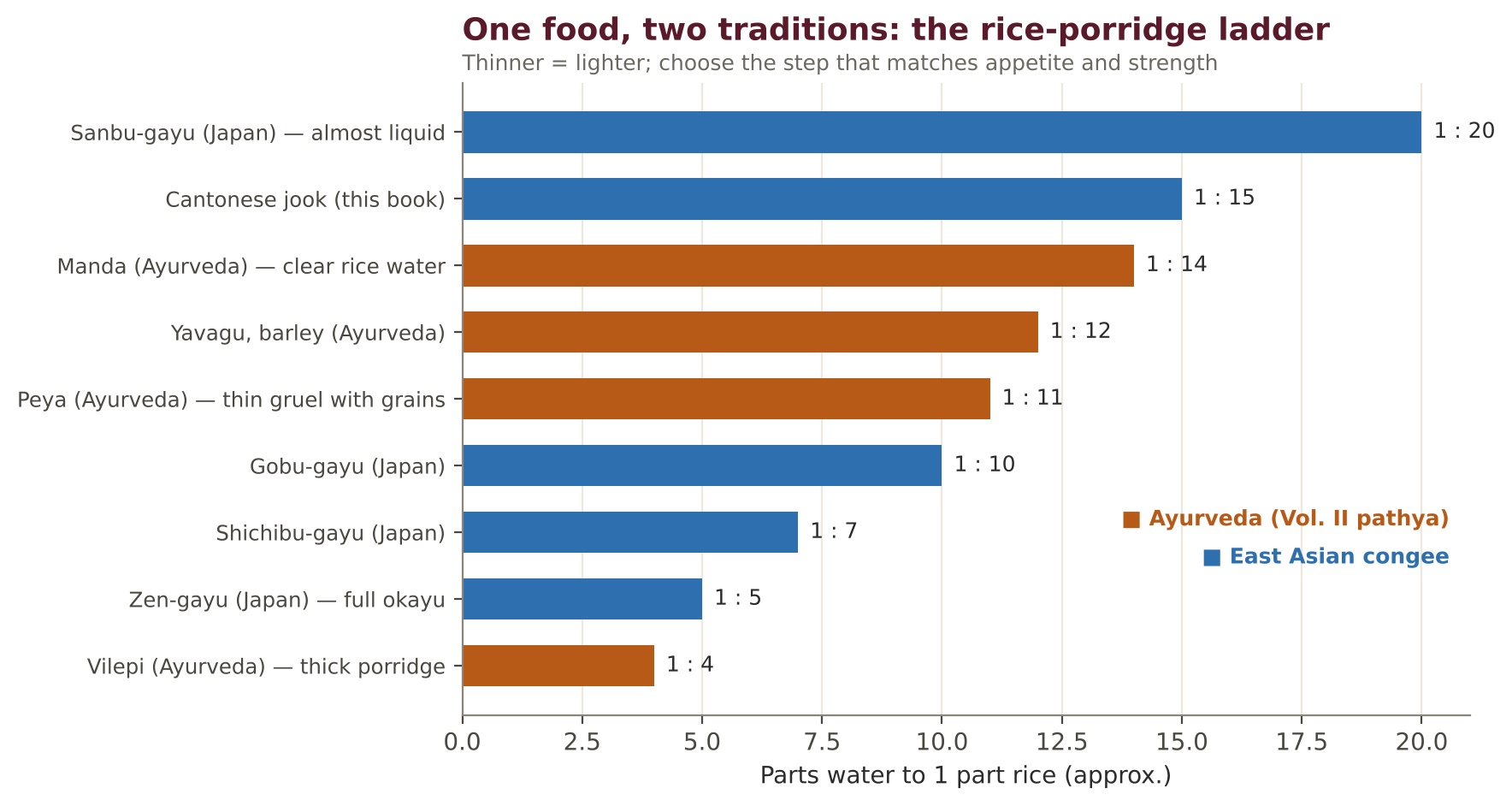
Across East and Southeast Asia, the first food for the sick, the newborn and the elderly is rice cooked in many times its volume of water. China's zhou, Japan's okayu, Korea's juk, Vietnam's cháo, Malaysia's bubur and Sr…
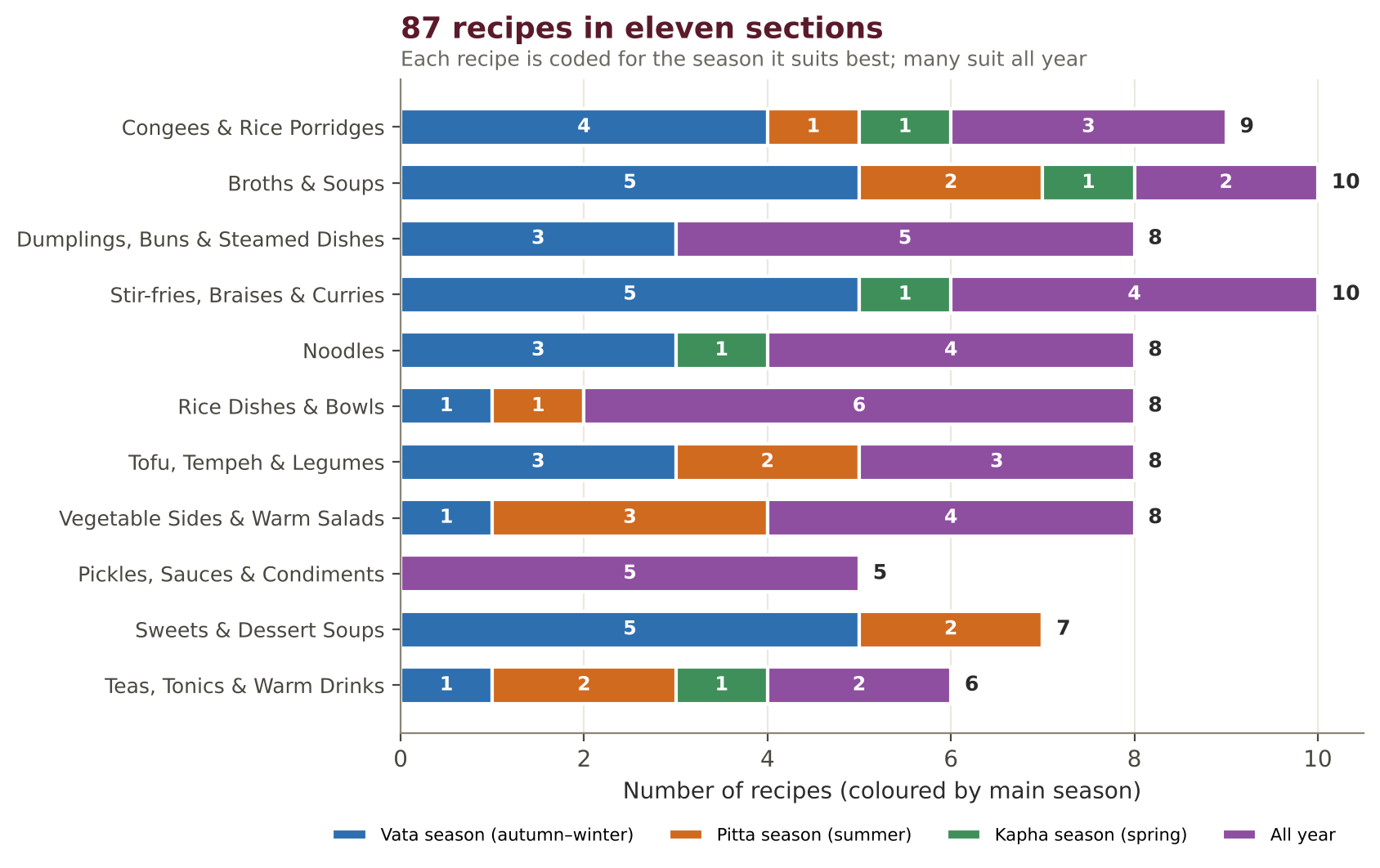
9 recipes
- Plain Jook with Ginger & Sesame (Bai Zhou)
- Okayu with Umeboshi-free Ginger & Shiso Herbs
- Nanakusa-gayu (Seven-Herb Spring Rice Porridge)
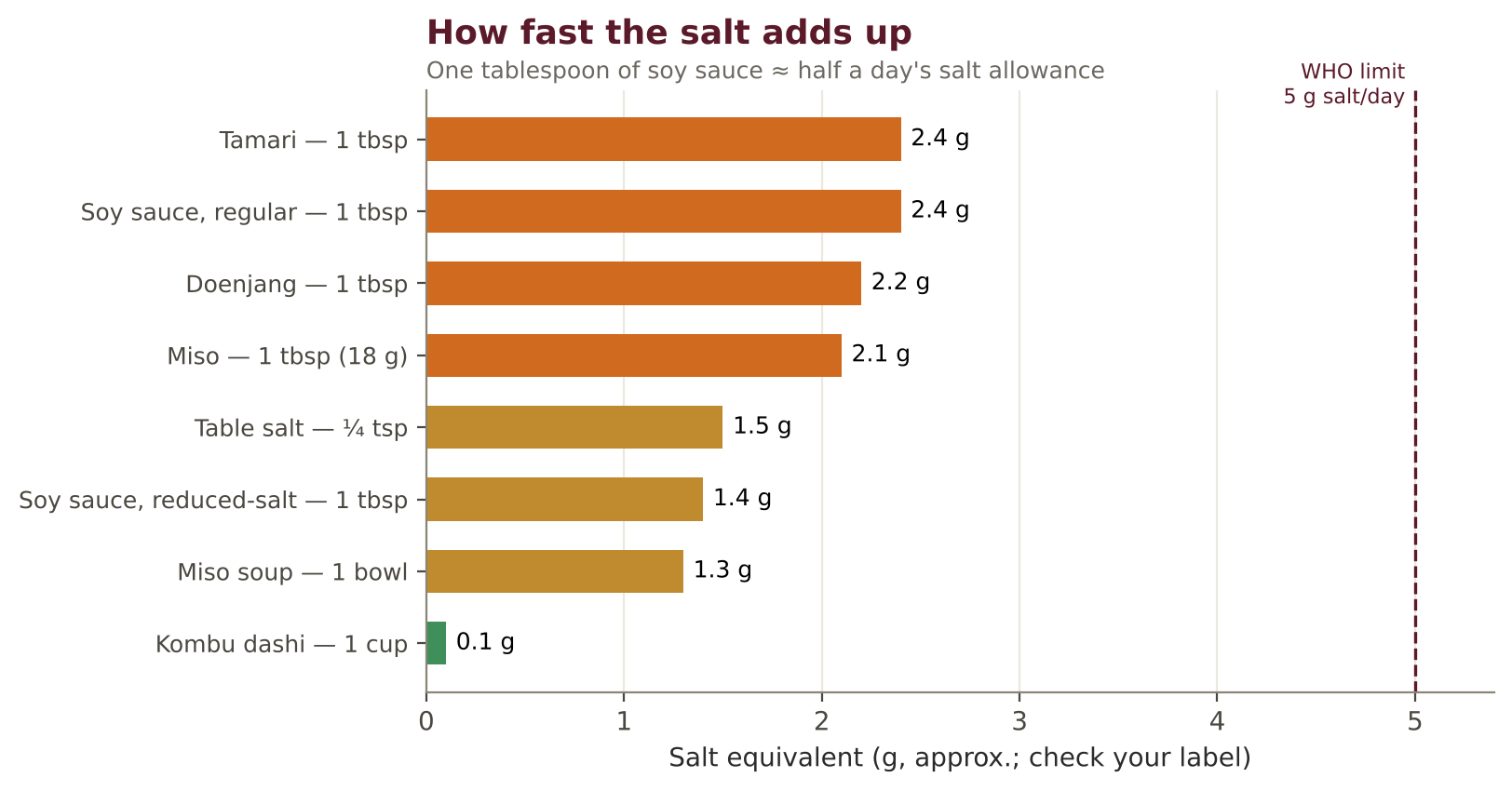
In East Asia soup is drunk through the meal, not just at its start — and is usually a clear, light broth. The Buddhist temple kitchens of Japan, China and Korea perfected flavourful stocks without meat, onion or garlic, …
10 recipes
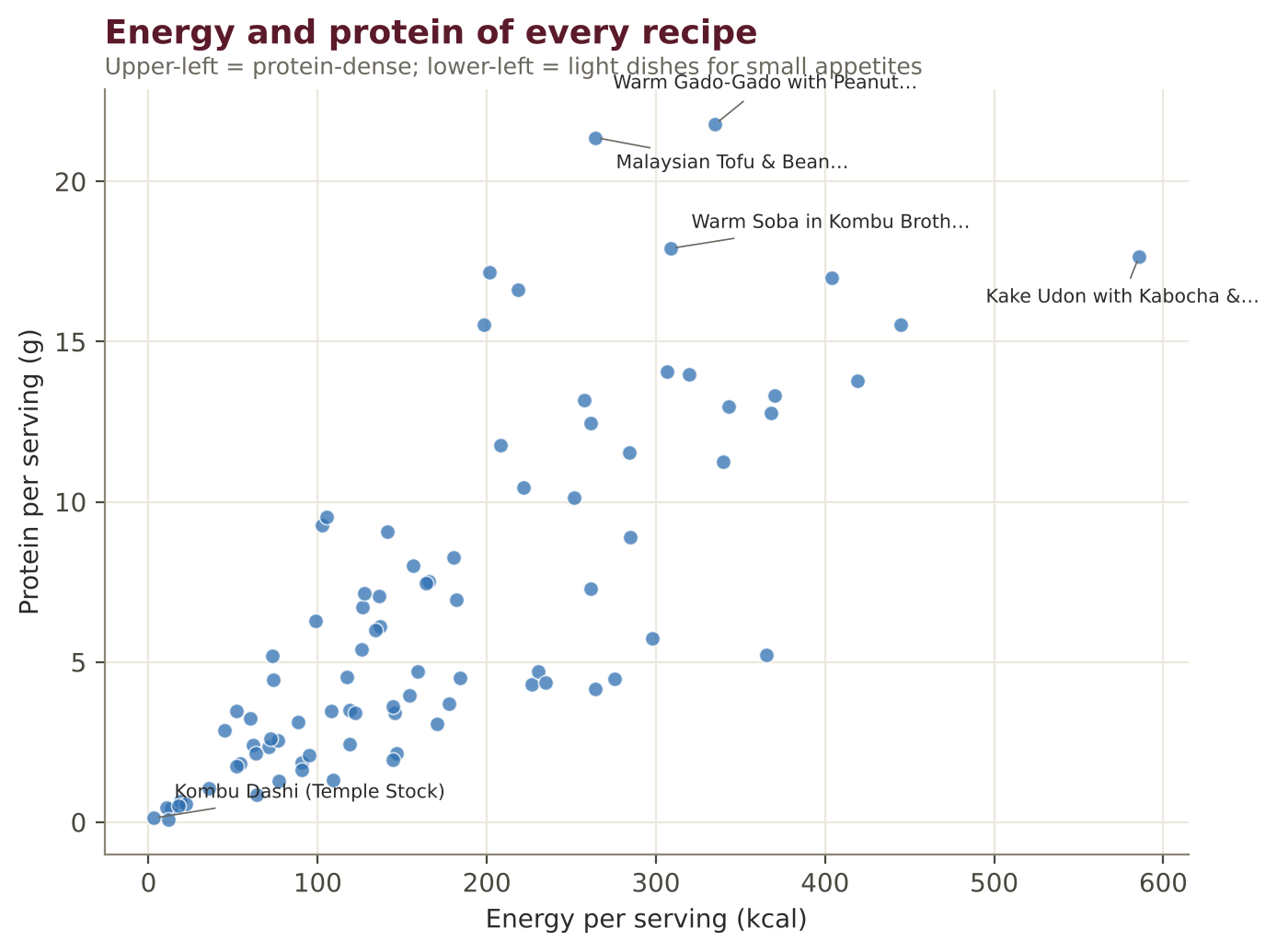
- Kombu Dashi (Temple Stock)
- Miso Soup with Tofu & Wakame
- Winter Melon Soup with Ginger (Dong Gua Tang)
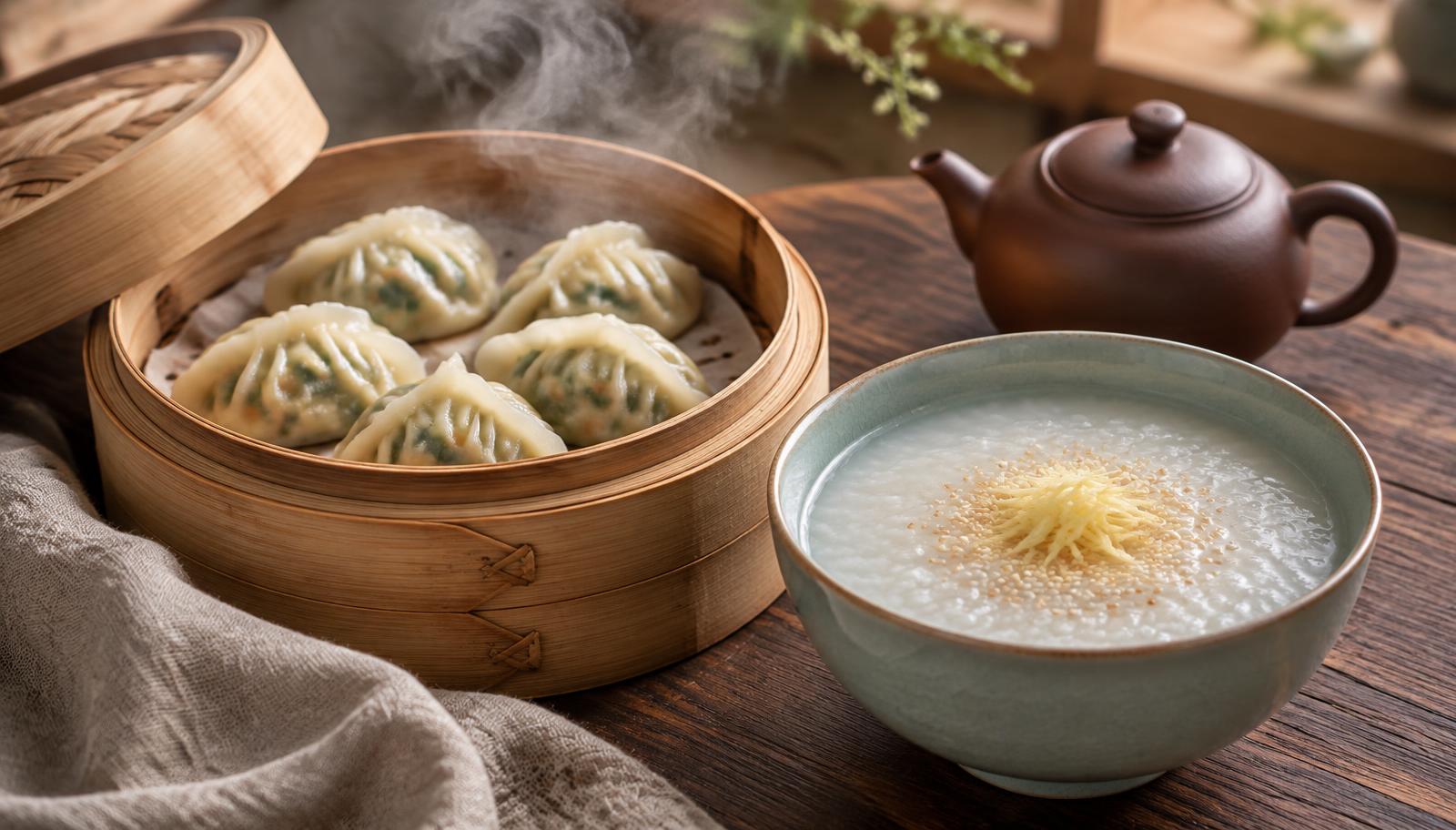
Steaming is the most widely used cooking method in East Asia and one of the gentlest anywhere: food stays moist, needs little oil, and turns out soft. Dumplings, buns and steamed tofu are also ideal for sharing at a tabl…
8 recipes
- Cabbage, Tofu & Ginger Jiaozi
- Himalayan Vegetable Momos with Paneer
- Steamed Milk Buns (Mantou)
The wok cooks quickly over high heat with little oil — perfect for keeping vegetables bright. For older digestion, stir-fry a little longer, add a splash of stock and cover for a minute (the Chinese 'stir-fry–braise'), a…
10 recipes
- Bok Choy with Ginger & Sesame
- Buddha's Delight (Lo Han Jai, Mushroom-free)
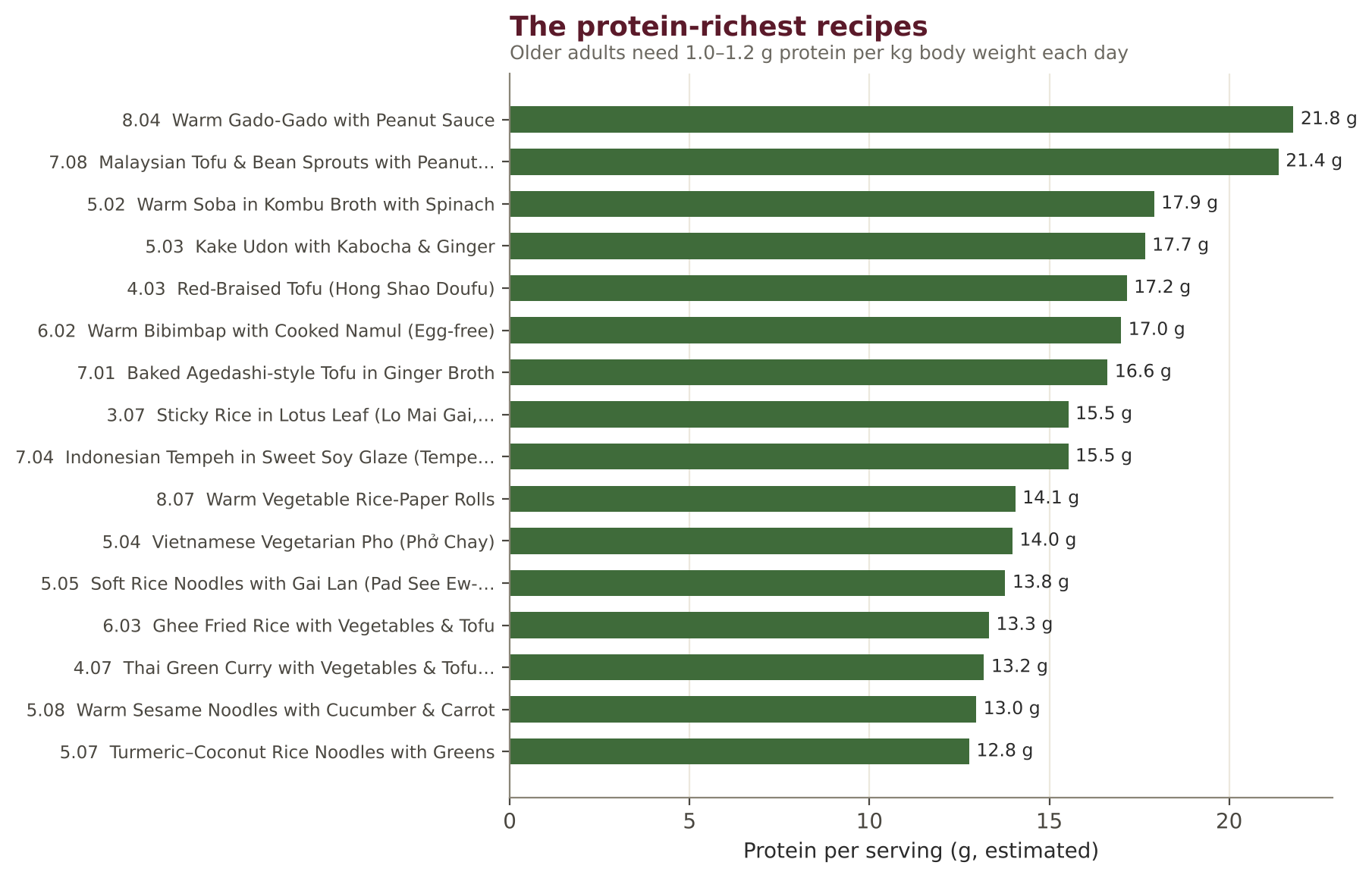
- Red-Braised Tofu (Hong Shao Doufu)
Noodles symbolise long life in Chinese, Japanese and Korean tradition and are served at birthdays — fitting for a book written for elders. Wheat, buckwheat, rice and mung-bean noodles each have different qualities; serve…
8 recipes
- Japchae — Glass Noodles with Vegetables (Egg-free)
- Warm Soba in Kombu Broth with Spinach
- Kake Udon with Kabocha & Ginger
Rice is the centre of the East and Southeast Asian table. Mixed rice, coconut rice, seasoned rice and rice bowls are complete meals with very little effort.
8 recipes
- Takikomi Gohan — Seasoned Rice with Root Vegetables
- Warm Bibimbap with Cooked Namul (Egg-free)
- Ghee Fried Rice with Vegetables & Tofu
Tofu, tempeh, soy milk, edamame and adzuki beans give the East Asian vegetarian kitchen its protein — exactly what older adults need more of. Ayurveda considers soy cool, heavy and somewhat hard to digest, so these recip…
8 recipes
- Baked Agedashi-style Tofu in Ginger Broth
- Sesame Tofu (Goma-dōfu)
- Adzuki & Kabocha Simmer (Itoko-ni)
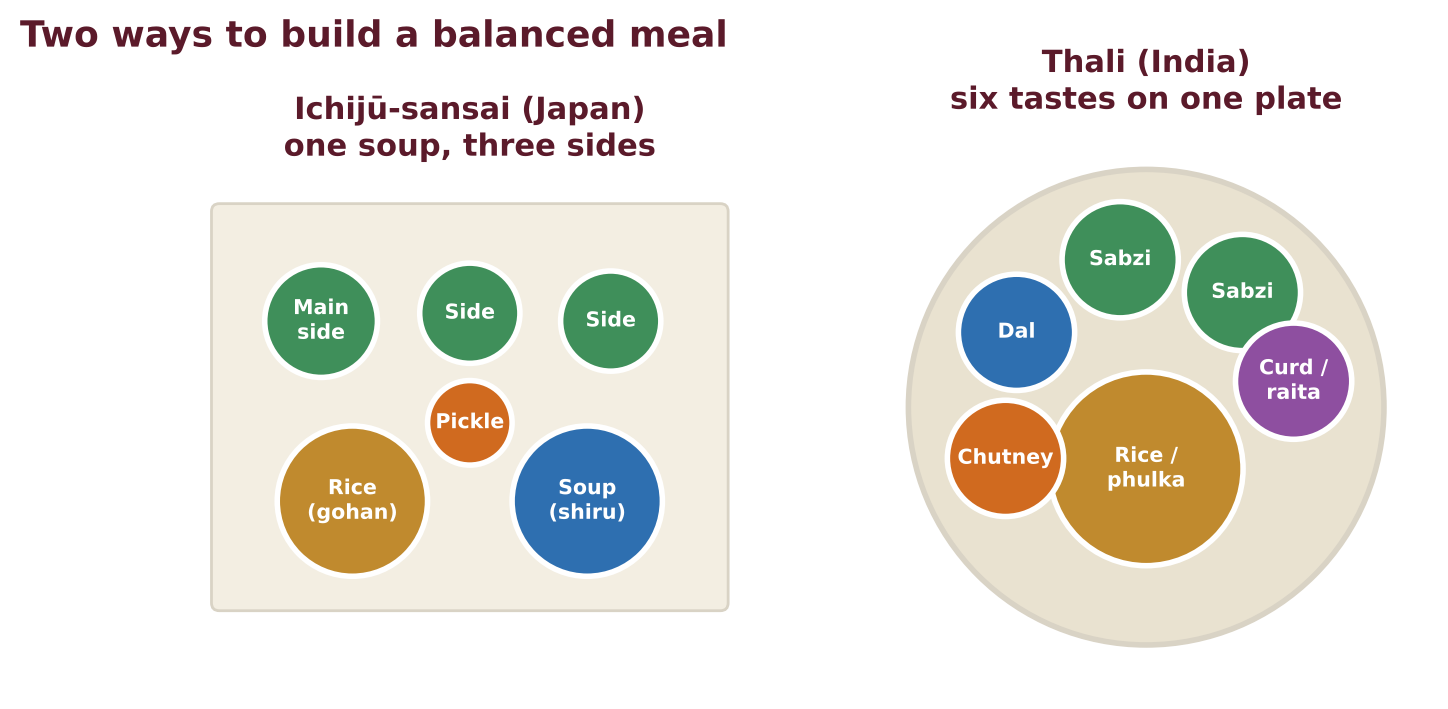
The small vegetable side dishes of Japan (o-sōzai), Korea (namul and banchan) and Southeast Asia bring many colours and tastes to the table in modest portions — the six-taste principle in miniature.
8 recipes
- Spinach with Sesame Dressing (Hōrensō no Gomaae)
- Korean Namul Trio (Spinach, Carrot, Zucchini)
- Kinpira — Braised Burdock & Carrot
East Asian meals rely on a few strong condiments — pickles, dipping sauces, seasoned salts. Used in small amounts they provide the salty, sour and pungent tastes that complete a meal.
5 recipes
- Quick Ginger–Daikon Pickle (Asazuke)
- Nepali Tomato–Sesame Achar
- Ginger–Soy Dipping Sauce
In China, Korea and Southeast Asia, many desserts are warm, sweet soups (tong sui, 'sugar water') made from beans, grains, seeds and fruit — remarkably close to Ayurvedic payasam and kheer. They are served warm, in small…
7 recipes
- Mango Sticky Rice (Khao Niao Mamuang)
- Red Bean Soup with Dried Tangerine Peel (Hong Dou Tang Shui)
- Black Sesame Tang Yuan in Ginger Syrup
Tea is the national drink of half of Asia, and herbal 'teas' (tisanes) form a vast pharmacy of everyday tonics. Most green and black teas contain caffeine; these recipes favour caffeine-free brews and use real tea only o…
6 recipes
- Ginger–Jujube Tea (Daechu-saenggang-cha)
- Chrysanthemum & Goji Infusion (Ju Hua Gou Qi Cha)
- Roasted Barley Tea (Mugicha / Boricha)