Skip to content
Annapurna Kitchen

Volume V

Ayurvedize Any Asian Recipe in Seven Steps

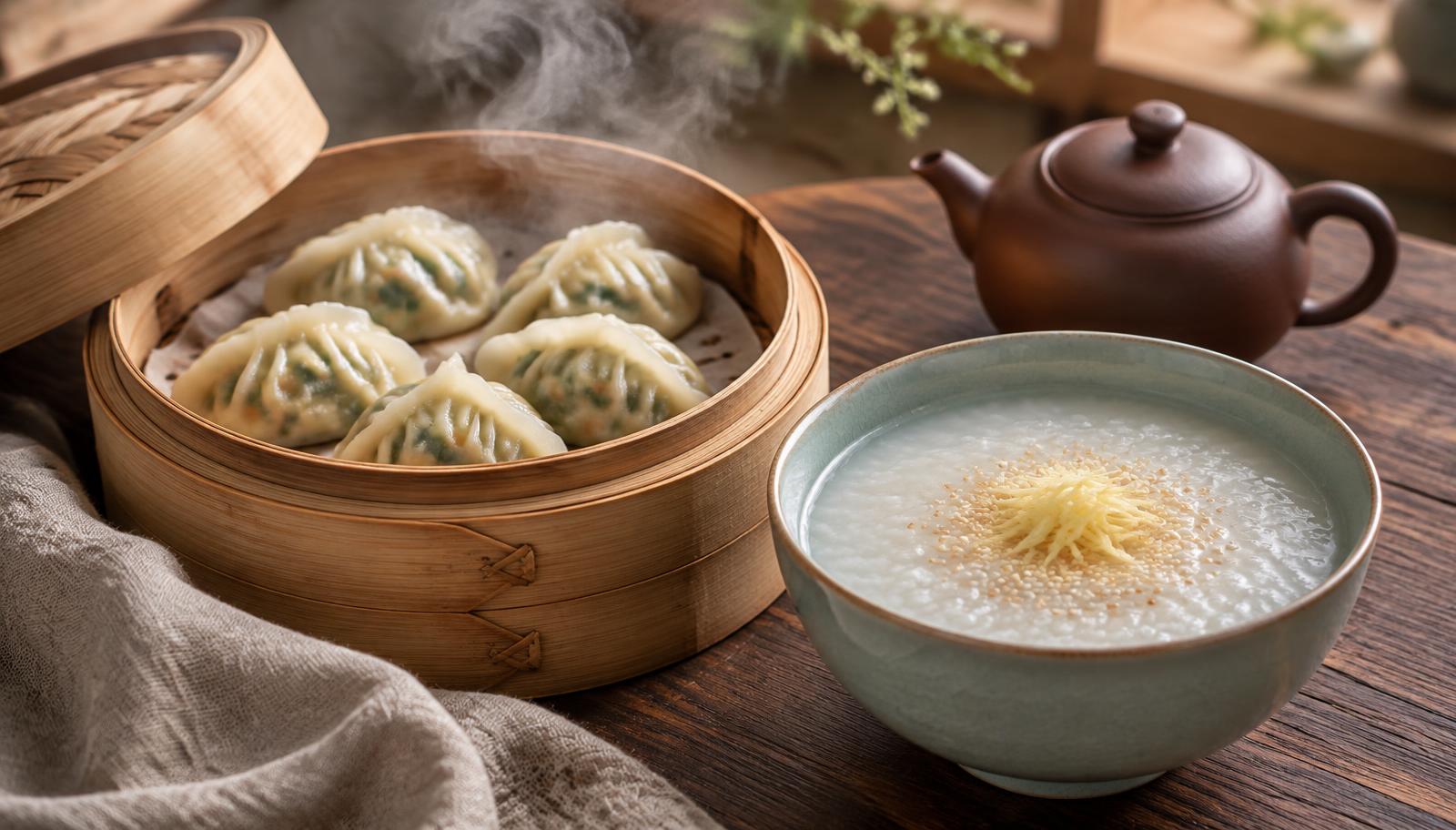
Steamed vegetable dumplings beside a celadon bowl of congee with ginger and sesame

1 minute read

The seven-step method applied to Eastern recipes.

Five worked examples#

Original, What changes, Result in this book
OriginalWhat changesResult in this book
Kung pao chickenTofu in place of chicken; ginger instead of garlic and scallion; mild chilli; peanuts keptVariation of 4.04 with peanuts
Shoyu ramenKombu–soy broth; udon or wheat noodles; bok choy and kabocha in place of pork and egg; drink half the broth5.03
Kimchi jjigaeDoenjang instead of kimchi (less sour, fermented heat); tofu, spinach and radish2.07
Pad thaiSoft rice noodles with tofu, tamarind, jaggery and ground peanuts; no egg or fish sauce; bean sprouts blanchedVariation of 5.05
Vegetable sushiWarm onigiri instead of cold vinegared rice; cooked fillings; no raw fish6.08
Swipe sideways to see all columns.
Nine everyday swaps for the Eastern kitchen.

How meals are built#

The Japanese home meal is built on ichijū-sansai — one soup and three side dishes with rice — while the Indian thali gathers the six tastes on a single plate. Both achieve the same thing: variety of taste, colour and texture in modest portions.

Two ways to build a balanced meal: the Japanese ichijū-sansai and the Indian thali.
The Annapurna world plate for lunch.

How to read the recipes#

Each recipe gives the region and dish that inspired it; servings, portion, time, texture, dosha and best season; an ingredient table with household measures, base quantities and a café batch (×5); a short method; estimated nutrition per serving (including salt from soy sauce and miso); a care note for 55+ guests; an Ayurvedic note; the Ayurvedic adaptations made to the original; and variations.

Sources and further reading

  1. The Ayurvedic Institute — Food guidelines for basic constitutional types
  2. Yoga International — Ayurveda's guide to health in every season
  3. Wikipedia — Buddhist cuisine (five pungent vegetables; temple cooking in China, Korea, Vietnam and Japan)
  4. Japanese Taste — What is shōjin ryōri? A guide to traditional Buddhist vegan cuisine
  5. Wikipedia — Congee
  6. Just One Cookbook — Japanese rice porridge (okayu): water ratios
  7. Satyori — Soy sauce: Ayurvedic properties
  8. Satyori — Sowa Rigpa vs Ayurveda
  9. ThaiJO journal article — A comparative study of therapeutic methods of Jivaka Komarabhacca and Thai traditional medicine
  10. Liebherr FreshMAG — Cooling food: the teachings of TCM and Ayurveda
  11. Wikipedia — Okinawa diet
  12. World Health Organization Europe — Five recommendations to reduce salt intake (2022)
  13. Singapore Food Agency — Inorganic arsenic in hijiki seaweed
  14. HealthLinkBC — Healthy eating guidelines for people taking warfarin
  15. Bauer J. et al. — Evidence-based recommendations for optimal dietary protein intake in older people (PROT-AGE), JAMDA 2013
  16. American Heart Association — The changing nutritional needs of older adults (2024)
Read sources chapter