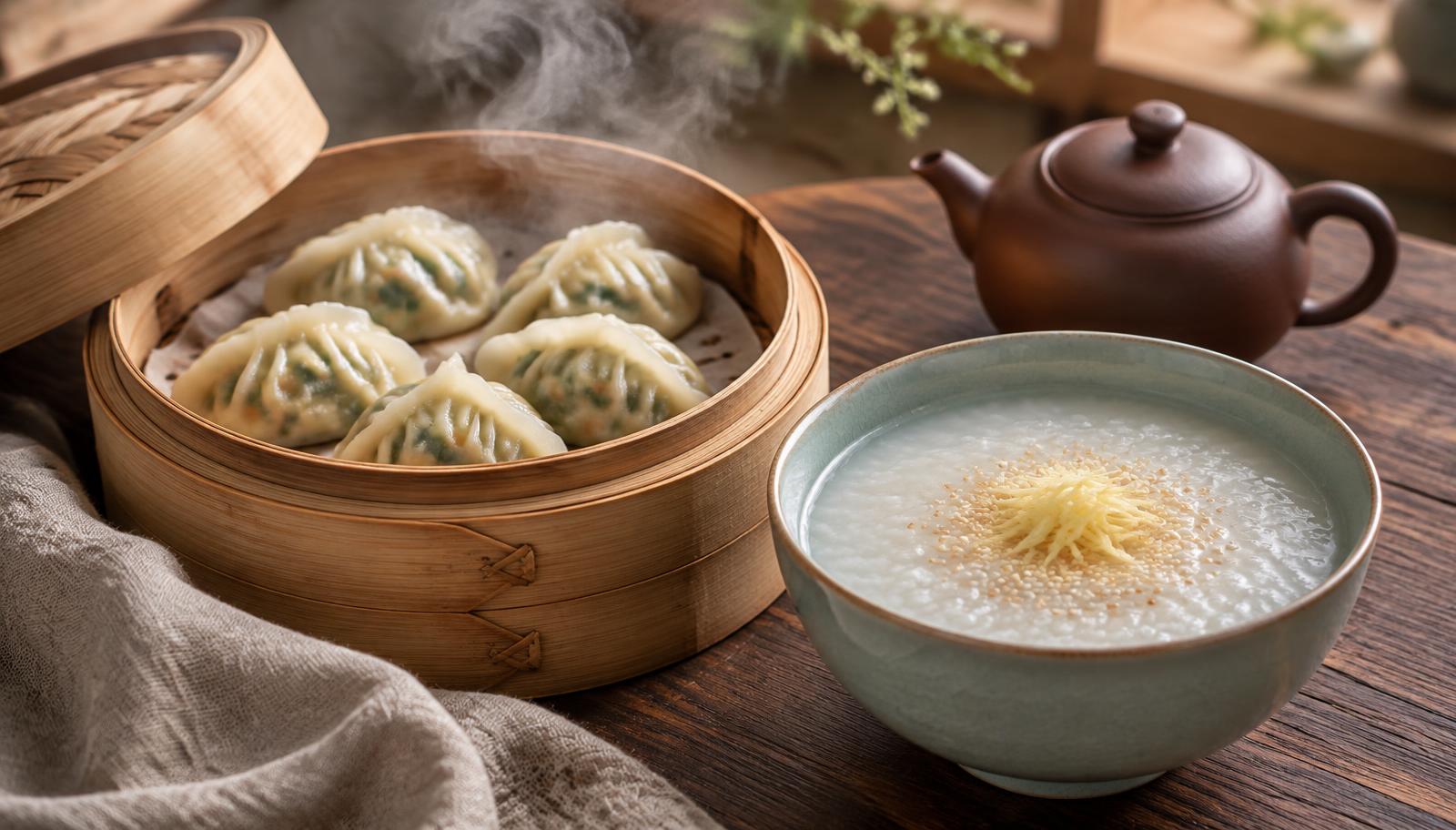
The East and Southeast Asian pantry overlaps more with the Indian one than most people expect: rice, mung beans, ginger, turmeric, sesame, coconut, tamarind and jaggery are shared, while soy foods, seaweeds, Asian greens and teas are new. The tables below give each food's effect on the doshas, drawing on the Ayurvedic Institute's food guidelines [1]
Thirty everyday Eastern foods and their effect on Vata, Pitta and Kapha. Rice, noodles and grains# Food, Taste · potency, Vata, Pitta, Kapha, Notes for 55+ Food Taste · potency Vata Pitta Kapha Notes for 55+ Jasmine / short-grain white rice Sweet · cooling Balances Balances Moderate The easiest grain to digest; congee for weak agni Brown rice, mixed-grain rice (japgok-bap) Sweet, astringent · warming Moderate Moderate Balances Soak 1–2 hours; cook soft Glutinous (sticky) rice Sweet · heavy, warming Balances Balances Aggravates Festive; small portions; choking risk — supervise Red / black rice Sweet, astringent · warming Balances Moderate Balances Sri Lankan red rice, Chinese black rice; soak and cook long Millet (foxtail, proso) Sweet · warm, dry Moderate Moderate Balances Northern Chinese porridge grain Buckwheat soba Sweet, astringent · warming Moderate Moderate Balances Choose 80–100% buckwheat for gluten-free Wheat noodles, udon, mantou Sweet · cooling, heavy Balances Balances Aggravates Udon is the softest noodle Rice noodles, rice paper Sweet · cooling, light Moderate Balances Moderate Gluten-free; serve in warm broth for Vata Glass noodles (mung or sweet-potato starch) Sweet · cooling Moderate Balances Moderate Snip short; slippery Job's tears (yi ren), barley Sweet, bland · cooling Moderate Balances Balances Classical dampness-clearing grains in both systems
Swipe sideways to see all columns. Soy foods# Soy is the protein foundation of East Asian vegetarian cooking. Ayurveda considers the soybean cool, heavy and difficult to digest, and so prefers fermented or well-cooked forms, warmed with ginger and spices. Soy sauce is salty and cooling, with a sweet post-digestive effect; it suits Pitta in moderation but increases Kapha and fluid retention in excess, and a tablespoon contains roughly 900–1,000 mg of sodium [7]
Soy food, Vata, Pitta, Kapha, Ayurvedic preparation Soy food Vata Pitta Kapha Ayurvedic preparation Tofu (firm) Moderate (warm, spiced) Balances Moderate Press, then braise or bake with ginger, pepper, star anise Silken tofu Moderate (warm) Balances Aggravates Steam warm with ginger; never chilled for Vata Tofu puffs, aburaage Moderate Moderate Aggravates Blanch in boiling water to remove excess oil Tempeh Balances Balances Moderate Steam 10 minutes first; fermentation aids digestion Edamame Moderate Balances Moderate Young, easier than mature beans Soy milk Moderate (warm, spiced) Balances Aggravates Always boil homemade soy milk; add ginger, cardamom Miso, doenjang Balances Aggravates Aggravates Small amounts; never boil after adding Soy sauce, tamari Balances Moderate Aggravates Reduced-salt versions; measure, do not pour Natto Moderate Moderate Moderate Very high in vitamin K2 — avoid if on warfarin [14]
Swipe sideways to see all columns. Vegetables, sea vegetables and aromatics# Food, Vata, Pitta, Kapha, Comment Food Vata Pitta Kapha Comment Daikon (cooked) Balances Moderate Balances Ayurveda's mooli; raw daikon is pungent and Pitta-provoking Bok choy, gai lan, choy sum Moderate Balances Balances Cook with ginger and sesame oil Napa cabbage Aggravates (raw) Balances Balances Steamed or in dumplings Lotus root Moderate Balances Balances Astringent and cooling; long-simmered in soups Winter melon (ash gourd) Moderate Balances Moderate Kushmanda — prized in both systems Kabocha pumpkin Balances Balances Aggravates Sweet, dense, very grounding Taro, Chinese yam Balances Balances Aggravates Mucilaginous, nourishing Burdock (gobo) Moderate Balances Balances Bitter cleansing root; parsnip is a soft substitute Bean sprouts Aggravates (raw) Balances Balances Blanch for Vata and elders Bamboo shoots Aggravates Moderate Balances Always cooked; rinse canned shoots Kombu Balances Moderate Aggravates Umami source; very high in iodine — use for stock, not to eat in large amounts Wakame, nori Balances Moderate Moderate Small amounts; good minerals Hijiki — — — Not used: high in inorganic arsenic [13] Ginger Balances Moderate (fresh) Balances The universal Asian and Ayurvedic digestive Galangal, lemongrass, lime leaf Balances Moderate Balances Thai aromatics; warming and carminative Thai basil, coriander, mint Moderate Balances Balances Fresh herbs add Pitta-cooling brightness Chilli Aggravates Aggravates Balances Used mildly or optionally in this book Sesame seeds and oil Balances Moderate Moderate Toasted sesame oil is for finishing, not frying Coconut milk Balances Balances Aggravates Cooling, rich; use light versions for Kapha
Swipe sideways to see all columns. Fruits, tonics and sweeteners# Food, Vata, Pitta, Kapha, Use Food Vata Pitta Kapha Use Red dates (jujube) Balances Balances Moderate Sweet tonic in porridges and teas Goji berries Balances Moderate Moderate Small amounts; may interact with warfarin — ask your doctor Longan, lychee Balances Aggravates (in excess) Aggravates Sweet and heating in Chinese medicine Asian pear Moderate Balances Moderate Steamed with honey for dry autumn coughs Persimmon Moderate Balances Balances Astringent; ripe only; not on an empty stomach Mango (ripe) Balances Moderate Aggravates Season's sweetness Rice syrup, palm sugar, jaggery Balances Balances Aggravates Unrefined sweeteners Green tea, matcha Aggravates Moderate Balances Caffeine — mornings only Barley tea, chrysanthemum, jujube tea Moderate Balances Balances Caffeine-free all-day drinks
Swipe sideways to see all columns.