Autumn
Sep – Nov (temperate Asia) · Post-monsoon (tropical Asia)
Congees with pumpkin and sweet potato; root-vegetable simmered dishes; sesame, ginger, red dates; warm broths with every meal.
Volume V
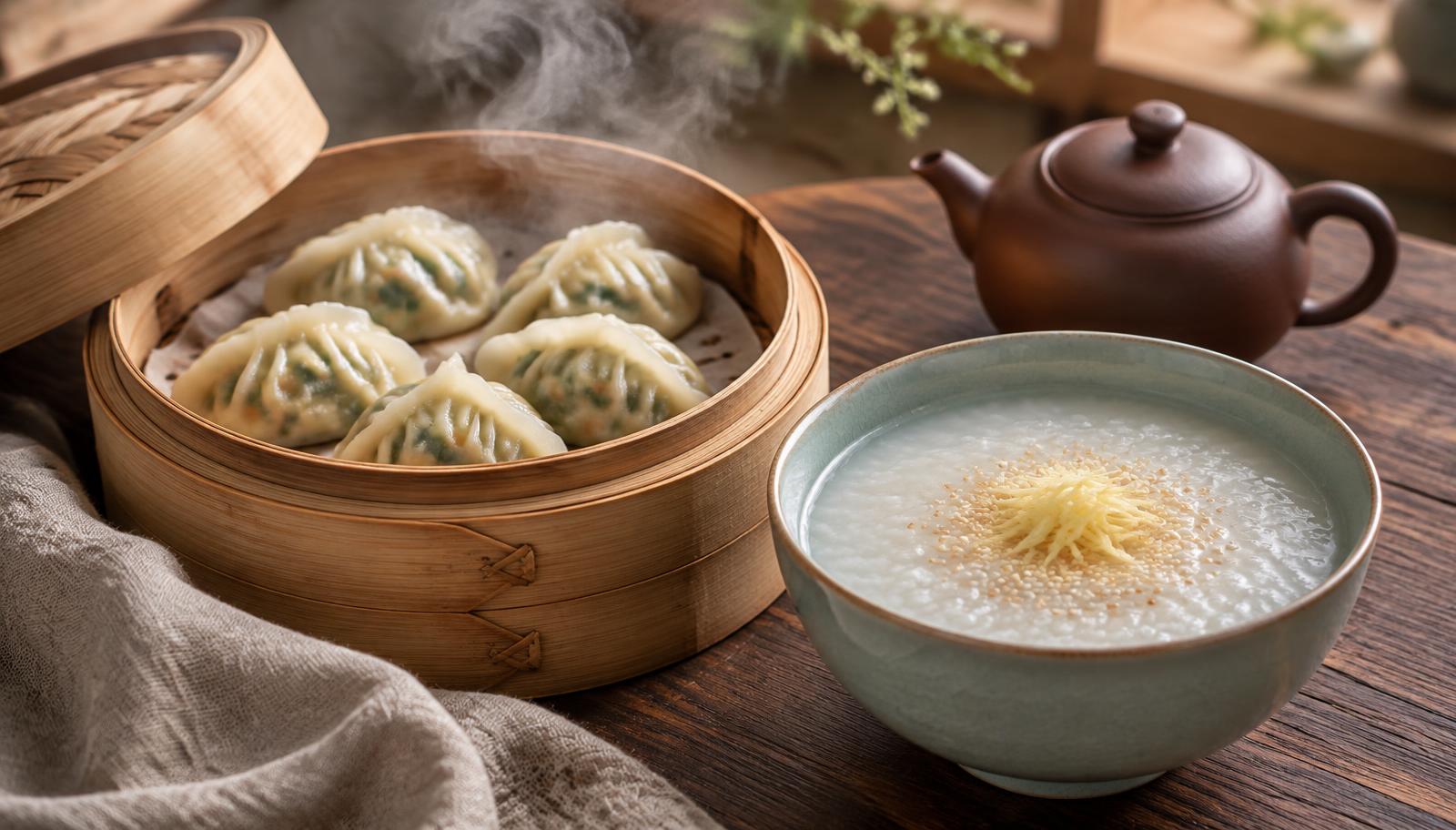
These four seven-day menus are written for readers in East and Southeast Asia, for Asian families abroad, and for anyone who loves the Eastern table. They are separate from the Haridwar monthly menus of Volume I. Each day combines recipes from this volume (numbered, e.g. 1.04) with Indian dishes from Volumes I and II — especially South Indian dishes, whose rice, coconut, steamed batters and mild broths sit naturally beside congee, dumplings and noodle soups.
| Time | Meal | Principle | Typical choices |
|---|---|---|---|
| On waking | Warm drink | Wakes agni gently | Lemongrass–ginger tea, ginger–jujube tea, chrysanthemum in summer |
| Breakfast | Congee, porridge, steamed buns, idli | Warm, soft, moderate | Jook, okayu, juk, millet porridge, cheung fun |
| Lunch — main meal | Rice or noodles + soup + two or three sides | Ichijū-sansai and thali principles | Bibimbap, takikomi gohan, curry with rice, noodle soup |
| Afternoon | Tea and a small sweet or fruit | Caffeine-free tea; tong sui | Barley tea, red-bean soup, steamed sweet potato |
| Dinner — light | Soup, congee, noodles in broth | Finish 2–3 hours before bed | Miso soup with onigiri, cháo, thukpa, kenchin-jiru |
| Bedtime (optional) | Warm drink | Calms Vata | Warm soy milk or golden milk |
With the foundation items, every day falls within or close to the range most adults over fifty need. Salt in these menus averages well under 5 g a day from the dishes themselves — provided dipping sauces and pickles are used in the spoonful amounts given in the recipes.
Tropical Asia: use the Summer & Monsoon week in the hot and wet seasons, the Autumn week after the monsoon, and the Winter week in the cool dry season.
Sep – Nov (temperate Asia) · Post-monsoon (tropical Asia)
Congees with pumpkin and sweet potato; root-vegetable simmered dishes; sesame, ginger, red dates; warm broths with every meal.
Dec – Feb (temperate Asia) · Cool dry season (tropical Asia)
Hearty noodle soups, dumplings, braised tofu and adzuki; ginger and jujube teas; from late winter, lighten with daikon, buckwheat and millet.
Mar – May (temperate Asia) · Hot dry season begins (tropical Asia)
Spring greens and herbs, buckwheat soba, daikon, sprouts and light tofu dishes; less sticky rice, coconut and sweets; pungent ginger and pepper.
Jun – Aug (temperate Asia) · Hot & wet seasons (tropical Asia)
Mung bean, winter melon, cucumber, coconut and rice; chrysanthemum and barley teas at room temperature; less chilli, sour pickle and fried food. In the monsoon, cook everything and add ginger.