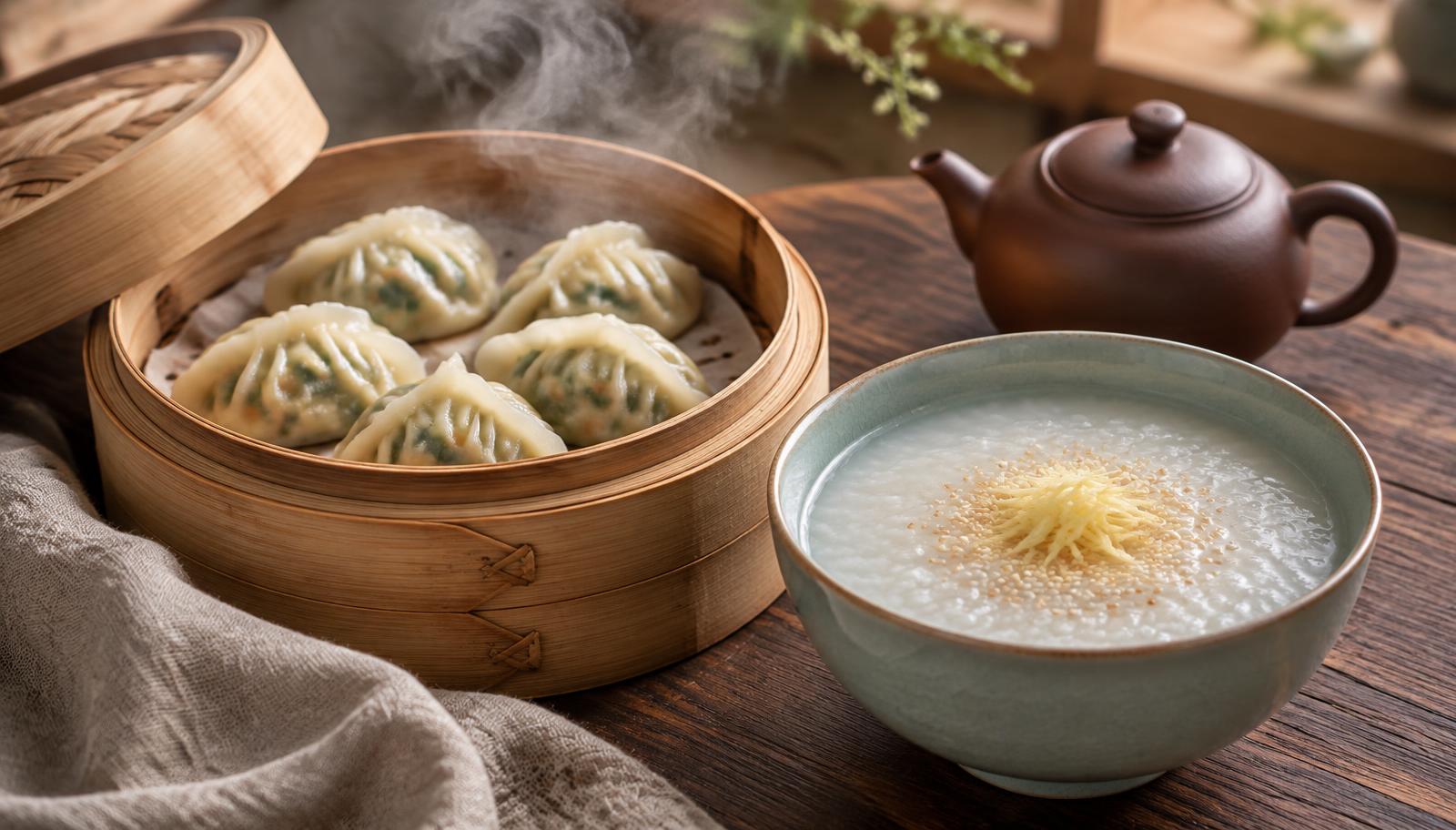
These four seven-day menus are written for readers in East and Southeast Asia, for Asian families abroad, and for anyone who loves the Eastern table. They are separate from the Haridwar monthly menus of Volume I. Each day combines recipes from this volume (numbered, e.g. 1.04) with Indian dishes from Volumes I and II — especially South Indian dishes, whose rice, coconut, steamed batters and mild broths sit naturally beside congee, dumplings and noodle soups.
The shape of a day#
| Time | Meal | Principle | Typical choices |
|---|---|---|---|
| On waking | Warm drink | Wakes agni gently | Lemongrass–ginger tea, ginger–jujube tea, chrysanthemum in summer |
| Breakfast | Congee, porridge, steamed buns, idli | Warm, soft, moderate | Jook, okayu, juk, millet porridge, cheung fun |
| Lunch — main meal | Rice or noodles + soup + two or three sides | Ichijū-sansai and thali principles | Bibimbap, takikomi gohan, curry with rice, noodle soup |
| Afternoon | Tea and a small sweet or fruit | Caffeine-free tea; tong sui | Barley tea, red-bean soup, steamed sweet potato |
| Dinner — light | Soup, congee, noodles in broth | Finish 2–3 hours before bed | Miso soup with onigiri, cháo, thukpa, kenchin-jiru |
| Bedtime (optional) | Warm drink | Calms Vata | Warm soy milk or golden milk |
The daily foundation#
With the foundation items, every day falls within or close to the range most adults over fifty need. Salt in these menus averages well under 5 g a day from the dishes themselves — provided dipping sauces and pickles are used in the spoonful amounts given in the recipes.