The congee ladder#
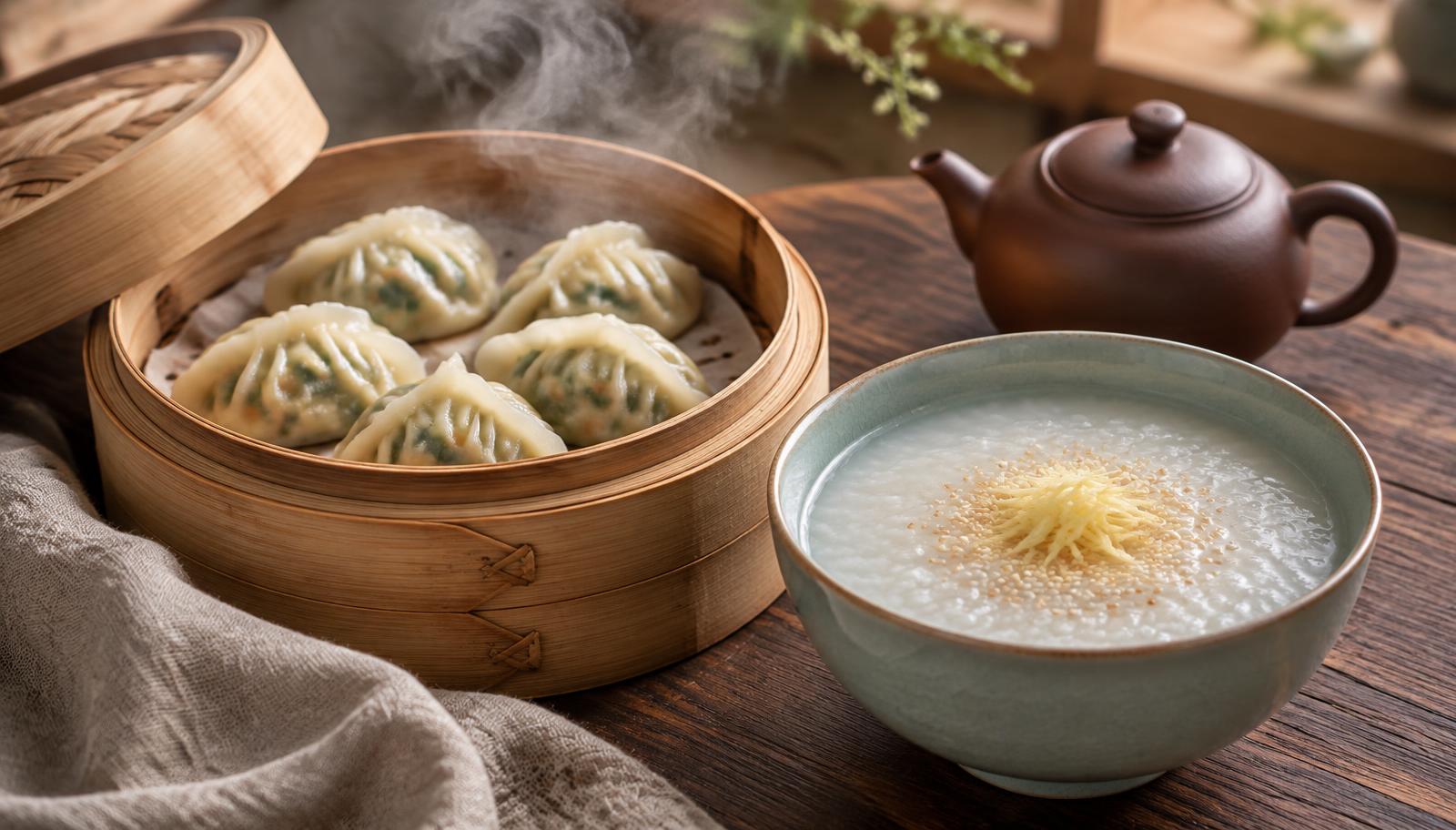
Ayurveda describes a series of rice preparations of increasing thickness — manda (rice water), peya (thin gruel), vilepi (thick porridge), and finally rice — used to restore appetite and strength step by step after illness, fasting or panchakarma. The East Asian kitchen has the same ladder. Japanese hospitals and households still grade okayu by water ratio: zen-gayu (1:5), shichibu-gayu (1:7), gobu-gayu (1:10) and sanbu-gayu (1:20) [6]. Congee is served throughout Asia to the sick and the elderly [5].
Kombu dashi: umami without fish, mushrooms or onion#
Dashi is the stock behind most Japanese soups and simmered dishes. Temple cooks make it from kombu (and usually shiitake, which this kitchen omits). Kombu is rich in natural glutamate — the source of umami, the "fifth taste" discovered by the Japanese chemist Kikunae Ikeda in kombu itself. A strong kombu dashi lets you use far less salt (Recipe 2.01).
| Stock | Ingredients (for 1 litre) | Time | Best for |
|---|---|---|---|
| Cold-brew kombu dashi | 10 g kombu, 1 L water | Soak 8 h, refrigerated | Miso soup, okayu, chawanmushi |
| Hot kombu dashi | 10 g kombu, 1 L water | Soak 30 min, heat slowly to 60 °C, hold 30 min, remove before boil | Noodle broths, nimono |
| Kombu–daikon–carrot | 10 g kombu, 100 g daikon, 1 carrot, 1.2 L water | Simmer 30 min | Congee, kenchin-jiru |
| Charred-ginger spice stock | 30 g charred ginger, star anise, cinnamon, clove, coriander, fennel, daikon, carrot | Simmer 40 min | Pho, thukpa |
| Corn-cob & ginger | 2 corn cobs, 3 slices ginger, 1.2 L water | Simmer 30 min | Sweet corn soup, summer broths |
Steaming#
Steaming keeps food moist and soft without added fat and is the gentlest cooking method for older digestion. Use a bamboo steamer over a wok or a metal insert over a saucepan; line baskets with cabbage leaves or perforated baking paper; keep water at a steady simmer and top up with boiling water.
| Food | Steaming time | Test |
|---|---|---|
| Silken tofu (whole block) | 8 min | Heated through |
| Kabocha wedges | 12–15 min | Skewer slides through |
| Sweet potato chunks | 15–20 min | Soft |
| Jiaozi / momos | 10–12 min | Wrappers translucent |
| Mantou | 15 min + 5 min rest | Spring back when pressed |
| Glutinous rice (soaked) | 25 min | Translucent and tender |
| Rice-noodle sheets (cheung fun) | 3 min | Translucent, set |
| Egg-free chawanmushi | 15 min, gentle heat | Wobbly but set |
The wok, adapted for elders#
The classic stir-fry cooks vegetables crisp-tender in minutes. For older teeth and digestion, use the stir-fry–braise: stir-fry aromatics and vegetables 2 minutes, add a splash of stock, cover for 2–3 minutes until tender, then uncover to glaze. Cut vegetables small and thin. Use a neutral oil for high heat and add toasted sesame oil only at the end, off the heat — it burns easily and becomes bitter.
Tofu and tempeh, step by step#
| Step | Firm tofu | Silken tofu | Tempeh |
|---|---|---|---|
| Prepare | Press 20 min under a weight | Drain gently; do not press | Steam 10 min to soften and remove bitterness |
| Flavour | Marinate in soy, ginger, a little jaggery | Pour warm sauce over after steaming | Simmer in spiced liquid (bacem) |
| Cook | Bake, pan-sear, braise | Steam or add to soup at the end | Pan-sear after simmering |
| Ayurvedic touch | Ginger, pepper, star anise warm it | Warm ginger–sesame oil over the top | Coriander seed, galangal |
| 55+ note | ≈ 12–15 g protein per 100 g | ≈ 5 g protein per 100 g; spoon-soft | ≈ 19 g protein per 100 g |
Rice and noodle cooking chart#
| Item | Water / method | Time | Tip |
|---|---|---|---|
| Jasmine rice | 1 : 1.5 by volume | 15 min + 10 rest | Rinse three times |
| Japanese short-grain rice | 1 : 1.2 by volume | Soak 30 min; 15 min + 10 rest | Fluff with a wet paddle |
| Glutinous rice | Soak 4 h; steam, do not boil | 25 min | Line steamer with cloth |
| Red / brown rice | 1 : 2.2 | Soak 2 h; 40 min | Pressure cooker 15 min |
| Soba | Large pot of boiling water | 5–6 min | Rinse in warm water for hot dishes |
| Udon (frozen) | Boiling water | 1–2 min | Do not overcook — they tear |
| Rice noodles (dried) | Soak in hot water, then boil 1 min | 10 min soak | Snip with scissors for elders |
| Glass noodles | Boil | 6 min | Snip into short lengths |