9. Ayurvedize Any Asian Recipe in Seven Steps
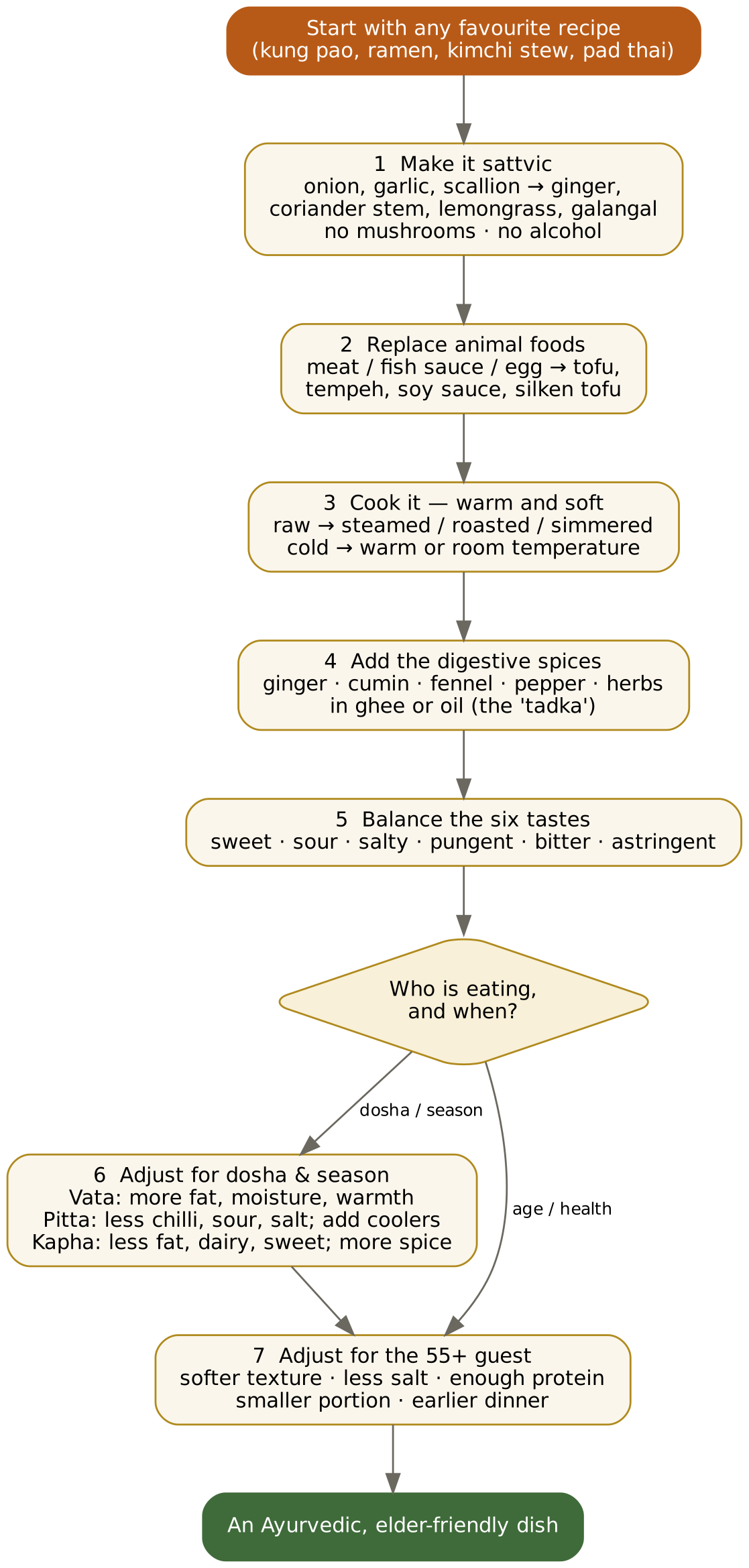 Figure — The seven-step method applied to Eastern recipes.
Five worked examples
| Original | What changes | Result in this book |
|---|---|---|
| Kung pao chicken | Tofu in place of chicken; ginger instead of garlic and scallion; mild chilli; peanuts kept | Variation of 4.04 with peanuts |
| Shoyu ramen | Kombu–soy broth; udon or wheat noodles; bok choy and kabocha in place of pork and egg; drink half the broth | 5.03 |
| Kimchi jjigae | Doenjang instead of kimchi (less sour, fermented heat); tofu, spinach and radish | 2.07 |
| Pad thai | Soft rice noodles with tofu, tamarind, jaggery and ground peanuts; no egg or fish sauce; bean sprouts blanched | Variation of 5.05 |
| Vegetable sushi | Warm onigiri instead of cold vinegared rice; cooked fillings; no raw fish | 6.08 |
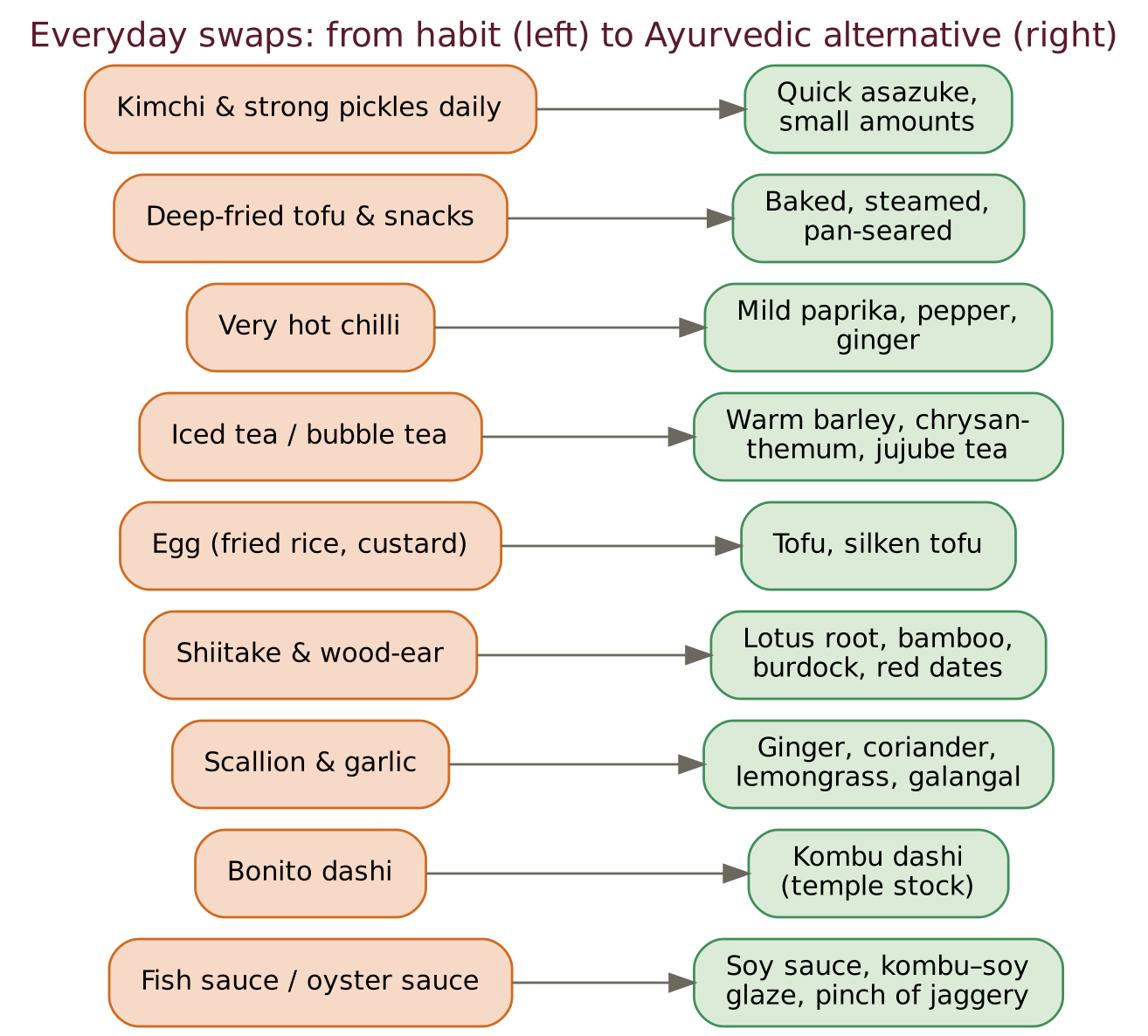 Figure — Nine everyday swaps for the Eastern kitchen.
How meals are built
The Japanese home meal is built on ichijū-sansai — one soup and three side dishes with rice — while the Indian thali gathers the six tastes on a single plate. Both achieve the same thing: variety of taste, colour and texture in modest portions.
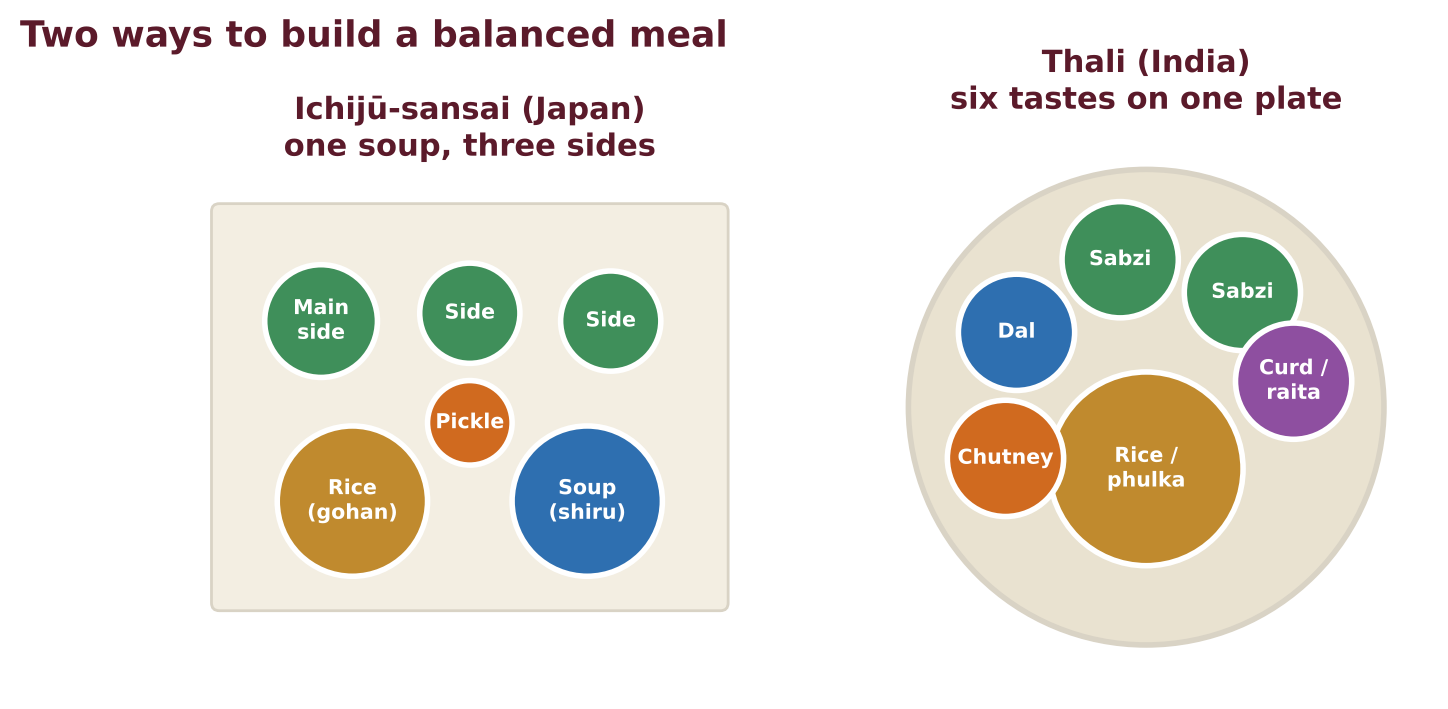 Figure — Two ways to build a balanced meal: the Japanese ichijū-sansai and the Indian thali.
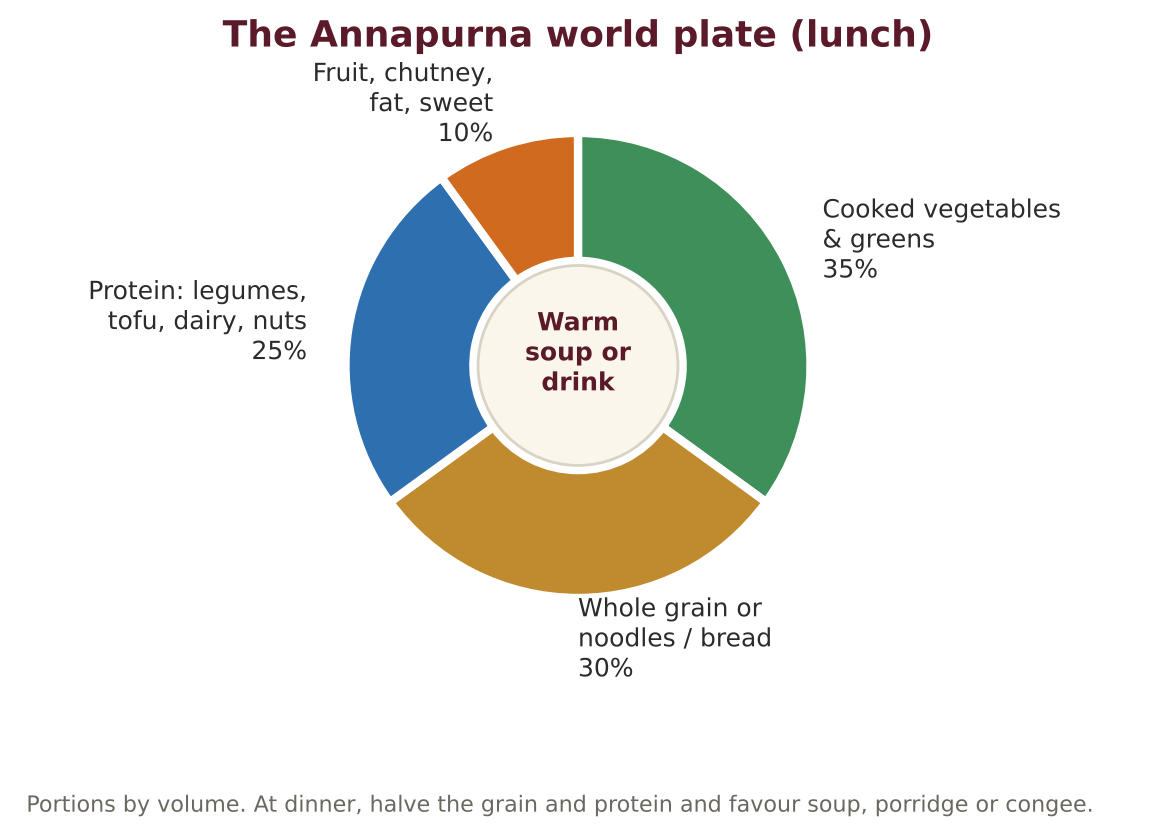 Figure — The Annapurna world plate for lunch.
How to read the recipes
Each recipe gives the region and dish that inspired it; servings, portion, time, texture, dosha and best season; an ingredient table with household measures, base quantities and a café batch (×5); a short method; estimated nutrition per serving (including salt from soy sauce and miso); a care note for 55+ guests; an Ayurvedic note; the Ayurvedic adaptations made to the original; and variations.