7. Nutrition for the Fifty-Plus Reader
Ayurveda and modern nutrition science agree more often than they disagree. Both emphasise whole, minimally processed, mostly plant food; enough protein; warmth and regularity; and moderation in salt, sugar and alcohol. This chapter gives the modern targets so that the Ayurvedic menus can be checked against them.
| Nutrient | Why it matters after 50 | Daily target (approx.) | Best sources in this book |
|---|---|---|---|
| Protein | Protects muscle and strength; prevents sarcopenia and frailty | 1.0–1.2 g per kg body weight (≈ 60–80 g); 1.2–1.5 g/kg with chronic illness [8] | Lentils, beans, quinoa, ricotta, cottage cheese, paneer, milk, nuts, seeds |
| Calcium | Bone strength; needs rise for women from 51 and men from 71 | 1,200 mg (women 51+, men 71+) [7] | Milk, yoghurt, paneer, sesame/tahini, almonds, kale, fortified plant milks |
| Vitamin D | Calcium absorption, muscle function | 600–800 IU; many need a supplement in northern winters | Sunlight, fortified milks; ask your doctor |
| Vitamin B12 | Absorption falls with age and with some medicines (metformin, antacids) | 2.4 µg; vegetarians often need fortified foods or a supplement [7] | Milk, yoghurt, cheese; fortified plant milks; supplement if advised |
| Fibre | Bowel regularity, heart health, blood sugar | 25–30 g | Oats, barley, legumes, vegetables, fruit |
| Fluid | Thirst declines with age | 6–8 cups warm fluids | Soups, teas, warm water |
| Salt | Blood pressure, stroke risk | Less than 5 g salt (2 g sodium) [9] | Herbs, lemon, spice instead of salt |
The evidence for Mediterranean-style eating
The Mediterranean diet — vegetables, legumes, whole grains, olive oil, nuts, fruit, modest dairy — is the most studied eating pattern for healthy ageing, and it is very close to a sattvic vegetarian diet. A pooled analysis of 5,789 people aged 60 and over found that those with medium adherence had 38% lower odds of frailty and those with high adherence 56% lower odds than those with low adherence [5] [6].
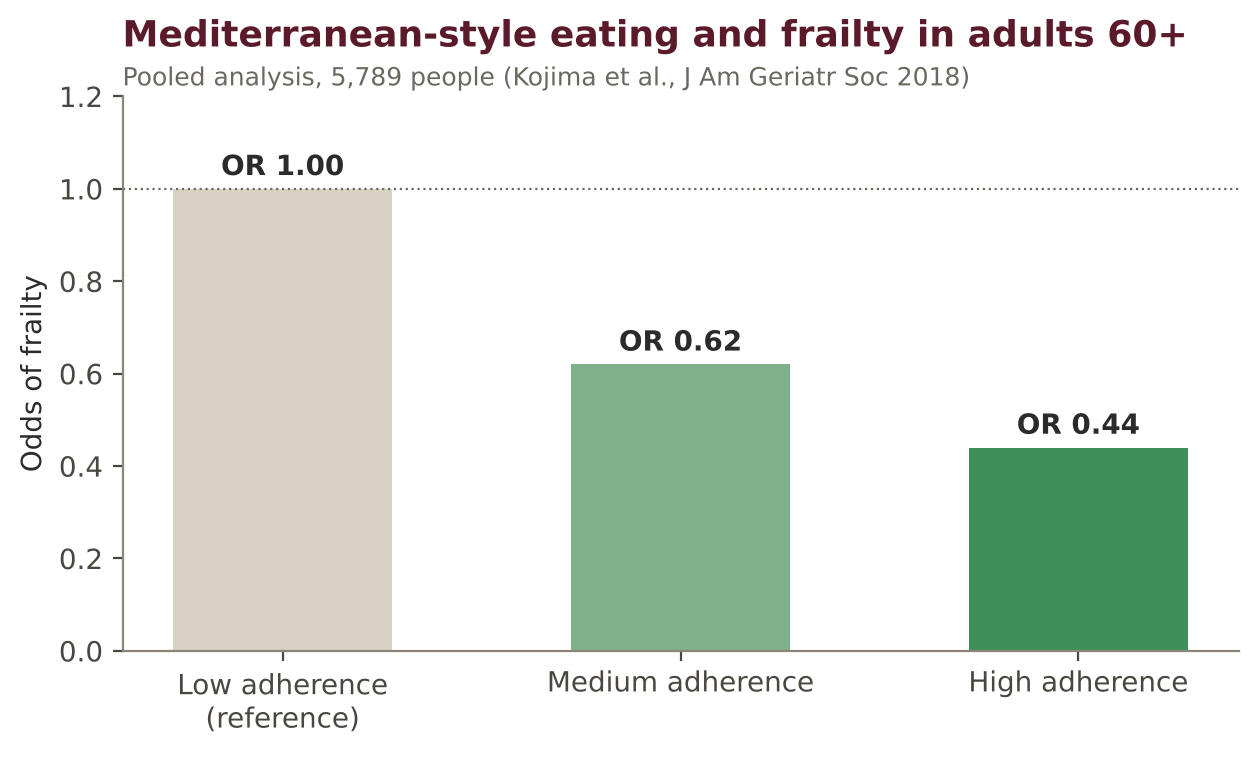 Figure — Mediterranean-style eating and the odds of frailty in older adults.
Medicines and food: what to check with your doctor
[!WARNING] Food–medicine cautions
- Warfarin: keep vitamin K intake (kale, spinach, chard, broccoli) steady from day to day rather than avoiding greens; ask before eating cranberry or grapefruit, and before using herbal products [11].
- Statins and some blood-pressure medicines: grapefruit can interfere — check your leaflet.
- Diabetes medicines: the desserts and porridges contain natural sugars; take half portions and pair with protein.
- Kidney disease: high-potassium foods (potatoes, squash, tomatoes, beans) and protein targets may need adjustment.
- Turmeric, ginger and fish-oil-free omega-3 supplements in medicinal doses can affect bleeding — culinary amounts are fine.