2. The Dosha Year in Temperate Climates
Ayurveda teaches that the qualities of the season enter the body. In India the year turns on the monsoon; in Europe, North America and much of Australia it turns on cold and warmth. The doshas still follow the qualities of the weather — so the calendar shifts, but the logic does not [2].
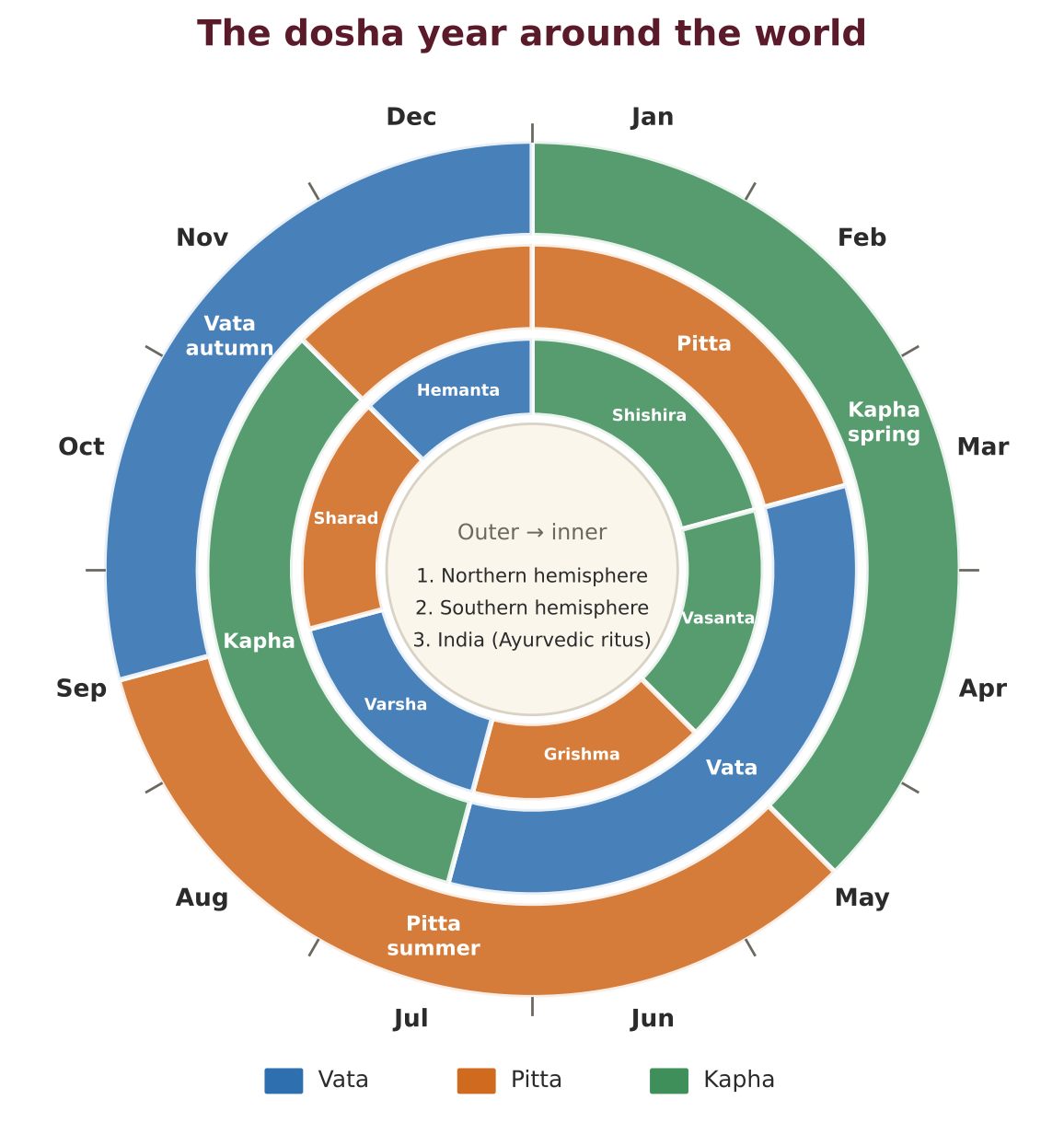 Figure — The dosha year in the northern hemisphere (outer ring), the southern hemisphere (middle) and the Indian ritu calendar (inner).
| Western season | Northern hemisphere | Southern hemisphere | Dominant qualities | Dosha | Kitchen emphasis |
|---|---|---|---|---|---|
| Late autumn – early winter | Oct – Dec | Apr – Jun | Cold, dry, windy, changeable | Vata | Soups, stews, root vegetables, oats, ghee, warming spices, sweet–sour–salty |
| Late winter – spring | Jan – May | Jul – Nov | Cold, damp, heavy, then thawing | Kapha | Barley, millet, quinoa, legumes, greens, ginger, pepper; less dairy and sweet |
| Summer – early autumn | Jun – Sep | Dec – Mar | Hot, bright, sharp | Pitta | Zucchini, cucumber, leafy greens, rice, coconut, mint, coriander, fennel; less chilli and sour |
Adjusting for your local climate
The table is a starting point. Read your own weather by its qualities rather than its calendar name.
| Climate | Typical feature | Treat it as | Practical adjustment |
|---|---|---|---|
| Northern & central Europe, Canada | Long cold winters, short mild summers | Long Vata–Kapha season | Prioritise warm cooked food for 8–9 months; enjoy summer salads only in July–August |
| Mediterranean, California, south-west Australia | Hot dry summer, mild wet winter | Pitta summer, mild Kapha winter | Cooling Pitta foods from May to September; light spring cleansing foods in winter–spring |
| British Isles, Pacific North-West, New Zealand | Cool and damp most of the year | Kapha with Vata winds | Warm, light, spiced food; barley, ginger, pepper; avoid heavy dairy |
| US Midwest & continental climates | Very cold winters, hot humid summers | Strong Vata winter, Pitta–Kapha summer | Hearty winter stews; summer meals light and cooling but cooked |
| Desert & high altitude | Dry, windy, large day–night swings | Vata all year | Extra ghee and oil, soups, hydration, regular routine |
| Tropical & subtropical | Hot and humid | Pitta–Kapha | Light, cooling, easily digested food; coconut, rice, mung, cooked greens |
[!TIP] Southern-hemisphere readers
- Every recipe in this book carries a season code: Vata season, Kapha season, Pitta season or All year.
- In Australia, New Zealand, South Africa, Chile and Argentina, shift the menus in Part III by six months: the "Autumn" week is for March–May, "Winter" for June–August, "Spring" for September–November and "Summer" for December–February.
- Christmas falls in Pitta season south of the equator: choose the Midsummer Garden Lunch (Part III) rather than the winter feast.
Ritucharya at the junctions
Ayurveda warns that the two weeks at the junction between seasons (ritusandhi) are the most vulnerable to colds, digestive upsets and low mood. In the West these are roughly the equinoxes and the start of the heating and cooling seasons. At each junction, step down the old season's foods gradually, eat simply for a few days (a kitchari day, Recipe 3.07, is ideal — a practice popularised in the West by teaching centres such as Kripalu [3]), and keep sleep and meal times regular.
| Junction | Northern hemisphere | What to step down | What to step up |
|---|---|---|---|
| Summer → autumn | Mid-Sept – early Oct | Raw salads, cold drinks, tropical fruit | Soups, cooked apples and pears, ghee, oats |
| Early → late winter | Late Dec – mid-Jan | Very rich festive food, sweets | Barley, millet, ginger tea, spice, lighter dinners |
| Spring → summer | Late May – mid-June | Heavy grains, pungent spices | Rice, zucchini, mint, coconut, room-temperature drinks |