6. Western Habits Worth Adapting
Several everyday Western habits work against the digestion, sleep and joints of older people, according to Ayurveda. None is forbidden; each has a gentle swap.
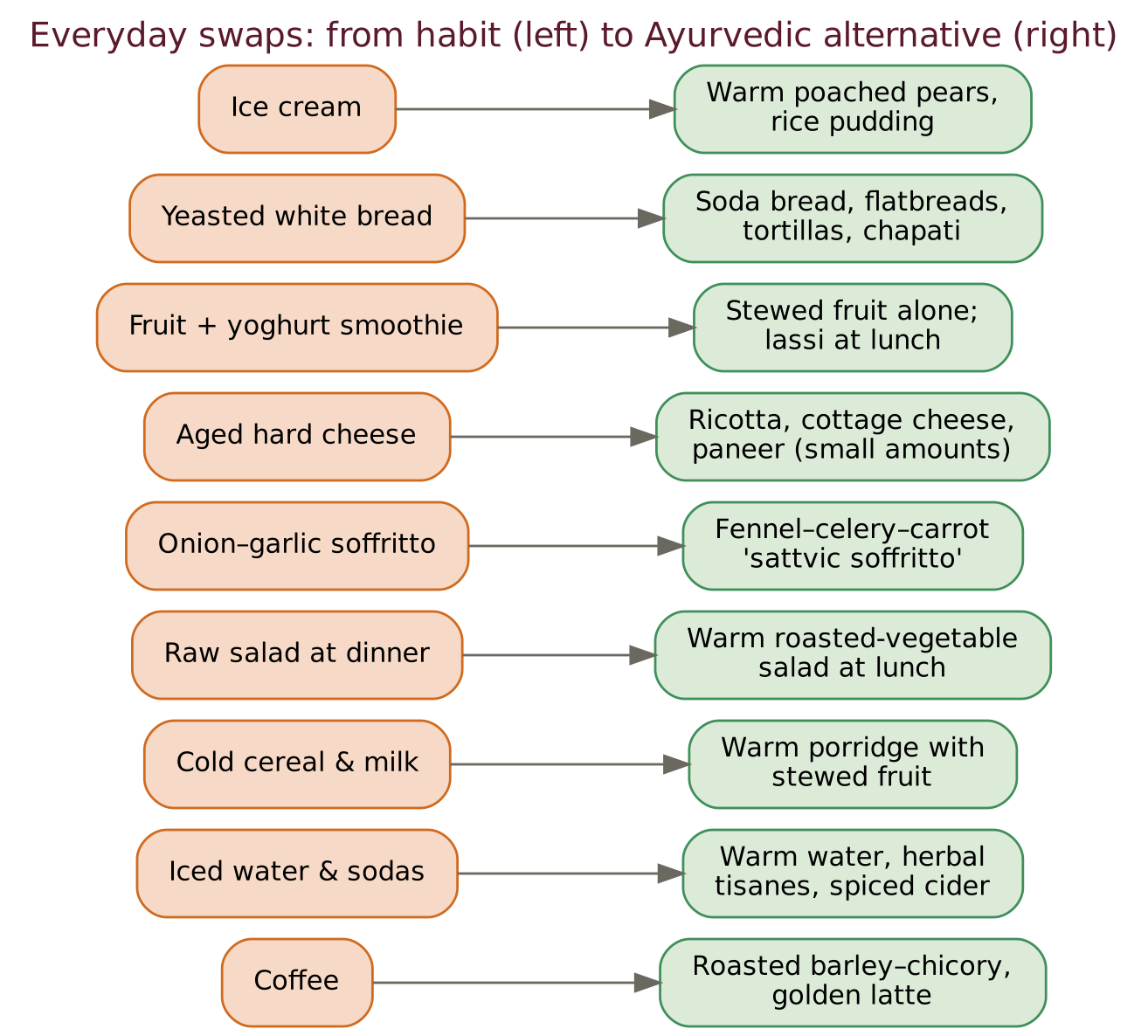 Figure — Nine everyday swaps for the Western kitchen.
| Habit | Ayurvedic concern | Gentle alternative | Recipe(s) |
|---|---|---|---|
| Iced water and iced drinks with meals | Cold extinguishes agni; Vata rises | Warm or room-temperature water; sips only during meals | 11.05, 11.02 |
| Strong coffee, several cups a day | Hot, sharp, drying; disturbs Vata and Pitta, sleep and bone calcium balance | One mild coffee before noon, or barley–chicory 'coffee', golden latte | 11.06, 11.01 |
| Cold cereal with cold milk | Cold, dry, heavy combination | Warm porridge with stewed fruit | 1.01–1.10 |
| Raw salad as a main meal, especially at night | Rough, cold, hard for Vata and older digestion | Warm salads at lunch; cooked vegetables at dinner | 7.01–7.04 |
| Fruit and yoghurt smoothies | Fruit with dairy, sour with milk, and cold — a classic incompatible combination (viruddha) | Stewed fruit alone; lassi or yoghurt at lunch | 10.05, 9.04 |
| Aged cheese at every meal | Salty, sour, heating, heavy; high in salt and saturated fat | Fresh cheeses in small amounts; nutritional depth from nuts and legumes | 5.03, 6.06 |
| Yeasted white bread with every meal | Heavy, sour, Kapha-increasing | Soda bread, flatbreads, tortillas, chapati | 8.01–8.05 |
| Ice cream and chilled desserts | Cold and heavy; congests | Warm poached fruit, rice pudding, crumble | 10.01–10.04 |
| Late heavy dinner | Agni is weakest after sunset | Main meal at lunch; soup, porridge or kitchari at dinner | Part III menus |
| Microwaved leftovers several days old | Stale food loses prana; tamasic | Cook fresh daily; freeze portions immediately if needed | — |
Onions, garlic, mushrooms and nightshades
The Annapurna Kitchen avoids onion and garlic because they are classed as rajasic and tamasic — stimulating the senses and passions — and because many spiritual traditions, from the yogic to the Buddhist, set them aside for meditation. Mushrooms are avoided because they grow in decay and darkness and are considered tamasic; Ayurveda also finds them aggravating to Vata [1].
Nightshades — tomatoes, potatoes, peppers and aubergine — are a different matter. Some wellness writers advise avoiding them for inflammation, but there is no compelling scientific evidence that they harm most people, and they are rich in nutrients [10]. Ayurveda's view is nuanced: raw tomato aggravates all three doshas, but cooked tomato with carrot, jaggery and fennel is acceptable in moderation. This book uses tomato moderately and always cooked, uses potato and sweet peppers freely, and omits aubergine in keeping with Centre practice.
Food combinations to avoid in Western meals
| Combination | Common Western form | Why Ayurveda avoids it | Better |
|---|---|---|---|
| Milk + sour fruit | Berry smoothie with milk; strawberries and cream | Sour curdles milk; heavy and cold together | Eat fruit 1 h apart from milk |
| Milk + banana | Banana smoothie | Heavy, cold, mucus-forming | Banana alone, or almond milk in baking |
| Yoghurt + fruit | Fruit yoghurt, parfait | Sour + sweet + cold; slows digestion | Plain spiced yoghurt at lunch; fruit separately |
| Honey heated or baked | Honey cake, honey-glazed roast | Heated honey is said to become toxic (ama) | Add honey to warm (not hot) food |
| Cheese + beans + bread | Bean-and-cheese burrito, cheese on beans on toast | Very heavy, hard to digest | Beans with herbs and a little ghee |
| Cold drinks with hot food | Iced soda with pizza | Opposing temperatures stall agni | Warm water or herbal tea |
| Melon with other foods | Fruit salad with melon | Melon digests alone | Melon alone, mid-morning |