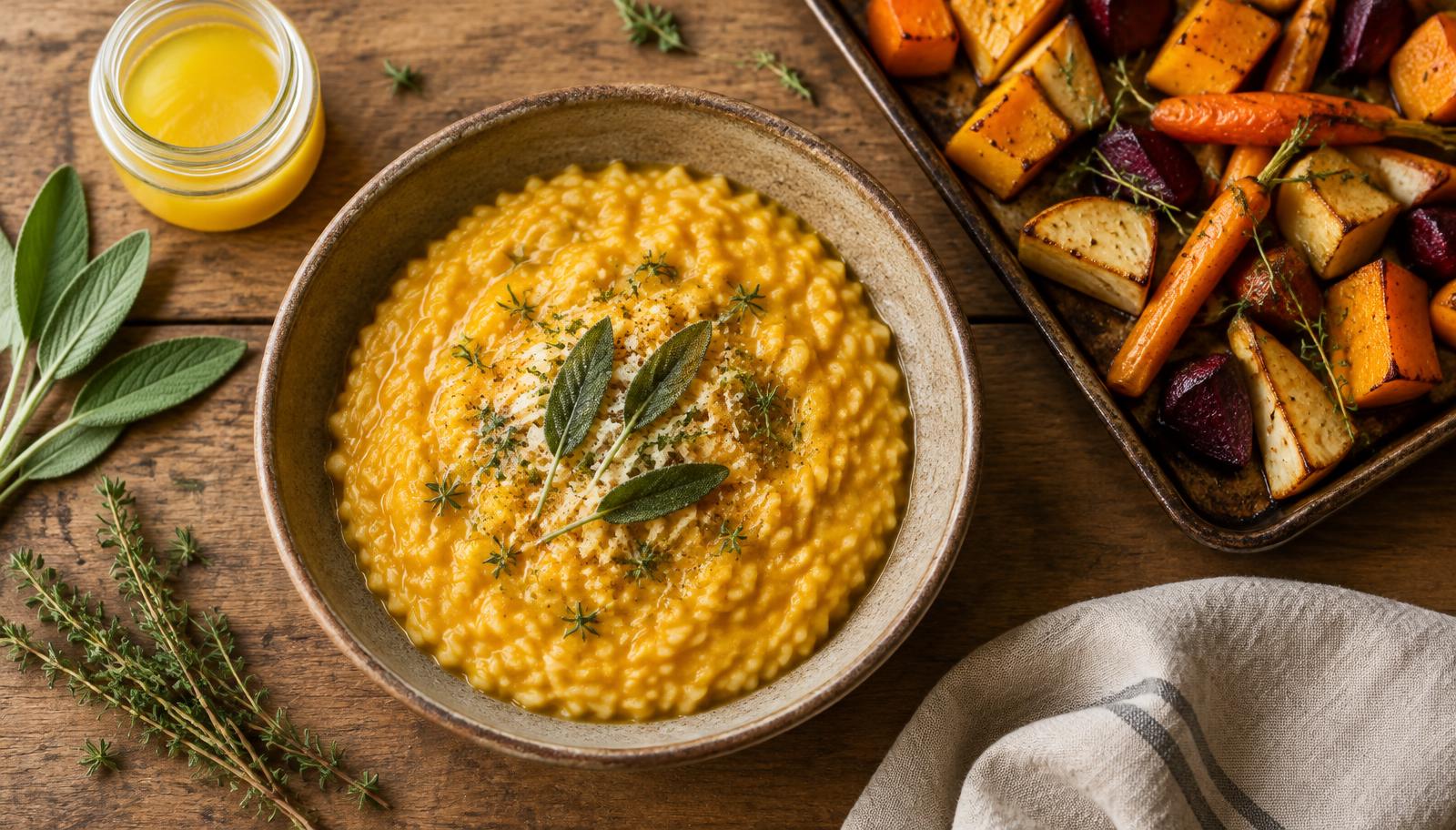
These four seven-day menus are written for readers in Europe, the Americas, Australasia and anywhere else with a temperate climate. They are separate from the monthly Haridwar menus of Volume I: those follow the Indian ritu calendar and the Centre's café; these follow the Western year. Each day combines recipes from this volume (numbered, e.g. 4.01) with Indian dishes from Volumes I and II (shown with their volume and name), so that the menus bridge both kitchens.
The shape of a day#
| Time | Meal | Principle | Typical choices |
|---|---|---|---|
| On waking (6–7 am) | Warm drink | Wakes agni; hydrates after the night | Ginger–lemon tonic, jeera–ginger water, barley water in summer |
| 7.30–8.30 am | Breakfast | Warm, moist, moderate | Porridge, crêpes, hash, idli, poha |
| 12–1.30 pm | Lunch — main meal | Agni strongest at midday (Pitta time) | Main dish + vegetable side + Indian dal, raita or chutney |
| 4 pm | Afternoon | Light drink or small snack | Herbal tea, spiced cider, baked fruit, date bites |
| 6–7 pm | Dinner — light | Agni weakening; finish 2–3 h before bed | Soup with bread, kitchari, kanji, light pasta |
| 9 pm | Bedtime (optional) | Calms Vata; aids sleep | Warm spiced milk or golden latte |
The daily foundation#
The menus list the cooked dishes. To meet the energy and protein needs of most adults over fifty, add these daily foundation items each day:
The chart shows that, with the foundation items, every menu day falls within or close to the range most older adults need. Those with larger appetites, higher protein needs (after illness or surgery, or with sarcopenia) or more physical activity can add an extra portion of dal, nuts or dairy; those with small appetites should prioritise the protein-rich dishes and eat little and often.