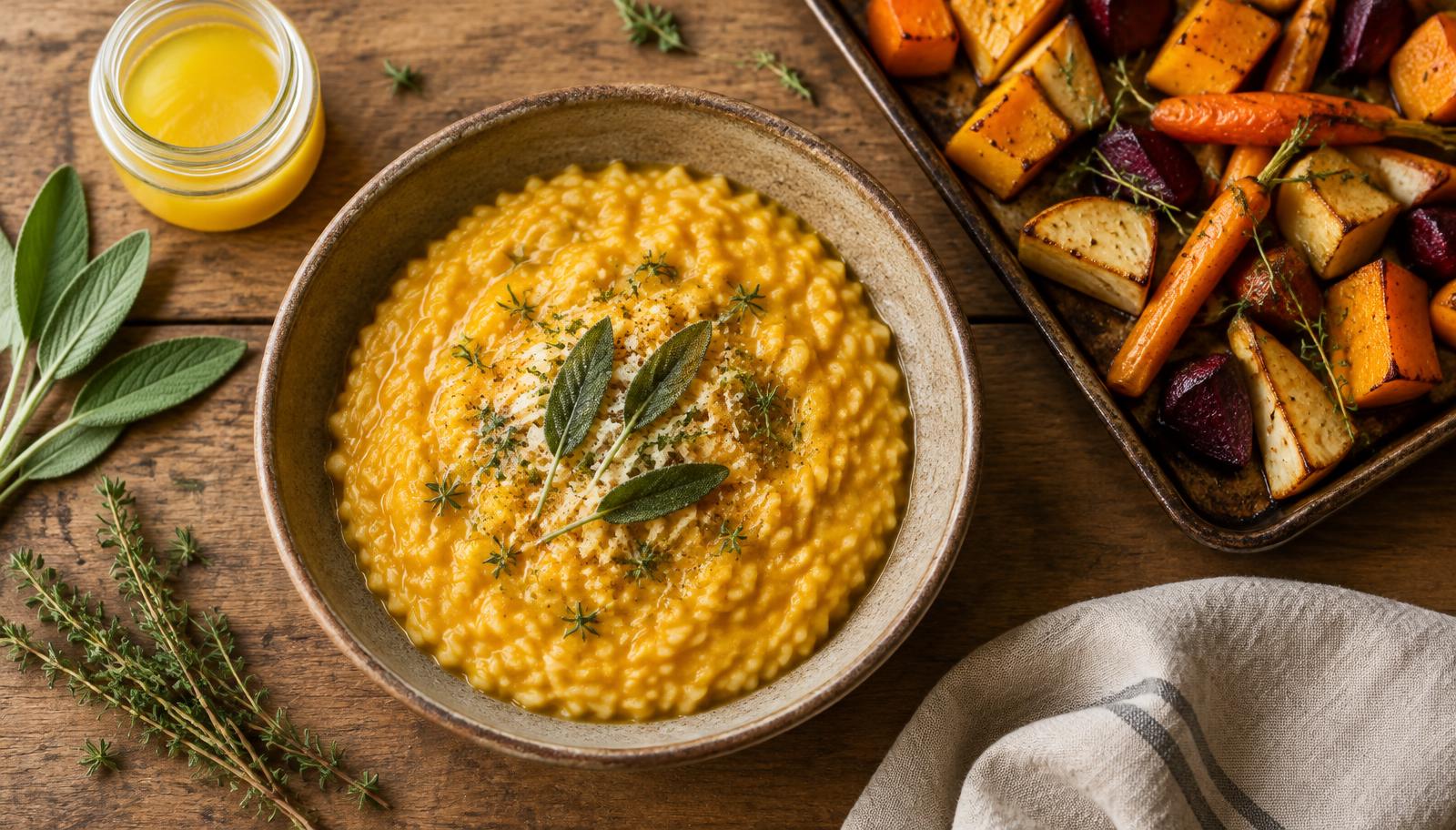
Most Western supermarkets now sell everything a sattvic Ayurvedic kitchen needs: whole grains, lentils and beans, an enormous variety of vegetables, fruit, herbs, nuts, olive oil and good butter for ghee. The challenge is not finding ingredients but knowing their qualities. The tables below summarise each food's taste, potency and effect on the doshas, drawing on the Ayurvedic Institute's food guidelines [1]
Thirty everyday Western foods and their effect on Vata, Pitta and Kapha. Grains# Grain, Taste · potency, Vata, Pitta, Kapha, Notes for 55+ Grain Taste · potency Vata Pitta Kapha Notes for 55+ Oats (cooked) Sweet · slightly warm Balances Balances Moderate Soluble fibre (beta-glucan) supports cholesterol; always cooked, never dry Quinoa Sweet, astringent · neutral Balances Balances Balances Complete protein (≈ 4 g per 100 g cooked); rinse well to remove bitter saponins Pearl barley Sweet, astringent · cooling Moderate Balances Balances Classical Kapha grain (yava); soak overnight and cook soft Millet Sweet · warm, dry Moderate (with ghee) Moderate Balances Gluten-free; becomes dry when cold — serve warm Spelt, wheat Sweet · cooling, heavy Balances Balances Aggravates Grounding; Kapha types prefer rye or barley breads Rye Astringent · warm, dry Moderate Moderate Balances Heavy rye bread can be hard to chew — toast lightly Basmati / arborio rice Sweet · cooling Balances Balances Moderate Easiest grain to digest; arborio is creamier and heavier Corn / polenta Sweet · warm, dry Moderate Moderate Balances Make soft with milk for Vata Buckwheat Sweet, astringent · warm Moderate Moderate Balances Gluten-free (despite its name) Bulgur, couscous Sweet · cooling Balances Balances Moderate Quick, soft; fine bulgur for chewing difficulties
Swipe sideways to see all columns. Legumes# Legume, Vata, Pitta, Kapha, Kitchen technique Legume Vata Pitta Kapha Kitchen technique Red lentils Moderate Balances Balances Fastest-cooking; collapse to a soft purée in 20 min Puy / green lentils Moderate Balances Balances Hold their shape; cook 25 min, add cumin Mung beans (whole or split) Balances Balances Balances The most digestible legume — the heart of kitchari Split peas Aggravates Balances Balances Soak 4 h; cook with ginger and fennel Chickpeas Aggravates Balances Balances Soak overnight, pressure-cook until very soft; peel skins for hummus Cannellini, haricot beans Aggravates Balances Balances Cook with bay leaf and a strip of kombu; season with cumin and ghee Tofu, tempeh Moderate (warm) Balances Moderate Cook with ginger and warming spices (see Vol. V)
Swipe sideways to see all columns. Vegetables# Vegetable, Vata, Pitta, Kapha, Comment Vegetable Vata Pitta Kapha Comment Asparagus Balances Balances Balances One of Ayurveda's favourite vegetables (akin to shatavari) Fennel bulb Balances Balances Balances Sweet, aromatic, digestive — the backbone of the sattvic soffritto Zucchini, summer squash Balances Balances Moderate Western cousin of lauki and tinda Butternut, pumpkin Balances Balances Aggravates (in excess) Sweet and grounding — a Vata staple Sweet potato, parsnip Balances Balances Aggravates Roast or mash with ghee Carrot, beetroot Balances (cooked) Moderate Balances Raw carrot and beet are rough for Vata Kale, chard, spinach Aggravates (raw) Balances Balances Always cook for Vata; add oil and lemon Broccoli, cauliflower, cabbage Aggravates Balances Balances Cook well with cumin, fennel or ginger to prevent wind Celery, celeriac Moderate Balances Balances Celery replaces onion as an aromatic Artichoke Moderate Balances Balances Bitter and astringent — a liver-friendly spring food Tomato Aggravates Aggravates Aggravates (raw) Cook with carrot, jaggery and fennel to soften its sourness Sweet peppers Moderate Moderate Balances Roast and peel for easy digestion Avocado Balances Balances Aggravates Rich, oily, nourishing; small portions for Kapha Lettuce, rocket Aggravates Balances Balances Summer lunch only for strong digestion
Swipe sideways to see all columns. Fruit# Fruit, Vata, Pitta, Kapha, Best way to eat Fruit Vata Pitta Kapha Best way to eat Apples Balances (cooked) Balances Balances Stewed or baked with cinnamon Pears Moderate (cooked) Balances Balances Poached with cardamom or saffron Berries Moderate Moderate (sweet ones) Balances Warm compote; avoid with milk Cherries Balances Moderate Moderate Sweet ripe cherries between meals Plums, peaches, apricots Balances Moderate Moderate Ripe, sweet; stewed in cold weather Grapes Balances Balances Moderate Sweet dark grapes; raisins soaked Citrus (orange) Balances Moderate Moderate Sweet oranges only; avoid on an empty stomach for Pitta Cranberries Aggravates Balances Balances Sweetened lightly; check with doctor if on warfarin [11] Figs, dates, prunes Balances Balances Aggravates Soak dried fruit before eating
Swipe sideways to see all columns. Dairy and fats# Food, Vata, Pitta, Kapha, Notes Food Vata Pitta Kapha Notes Fresh milk (warm, spiced) Balances Balances Moderate Boil with cardamom or ginger; drink apart from sour fruit Ghee Balances Balances Moderate The prime cooking fat; make your own (Vol. I Foundation 1) Butter (unsalted) Balances Moderate Aggravates Use for ghee rather than as a spread Ricotta, cottage cheese, paneer Balances Balances Aggravates Fresh, unaged cheeses are lighter than hard cheese Aged hard cheese (Cheddar, Parmesan) Moderate Aggravates Aggravates Salty, sour, heating and heavy — a seasoning, not a main Feta, halloumi Moderate Aggravates Aggravates Very salty; rinse feta briefly in water Yoghurt Balances (spiced) Aggravates Aggravates Lunch only, room temperature, never heated; buttermilk (takra) is lighter Olive oil Balances Moderate Aggravates (in excess) Extra-virgin for dressings and gentle cooking Sunflower oil Moderate Balances Moderate Neutral; good for higher-heat cooking Coconut oil Moderate Balances Aggravates Cooling; good for Pitta summers
Swipe sideways to see all columns. Herbs and spices of the Western kitchen# European herbs are a pharmacy in their own right. Most are warming and light, which makes them excellent for Kapha and good for Vata when used in fat; Pitta types use them more lightly. Oregano, for example, is pungent and bitter, strongly heating, and best for Vata when cooked in oil, but aggravating to Pitta [4]
Herb / spice, Taste · potency, Best for, Ayurvedic use in the kitchen Herb / spice Taste · potency Best for Ayurvedic use in the kitchen Rosemary Pungent, bitter · heating Kapha, Vata Roast vegetables, herb ghee; stimulates circulation Thyme Pungent · heating Kapha, Vata Contains thymol, like ajwain — a carminative for beans Sage Pungent, bitter, astringent · warming Kapha, Vata Squash, gnocchi, risotto; dries excess mucus Oregano Pungent, bitter · heating Vata, Kapha Tomato sauce, beans; use lightly for Pitta [4] Basil (sweet) Pungent, sweet · warming Vata, Kapha Pesto, tomato; cousin of tulsi Dill Pungent, bitter · cooling All, especially Pitta Soups, yoghurt sauces, beets Parsley Pungent, bitter · mildly warming Kapha, Vata Gentle diuretic; abundant in tabbouleh Mint Pungent, sweet · cooling Pitta Summer salads, infusions, yoghurt sauces Bay leaf Pungent · warming Vata, Kapha Beans, stocks, rice pudding Nutmeg Pungent · heating Vata Milk, spinach, squash; calming at night (a pinch only) Black pepper Pungent · heating Kapha, Vata Kindles agni; pairs with turmeric Cinnamon Sweet, pungent · warming Vata, Kapha Oats, apples, cider, rice pudding Paprika (sweet) Pungent · mildly heating Vata, Kapha Colour and warmth without chilli heat Vanilla Sweet · cooling Pitta, Vata Desserts; soothing aroma
Swipe sideways to see all columns.