Indian readers living abroad, and Western readers using Volumes I and II, often ask: "What can I use instead?" This chapter pairs Indian kitchen staples with their closest Western equivalents by Ayurvedic qualities, not just by appearance.
| Indian ingredient | Western substitute | Why it works | Watch out for |
|---|---|---|---|
| Atta (whole-wheat flour) | Wholemeal or spelt flour | Same sweet, grounding wheat; spelt is slightly lighter | Bread flour is higher in gluten — tougher phulkas |
| Jau (barley) | Pearl or pot barley | Identical grain | Pot barley needs longer cooking |
| Bajra, jowar | Millet (proso), sorghum | Warm, dry, Kapha-reducing | Serve warm with ghee for Vata |
| Kuttu atta | Buckwheat flour | Same plant | — |
| Rajgira | Amaranth | Same plant | — |
| Moong dal | Split mung (Asian grocers) or red lentils | Red lentils are equally quick and light | Red lentils are a little more Vata-provoking |
| Toor dal | Yellow split peas | Similar sweet–astringent dal | Peas need soaking and longer cooking |
| Chana dal | Yellow split peas | Close texture | — |
| Paneer | Ricotta (soft), firm cottage cheese, halloumi (salty) | Fresh, unripened cheese | Halloumi is very salty — rinse |
| Dahi (curd) | Plain whole-milk yoghurt, live culture | Same | Greek yoghurt is heavier; thin it |
| Chaas / takra | Cultured buttermilk diluted 1:3 with water | Light and digestive | Commercial buttermilk is often salty |
| Ghee | Ghee or clarified butter | Identical | Make your own from unsalted butter |
| Mustard oil | Cold-pressed rapeseed (canola) oil | Same plant family, milder | Lacks mustard oil's pungency |
| Lauki, tinda, parwal | Zucchini, summer squash, green beans | Cooling, watery gourds | Zucchini cooks faster |
| Kaddu | Butternut, kabocha, pumpkin | Sweet squash | — |
| Methi leaves | Watercress, fenugreek microgreens, a few chicory leaves | Bitter green | Watercress is more pungent |
| Sarson (mustard greens) | Mustard greens, kale, collards | Bitter–pungent winter green | Cook longer |
| Arbi (colocasia) | Taro (Asian grocers) or floury potato | Starchy, slippery | — |
| Shakarkandi | Sweet potato | Identical family | Orange types are sweeter |
| Amla | Fresh gooseberries, sour cherries | Sour, rich in vitamin C | Not identical — amla is unique |
| Kokum, amchur, tamarind | Lemon juice, sumac, a little apple-cider vinegar | Sour taste | Vinegar is sharper — use half |
| Jaggery (gur) | Rapadura, panela, muscovado, maple syrup, coconut sugar | Unrefined sweetness | Maple is cooling; molasses sugars are warming |
| Curry leaves | Bay leaf + lemon zest (only approximate) | Aromatic, slightly bitter | No true substitute — buy frozen |
| Hing | A pinch of fennel + celery seed | Carminative for beans | Hing itself is widely sold online |
| Ajwain | Dried thyme | Both rich in thymol | Thyme is gentler |
| Kasuri methi | Dried fenugreek leaves (sold as such) | Same | — |
| Saunth (dry ginger) | Ground ginger | Identical | — |
| Kesar (saffron) | Saffron | Identical | — |
| Rose water, gulkand | Rose water, rose petal jam | Same flavour | Check for added alcohol in some brands |
Western dishes that are already Ayurvedic#
Many Western classics need no translation at all — they already follow Ayurvedic principles:
- Porridge (Scotland) — warm, moist, nourishing; add stewed apple and cinnamon.
- Barley water and barley broth (Britain) — the classical Kapha drink and gruel.
- Polenta (Italy) and grits (American South) — warm, soft grain porridges.
- Minestrone and pot-au-feu — slow-cooked vegetable broths, the Western yusha.
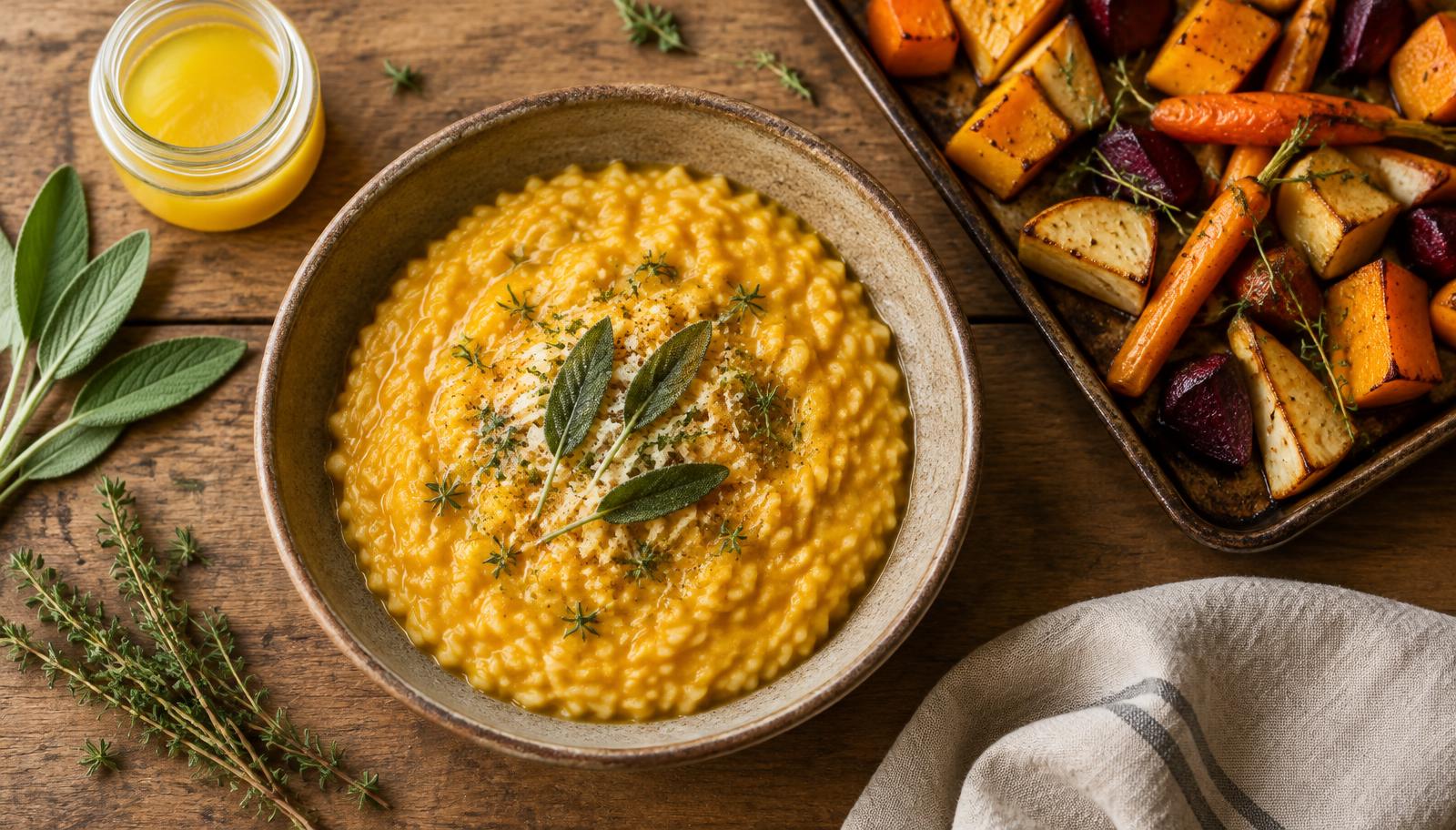
- Risotto — rice cooked slowly in broth with fat; close to a vilepi.
- Baked apples and poached pears — cooked fruit with warming spice.
- Chamomile and fennel teas — classic Pitta–Vata digestives.
- Mulligatawny — itself an Anglo-Indian soup, and easily made sattvic.