Annapurna Kitchen · Volume II
Cookware guide
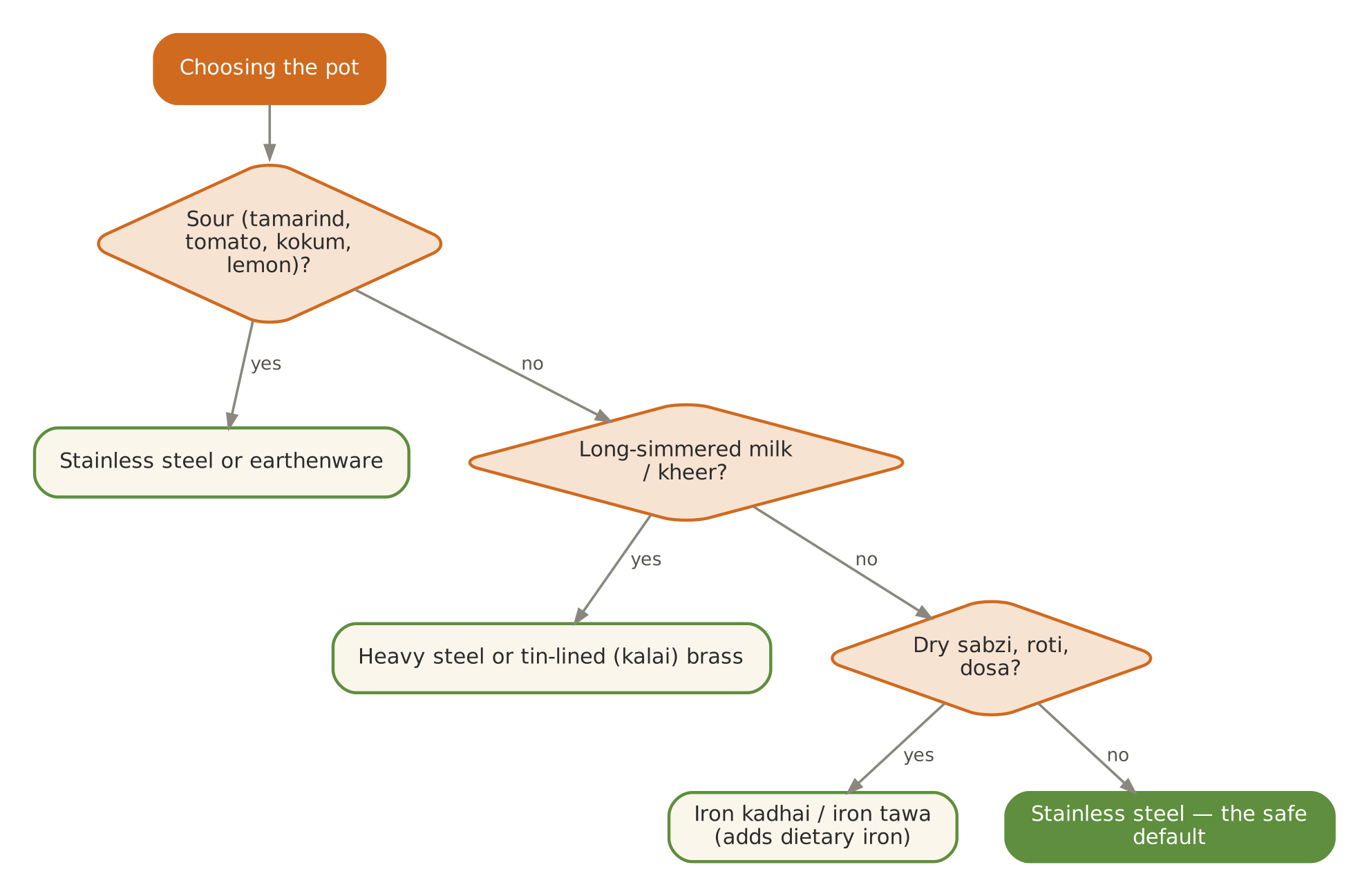
Choosing the pot
Is the dish sour?
| Material | Best for | Avoid | Care | Note |
|---|---|---|---|---|
| Stainless steel (food-grade 304) | Everything — the safe default | Overheating empty pans | Easy; dishwasher-safe | Inert; preferred for bulk dal, milk and storage |
| Iron (kadhai, tawa) | Sabzis, rotis, dosa | Leaving sour dishes (tamarind, tomato) standing; storing food | Dry immediately; oil lightly | A 2021 systematic review found iron-pot cooking raises food iron content |
| Tin-lined brass (kalai) | Kheer, dal, rice, milk dishes | Unlined brass for any cooking; acidic/sour foods | Mild soap, soft scrubber; re-tin every 1–2 years | Traditional; never use unlined brass |
| Bronze (kansa) | Serving plates, tumblers | Sour foods stored in it | Polish with tamarind/lemon, rinse, dry | Traditional serving metal |
| Copper | Storing drinking water only | Cooking; acidic drinks; milk | Clean weekly | Traditional for water storage; never for food |
| Earthenware (clay) | Slow-cooked dal, curd setting, cooling water | Thermal shock; detergents | Soak before first use; scrub with water & ash/soda | Gentle heat; eco-friendly |
| Cast iron (enamelled) | Stews, appam | Chipped enamel | Hand-wash | Inert surface |
| Aluminium (uncoated) | — (avoid) | Acidic & salty foods especially | — | Replaced with steel in this kitchen |
| Non-stick (PTFE-coated) | Occasional low-heat use only | Heating above 170 °C; empty heating; scratched coatings | Wooden tools; replace when worn | ICMR-NIN 2024 cautions against overheating non-stick |