1. How to Use This Book
1. How to Use This Book
Each of the twelve monthly chapters in Part II follows the same anatomy, so a cook can find the same information in the same place every month. Use the flowchart below on the first day of every month.
| Season card | Hindu month, Ayurvedic ritu, Haridwar weather, state of agni and doshas, tastes to favour and to limit | | Produce & festivals | What the garden and mandi offer this month; festivals and the food each calls for | | Kitchen guidance | 4–5 rules for the month, plus the morning and bedtime ritual drinks | | Seven-day menu | Breakfast, lunch thali (dal + 2 sabzis + rice/phulka + side), evening, dinner and small sweet for each day | | Nutrition chart | Energy by source and protein per serving for the month's six featured recipes | | Six recipes | Exact grams, household measures, café batch ×5, method, nutrition, 55+ care notes, Ayurvedic note, variations | | Process flowchart | The month's signature technique as a step-and-check flow | | Further dishes & variations | Extra ideas under every category to keep the menu fresh | | 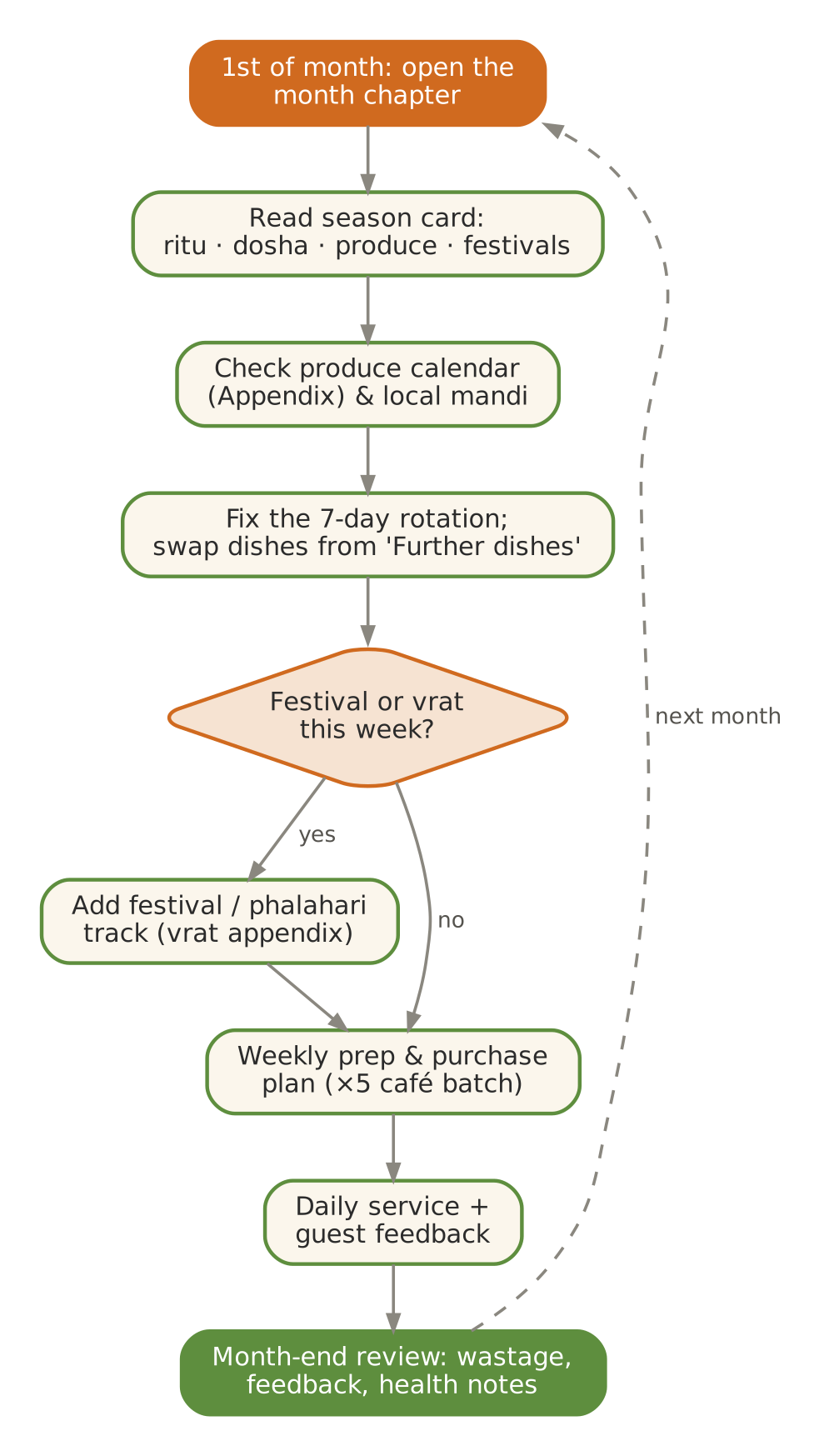
Figure 1. The monthly planning cycle |
2. Cooking for the 55+ Guest
2. Cooking for the 55+ Guest
What changes after 55
-
Muscle loss (sarcopenia) accelerates — protein needs rise even as appetite falls. Spread protein across all three meals.
-
Digestive secretions and chewing efficiency decline; dentures are common. Soft, moist textures and smaller, more frequent meals help.
-
Thirst sensation weakens; dehydration is a frequent, silent problem in Haridwar's summer and in winter when people simply drink less.
-
Bone density falls, especially in women — calcium, vitamin D (sunlight) and protein together protect bones.
-
Blood pressure, blood sugar and cholesterol are common concerns — salt, sugar and fat are portioned deliberately.
-
Constipation is common — warm water, fibre, ghee and stewed fruit address it; the Vata diet is naturally suited.
Daily planning targets
| Nutrient | Indicative daily target | How the menu delivers it |
|---|
| Energy | 1,600 – 2,000 kcal | Lower end for sedentary women; adjust for activity and weight trend |
| Protein | ≈ 1.0 – 1.2 g per kg body weight (≈ 55 – 70 g) | Higher than younger adults to protect muscle (sarcopenia); spread across 3 meals |
| Dietary fibre | 25 – 30 g | Whole moong, dalia, vegetables, fruit; with adequate water |
| Calcium | 1,000 – 1,200 mg | Milk, curd, paneer, ragi, sesame, leafy greens |
| Vitamin D | 600 – 800 IU | Morning sun 15–20 min; supplements on medical advice |
| Vitamin B12 | ≈ 2.5 µg | Dairy is the main vegetarian source — milk & curd daily; check levels |
| Visible fat (ghee + oil) | 20 – 25 g | Of which ghee 10–15 g (2–3 tsp), per the Vata plan |
| Salt | < 5 g (≈ 1 level tsp) total | House recipes use ¾ tsp per 4 servings; no salt shakers on tables |
| Added sugar | < 25 g | Dates, jaggery and fruit preferred; sweets at 40–100 g portions |
| Fluids | 1.5 – 2.0 L | Unless restricted by a doctor; thirst declines with age — offer hourly |
Targets are indicative planning figures drawn from ICMR-NIN and international guidance for older adults; individual needs differ and medical advice takes precedence.
The Annapurna thali
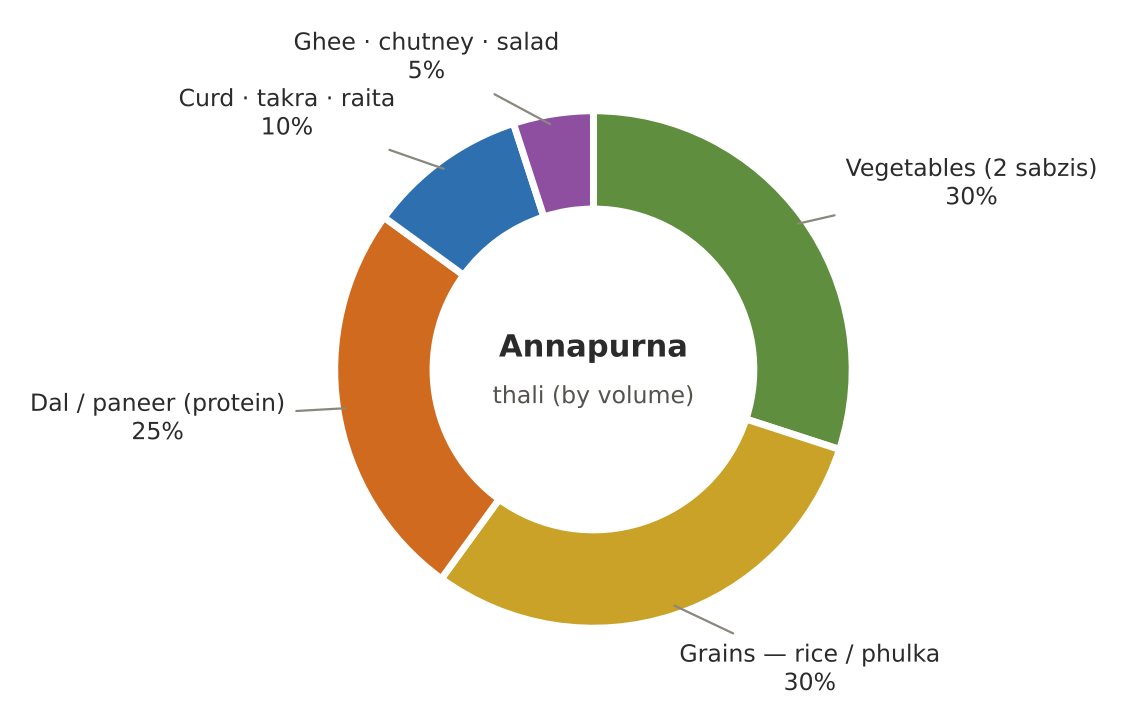
Figure 2. Plate model for lunch — by volume
| Item | Standard 55+ portion | Small-appetite portion |
|---|
| Cooked rice / khichdi | 150 g (1 heaped katori) | 100 g |
| Phulka | 2 (≈60 g atta) | 1–2 |
| Dal / kadhi / sambar | 180 ml (1 katori) | 150 ml |
| Sabzi (each) | 120 – 150 g | 100 g |
| Curd / raita | 100 g (lunch only) | 75 g |
| Soup (dinner) | 250 ml | 200 ml |
| Sweet | 40 – 100 g | ≈ half |
| Fruit | 100 – 150 g | 100 g, stewed if raw is unsuitable |
| Ghee (whole day) | 10 – 15 g | 5 – 10 g |
Does the menu meet the targets? A model day, month by month
For each month we added one serving of each of that month's six featured recipes to the daily staples (50 g raw rice, 60 g atta as two phulkas, 100 g curd and the bedtime golden milk). The result is an estimate of what a guest eating the full menu receives.
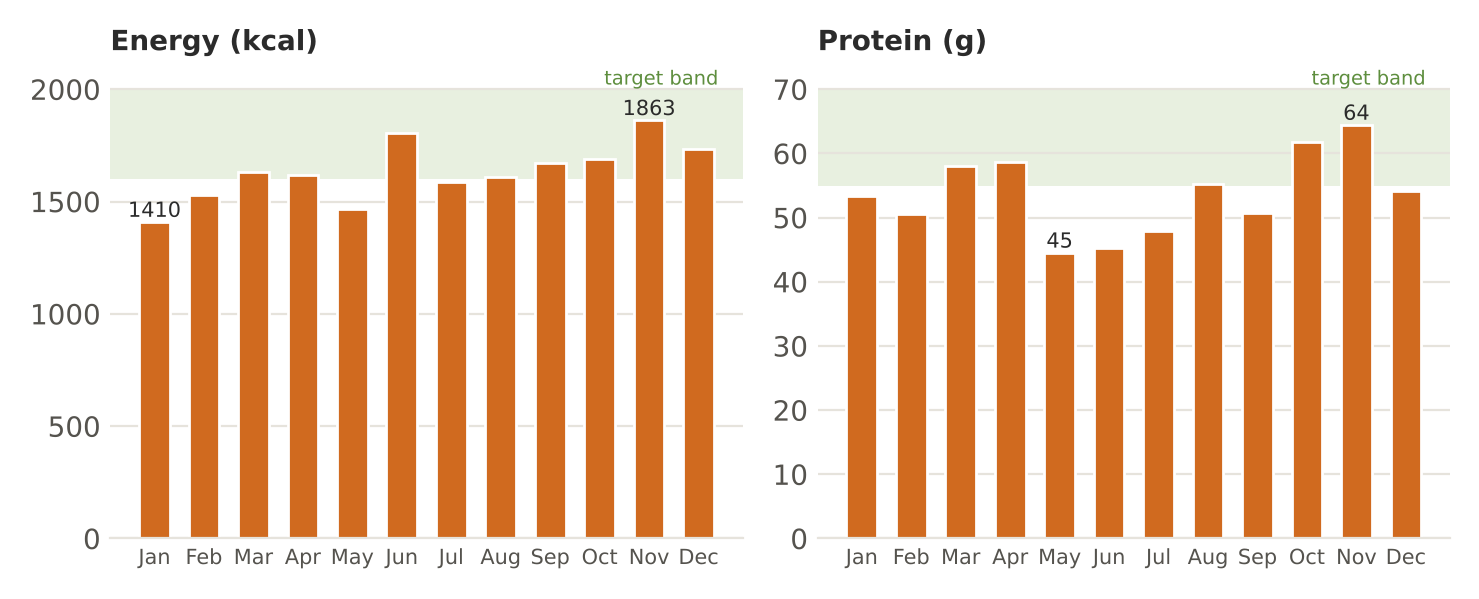
Figure 3. Estimated model-day energy and protein; green band = target range
What the model day tells the kitchen
Energy sits within or just below the 1,600–2,000 kcal band in most months — appropriate for mostly sedentary guests. Protein is the gap: May, June and July fall to about 45 g. In these months add one of: 50 g paneer at lunch, a glass of milk or takra mid-morning, sattu sharbat, or a moong chilla at breakfast. Salt stays near 3–4 g from recipes — leaving room within the 5 g limit for curd and bread. Fibre reaches 25–32 g except in July (≈ 19 g); add stewed fruit and dalia in the monsoon. |
3. Ayurvedic Principles for the Later Years
3. Ayurvedic Principles for the Later Years
In Ayurveda, life is divided into three stages: childhood (Kapha), adulthood (Pitta) and the later years (Vata). The source Kerala plan summarises the right diet for this Vata stage in four qualities — and they are the backbone of this book.
| Quality | Meaning | In the Annapurna kitchen |
|---|
| Ushna — warm | Warm in temperature and in action | Every dish served warm; drinks at room temperature; ginger, cumin, pepper used gently |
| Snigdha — unctuous | Moist, oily enough to counter dryness | 2–3 tsp ghee daily; sesame, coconut milk, nuts in measured amounts |
| Brimhana — grounding | Nourishing, building tissue | Root vegetables, rice, wheat, milk, paneer, dates, moong |
| Laghu-pachaka — easy to digest | Light enough for weak agni | Khichdi, kanji, yusha, steamed dishes; legumes always paired with hing & ginger |
The six seasons at Haridwar
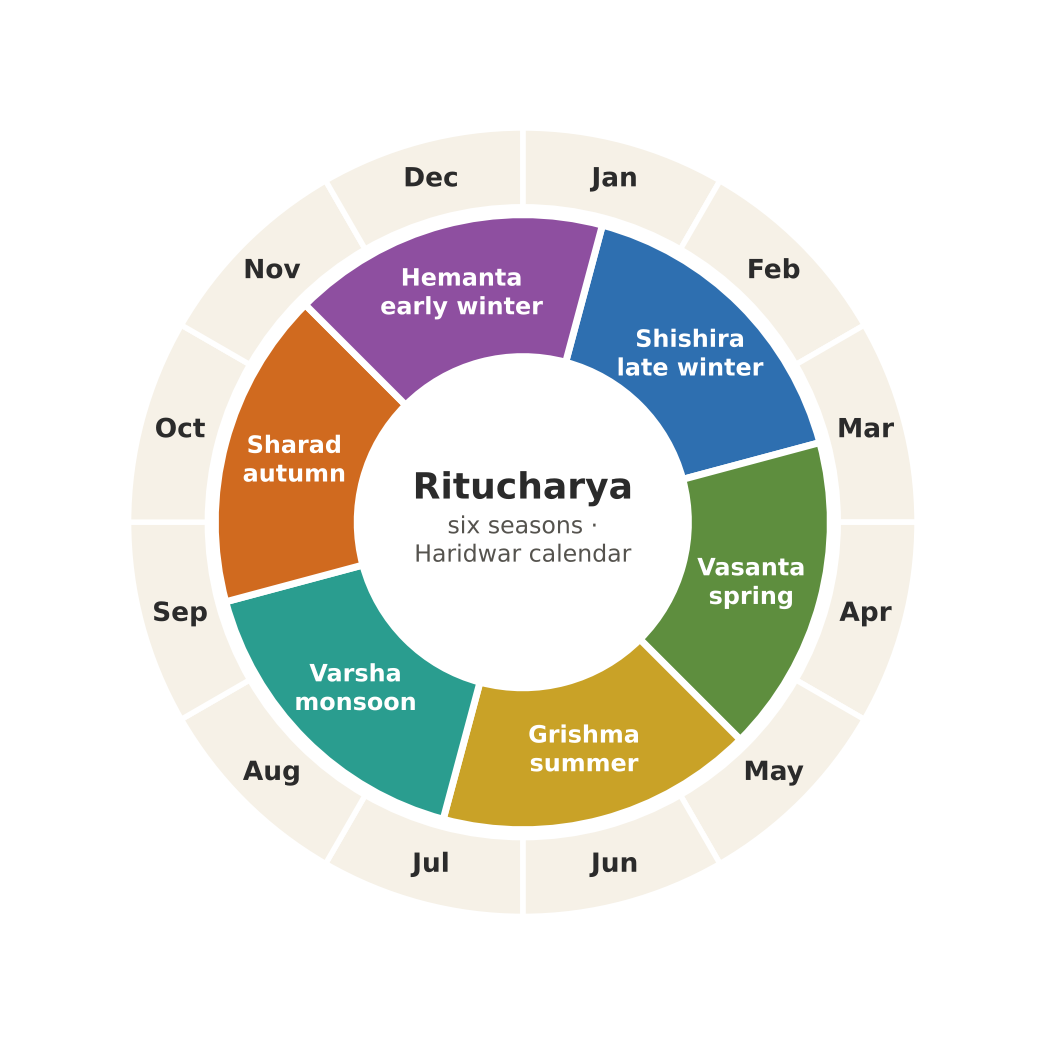
Figure 4. The ritucharya calendar used in this book (seasons begin around mid-month)
How each dosha moves through the year
Ayurveda teaches that each dosha first accumulates, then becomes aggravated, then subsides. Menus anticipate this: for example, Kapha accumulates in late winter, so March menus turn light and bitter before spring congestion peaks.
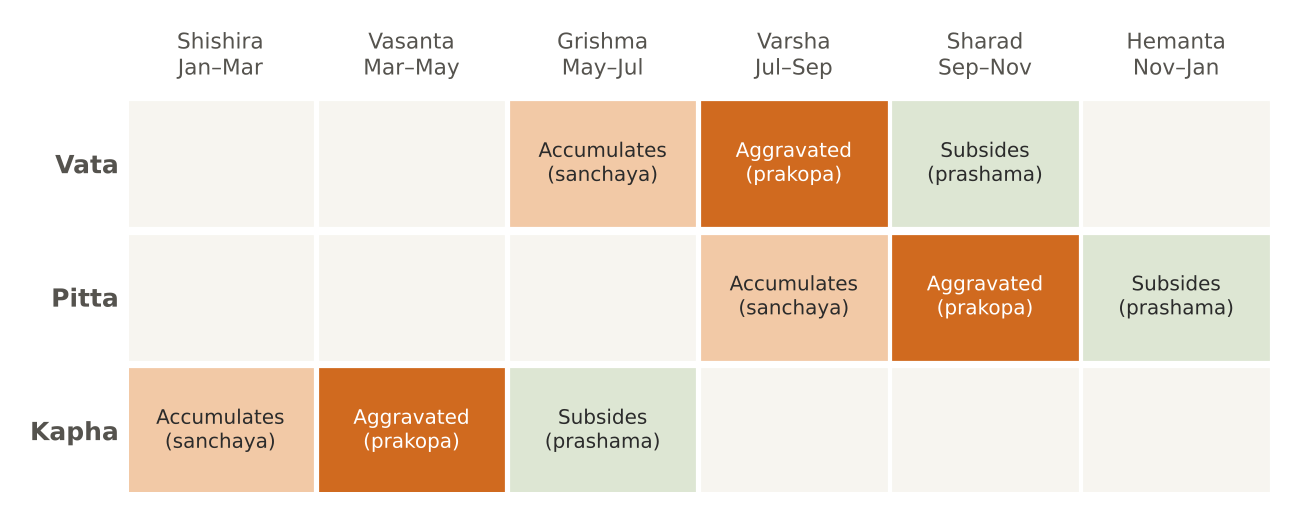
Figure 5. Seasonal cycle of the doshas (classical sanchaya–prakopa–prashama)
Agni through the day
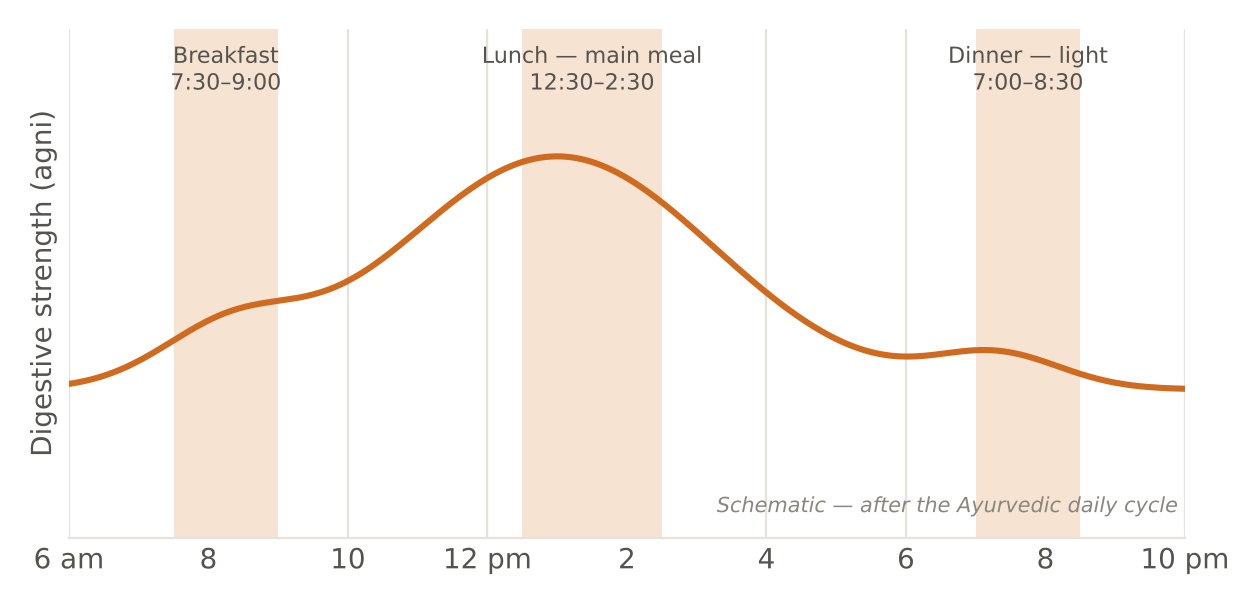
Figure 6. Why lunch is the main meal and dinner stays light
Key Vata dietary rules (from the source Kerala plan)
Never eat cold or raw: avoid raw salads, ice water, cold smoothies and unheated leftovers — cold immediately agitates Vata. (Raw salads appear only as steamed or cooked versions.) Generous ghee: 2–3 teaspoons of pure ghee spread across daily meals to lubricate the intestinal tract and counter Vata dryness. Pacing: the largest meal at lunch (12:00–1:30 pm) when agni is strongest; dinner light and early — ideally by 7:00–7:30 pm. |
Combinations the kitchen avoids
-
Curd at night, curd heated, or curd with fruit; milk with sour fruit or salt-heavy dishes.
-
Honey heated or cooked — honey is always added to warm (not hot) drinks.
-
Equal quantities of ghee and honey together.
-
Very cold drinks with or after meals; fruit (other than stewed) at the end of a heavy meal.
4. The Daily Rhythm
4. The Daily Rhythm
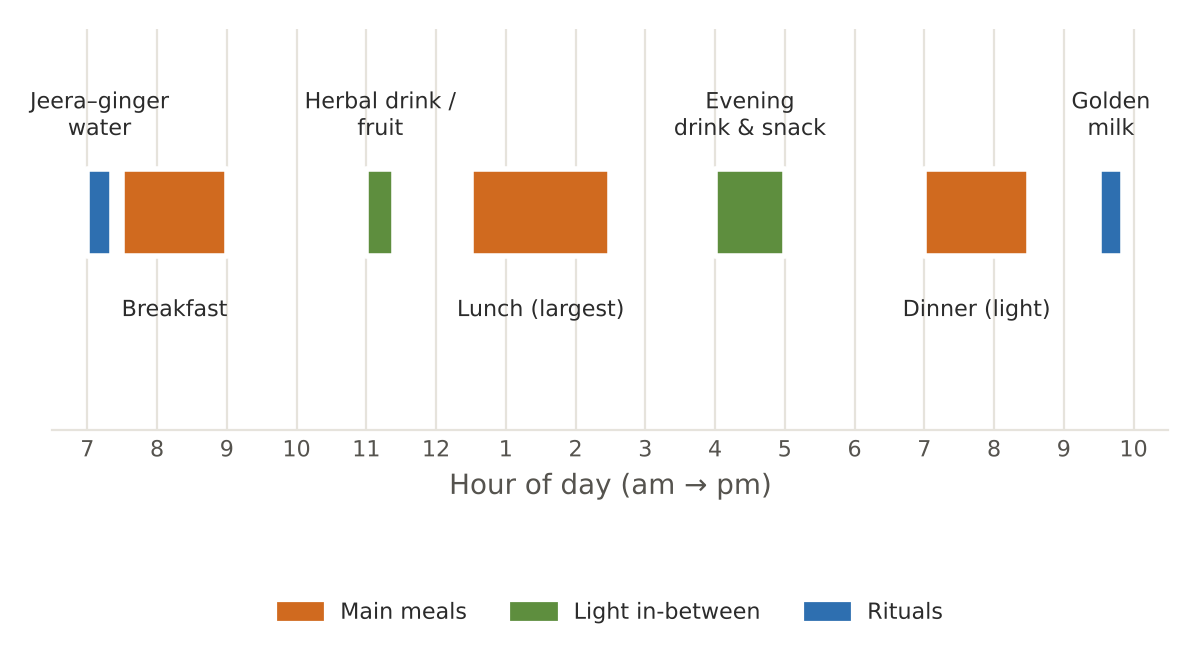
Figure 7. The guest day at the Centre
| Time | What is served | Notes |
|---|
| 7:00 am | Warm jeera–ginger water (150 ml) | Seasonal swaps: saunf water (summer), dhaniya water (Sharad) |
| 7:30 – 9:00 am | Breakfast (fixed meal) | A warm grain or pulse dish + fruit + tea/milk |
| 11:00 am | Herbal drink / fruit (optional) | CCF tea, takra, coconut water; stewed fruit in winter |
| 12:30 – 2:30 pm | Lunch — the main meal | Rice, dal, phulka, two seasonal vegetables, curd/raita/takra |
| 4:00 – 5:00 pm | Evening drink & light snack | Kadha, sharbat, makhana, stewed fruit |
| 7:00 – 8:30 pm | Dinner — light | Soup/khichdi/kanji, one vegetable, phulka or rice, small sweet; encourage 7:00–7:30 |
| 9:30 pm | Golden milk (150 ml) | Turmeric, nutmeg, cardamom, ½ tsp ghee |
Meal requests follow the Centre's policy: inform by 6:00 pm on the previous day; on-demand meals subject to availability.
Morning and bedtime rituals
Morning Jeera–Ginger Water
FOUNDATION · Serves 1 · Portion: 150 ml on waking · 8 min
Texture: Thin liquid Dosha: Vata–Kapha
| Ingredient | Household measure | Base qty | Café batch ×5 |
|---|
| Water | ¾ cup + 1 tbsp | 200 ml | 1,000 ml |
| Cumin (jeera) | ¼ tsp crushed | 1 g | 5 g |
| Ginger, fresh | 1 thin slice | 2 g | 10 g |
Method
1. Boil water with crushed cumin and ginger 5 minutes.
2. Cool to sip-warm; strain.
3. Serve at 7:00 am as guests wake.
| Per serving | Energy
5 kcal | Protein
0.1 g | Fat
0.1 g | Carbs
0.9 g | Fibre
0.3 g | Salt
0.0 g |
Care notes for 55+ guests
From the source Kerala ritual. Guests on fluid restriction count it in their daily allowance. | Ayurvedic note
Warm water on waking awakens agni and helps morning bowel movement (a Vata function). |
Variations & further ideas: Saunf water (summer) · Dhaniya water (Pitta) · Ajwain water (monsoon) · Lemon–honey water (spring, honey off heat)
Golden Milk (Haldi Doodh) — Bedtime
FOUNDATION · Serves 1 · Portion: 150 ml at 9:30 pm · 8 min
Texture: Liquid Dosha: Vata-pacifying
| Ingredient | Household measure | Base qty | Café batch ×5 |
|---|
| Cow's milk, whole | ⅔ cup (or almond milk) | 150 ml | 750 ml |
| Turmeric powder | ⅛ tsp | 0.5 g | 2.5 g |
| Nutmeg | tiny pinch | 0.1 g | 0.3 g |
| Green cardamom | 1 pod, crushed | 0.2 g | 1 g |
| Ghee (cow) | ½ tsp | 2.5 g | 13 g |
| Black pepper | 1 grain, crushed | 0.1 g | 0.5 g |
Method
1. Simmer milk with turmeric, nutmeg and cardamom 3 minutes.
2. Add ghee and a crushed peppercorn.
3. Serve warm.
| Per serving | Energy
123 kcal | Protein
4.9 g | Fat
8.3 g | Carbs
7.6 g | Fibre
0.2 g | Salt
0.0 g |
Care notes for 55+ guests
The source plan specifies ¼ cup; we standardise to 150 ml so it contributes ≈ 180 mg calcium. Guests with reflux: 100 ml, at least 1 hour after dinner. | Ayurvedic note
Nutmeg is a gentle sleep aid; turmeric with pepper and fat improves absorption. |
Variations & further ideas: Saffron milk · Ashwagandha milk (only on physician advice) · Date milk · Almond-milk version
6. Foundation Recipes
6. Foundation Recipes
These preparations are used throughout the twelve months. Make them in-house; they define the flavour and integrity of the kitchen.
Home Ghee from Unsalted White Butter
FOUNDATION · Serves 80 · Portion: 1 tsp (5 g) · 40 min
Texture: — Dosha: Tridoshic; the master Vata medicine
| Ingredient | Household measure | Base qty | Café batch ×5 |
|---|
| Unsalted white butter | 500 g unsalted white butter (makkhan) | 500 g | 2,500 g |
Method
1. Melt butter in a heavy steel pan on low.
2. Simmer gently 25–30 minutes; foam rises, then subsides; milk solids sink and turn light brown.
3. When bubbling becomes quiet and the ghee is clear golden with a nutty aroma, turn off the heat.
4. Cool 10 minutes; strain through fine muslin into a dry glass or steel jar.
5. Yield ≈ 400 g. Store at room temperature; always use a dry spoon.
| Per serving | Energy
45 kcal | Protein
0.1 g | Fat
5.1 g | Carbs
0.0 g | Fibre
0.0 g | Salt
0.0 g |
Care notes for 55+ guests
Daily house allowance: 2–3 tsp (10–15 g) per guest spread across meals, as the source Vata plan recommends. Guests with high LDL cholesterol: 1–2 tsp. | Ayurvedic note
Ghrita carries herbs into tissues (yogavahi), kindles agni without aggravating Pitta, and lubricates Vata dryness. |
Variations & further ideas: Herbal ghee with curry leaves · Ghee from cultured cream (bilona style) · Ginger-infused ghee · Saffron ghee for sweets
Sattvic Garam Masala (No Onion–Garlic)
FOUNDATION · Serves 50 · Portion: ¼ tsp · 20 min
Texture: Powder Dosha: Warming; use sparingly in Pitta months
| Ingredient | Household measure | Base qty | Café batch ×5 |
|---|
| Coriander seed / powder | 4 tbsp coriander seeds | 40 g | 200 g |
| Cumin (jeera) | 2 tbsp | 20 g | 100 g |
| Fennel (saunf) | 1 tbsp | 10 g | 50 g |
| Green cardamom | 15 pods | 5 g | 25 g |
| Cinnamon | 2-inch stick | 5 g | 25 g |
| Clove | 12 | 2 g | 10 g |
| Black pepper | 1½ tsp | 5 g | 25 g |
| Bay leaf (tej patta) | 2 leaves | 1 g | 5 g |
| Dry ginger (saunth) | 2 tsp dry ginger | 5 g | 25 g |
| Nutmeg | ¼ nutmeg | 1 g | 5 g |
Method
1. Dry-roast whole spices on low 4–5 minutes until fragrant; do not darken.
2. Cool completely.
3. Grind fine with dry ginger and nutmeg.
4. Store airtight, away from light; make fresh every 2 months.
| Per serving | Energy
6 kcal | Protein
0.2 g | Fat
0.2 g | Carbs
0.9 g | Fibre
0.5 g | Salt
0.0 g |
Care notes for 55+ guests
Our blend contains no chilli — heat is added separately and mildly where needed. | Ayurvedic note
Coriander and fennel dominate to keep the blend Pitta-friendly. |
Variations & further ideas: Sambar powder (mild) · Rasam powder · Kitchen king without onion–garlic · Chaat masala (house, low-salt)
House Digestive Churna (Hingvashtak-inspired)
FOUNDATION · Serves 60 · Portion: ½ tsp with first morsel of rice + ghee · 15 min
Texture: Powder Dosha: Vata–Kapha; kindles agni
| Ingredient | Household measure | Base qty | Café batch ×5 |
|---|
| Cumin (jeera) | 3 tbsp, roasted | 30 g | 150 g |
| Fennel (saunf) | 2 tbsp, roasted | 20 g | 100 g |
| Carom (ajwain) | 1 tbsp | 10 g | 50 g |
| Dry ginger (saunth) | 4 tsp dry ginger | 10 g | 50 g |
| Black pepper | 1½ tsp | 5 g | 25 g |
| Asafoetida (hing) | ½ tsp | 2 g | 10 g |
| Rock salt (sendha namak) | 1 tbsp rock salt | 15 g | 75 g |
Method
1. Dry-roast cumin, fennel and ajwain separately on low.
2. Cool and grind with dry ginger, pepper and rock salt.
3. Warm hing in a dry pan 10 seconds; mix in.
4. Store airtight; place a small bowl on each lunch table.
| Per serving | Energy
4 kcal | Protein
0.1 g | Fat
0.1 g | Carbs
0.6 g | Fibre
0.3 g | Salt
0.3 g |
Care notes for 55+ guests
Not a medicine — a culinary digestive. Guests with ulcers or reflux should avoid it. | Ayurvedic note
Modelled on the classical Hingvashtak churna taken with the first morsel of rice and ghee. |
Variations & further ideas: Ajwain–saunf mukhwas · Jeera–hing takra masala · Dhaniya–saunf digestive · Ginger–rock-salt slices
CCF Tea (Cumin–Coriander–Fennel)
FOUNDATION · Serves 4 · Portion: 150 ml · 12 min
Texture: Thin liquid Dosha: Tridoshic
| Ingredient | Household measure | Base qty | Café batch ×5 |
|---|
| Cumin (jeera) | ½ tsp | 2 g | 10 g |
| Coriander seed / powder | ½ tsp seeds | 2 g | 10 g |
| Fennel (saunf) | ½ tsp | 2 g | 10 g |
| Water | 3⅓ cups | 800 ml | 4,000 ml |
Method
1. Bring water to a boil.
2. Add the three seeds; simmer 10 minutes.
3. Strain; serve warm through the day.
| Per serving | Energy
5 kcal | Protein
0.2 g | Fat
0.1 g | Carbs
0.8 g | Fibre
0.4 g | Salt
0.0 g |
Care notes for 55+ guests
Caffeine-free — good for evening and for guests with sleep difficulty. | Ayurvedic note
The best-known Ayurvedic digestive tea; gently diuretic and anti-bloating. |
Variations & further ideas: CCF with mint (summer) · CCF with ginger (winter) · CCF with tulsi (monsoon) · CCF with rose (Sharad)
Spiced Takra (Digestive Buttermilk)
FOUNDATION · Serves 4 · Portion: 200 ml · 10 min
Texture: Thin liquid Dosha: Vata–Kapha; Pitta with coriander
| Ingredient | Household measure | Base qty | Café batch ×5 |
|---|
| Curd (dahi), plain | ¾ cup + 1 tbsp fresh curd | 200 g | 1,000 g |
| Water | 2½ cups (1 : 3) | 600 ml | 3,000 ml |
| Cumin (jeera) | ½ tsp roasted, powdered | 2 g | 10 g |
| Ginger, fresh | 1 tsp grated | 5 g | 25 g |
| Rock salt (sendha namak) | ⅓ tsp rock salt | 2 g | 10 g |
| Ghee (cow) | ½ tsp (tempering) | 3 g | 15 g |
| Asafoetida (hing) | small pinch | 0.2 g | 1 g |
| Curry leaves | 5 leaves | 1 g | 5 g |
| Coriander leaves | 1 tbsp | 5 g | 25 g |
Method
1. Churn curd and water well (remove any butter that rises).
2. Add roasted cumin, ginger and salt.
3. Temper ghee, hing and curry leaves; pour in.
4. Add coriander; serve at room temperature.
| Per serving | Energy
40 kcal | Protein
1.8 g | Fat
2.6 g | Carbs
2.8 g | Fibre
0.2 g | Salt
0.5 g |
Care notes for 55+ guests
Takra is the one cultured-milk drink Ayurveda allows after sunset in small amounts — unlike curd. | Ayurvedic note
'Takra is to humans what amrita is to the gods' — an old saying on its digestive value. |
Variations & further ideas: Pudina takra · Neer mor (Tamil) · Sambharam (Kerala) · Moru curry (warm)
Soft Phulka (House Standard)
FOUNDATION · Serves 8 · Portion: 1 phulka (≈30 g dough) · Rest 20 min · 15 min
Texture: Soft Dosha: Grounding
| Ingredient | Household measure | Base qty | Café batch ×5 |
|---|
| Whole-wheat flour (atta) | 1⅓ cups | 160 g | 800 g |
| Water | ⅓ cup + 1 tbsp, lukewarm | 100 ml | 500 ml |
| Rock salt (sendha namak) | pinch | 0.5 g | 2.5 g |
| Ghee (cow) | ¼ tsp per phulka | 10 g | 50 g |
Method
1. Knead atta, salt and lukewarm water to a soft, slightly sticky dough (8 minutes).
2. Cover and rest 20 minutes.
3. Divide into 8 balls; roll thin (6 inches) with minimal dry flour.
4. Cook on a hot tawa 20 seconds, flip, 30 seconds; puff on an open flame.
5. Brush ¼ tsp ghee; keep in a cloth-lined casserole.
| Per serving | Energy
79 kcal | Protein
2.4 g | Fat
1.6 g | Carbs
12.8 g | Fibre
2.2 g | Salt
0.1 g |
Care notes for 55+ guests
Lukewarm water and a long rest keep phulkas soft for hours; offer to tear into small pieces for denture wearers. | Ayurvedic note
Wheat is sweet and grounding — the staple of the North Indian Vata diet. |
Variations & further ideas: Jowar–wheat phulka (50:50) · Makki–wheat (25:75) winter roti · Methi phulka · Ragi–wheat phulka
Mint–Coriander Chutney (No Garlic)
FOUNDATION · Serves 10 · Portion: 1 tbsp · 10 min
Texture: Smooth paste Dosha: Cooling; aids digestion
| Ingredient | Household measure | Base qty | Café batch ×5 |
|---|
| Coriander leaves | 2 cups leaves & tender stems | 60 g | 300 g |
| Mint leaves | 1 cup leaves | 30 g | 150 g |
| Ginger, fresh | 1-inch | 10 g | 50 g |
| Green chilli (optional, deseeded) | ½ (optional) | 2 g | 10 g |
| Lemon juice | 1 tbsp | 15 ml | 75 ml |
| Cumin (jeera) | ¼ tsp roasted | 1 g | 5 g |
| Rock salt (sendha namak) | ⅓ tsp | 2 g | 10 g |
| Curd (dahi), plain | 2 tbsp (for smoothness) | 30 g | 150 g |
| Water | 2 tbsp | 30 ml | 150 ml |
Method
1. Wash herbs in salted water; drain well.
2. Grind all ingredients smooth.
3. Store refrigerated up to 2 days; bring to room temperature to serve.
| Per serving | Energy
6 kcal | Protein
0.4 g | Fat
0.2 g | Carbs
0.9 g | Fibre
0.4 g | Salt
0.2 g |
Care notes for 55+ guests
Mild version by default; the curd tames sharpness. | Ayurvedic note
Coriander cools Pitta; mint and ginger aid digestion. |
Variations & further ideas: Coconut–coriander chutney · Amla–ginger chutney · Tomato-free curry-leaf chutney · Raw-mango–mint chutney
7. The Kerala Vata Week — Adapted for Annapurna Kitchen
7. The Kerala Vata Week — Adapted for Annapurna Kitchen
The source plan is an authentic, nutrient-complete Kerala Ayurvedic menu. We kept its structure and almost all of its dishes; the changes below make it fully vegetarian and sattvic for Haridwar, and softer for older guests. Its dishes reappear across the year (December oats, June idiyappam & stew, September kanji, olan and payasam, December carrot–ginger soup).
| Day | Source breakfast / item | Annapurna adaptation | Source lunch | Annapurna adaptation |
|---|
| Mon | Njavara/basmati kanji with ghee, cumin, ginger · soaked almonds | Unchanged — kept as is | Basmati rice, moong parippu, sweet potato with coconut, warm beet salad | Warm beet salad served as beet thoran (cooked, warm) |
| Tue | Rava upma with ghee, mustard, curry leaves, carrots | Unchanged | Mor keerai (spinach in curd–coconut) + soft-boiled eggs or paneer | Eggs → paneer cubes sautéed in ghee (vegetarian, Haridwar) |
| Wed | Steel-cut oats, almond milk, cardamom, cinnamon, ghee, dates | Unchanged (see December breakfast) | Red matta rice, erissery, ghee | Unchanged — matta double-cooked very soft |
| Wed dinner | Chicken bone broth (mamsa rasa) or pumpkin–lentil soup | Chicken broth → Moong yusha / pumpkin–lentil soup | — | Classical vegetarian restorative replaces meat broth |
| Thu | Njavara kanji with hing + 2 soft-boiled eggs | Eggs → 2 tbsp cooked payar (whole moong) or 100 ml warm milk | Basmati rice, olan, snake-gourd thoran | Unchanged |
| Fri | Idiyappam with cardamom coconut milk | Unchanged (see June dinner) | Kalan (yam/plantain in curd–coconut) + cherupayar | Kalan served at lunch only (curd) |
| Sat | Puttu with kadala curry | Kadala soaked 8 h and pressure-cooked very soft; small portion | Fish curry or paneer curry, beans–carrots | Fish → paneer or raw-banana curry in the same coconut–turmeric base |
| Sun | Njavara kanji with milk, cardamom, dates, ghee | Unchanged | Sadhya plate: rice, parippu, aviyal, beet pachadi | Unchanged — see September (Onam) |
Why these substitutions work
Moong yusha (classical pulse soup) is the traditional vegetarian restorative in place of mamsa rasa (meat broth). Paneer and well-cooked whole moong replace eggs as protein; milk adds B12, which strict vegetarians often lack. Raw-banana or paneer in the same coconut–turmeric gravy keeps the Kerala fish-curry flavour profile. |
PART II